


- Posted on 26 Aug 2026
- 5-min read
An app helping users obtain data from dating sites has won the 2026 Wotton Kearney Neota Law Tech Challenge for Social Justice … amid confusion and hilarity
Tom Sulston was feeling upbeat on his mid-week flight from Melbourne to Sydney. As head of policy at Digital Rights Watch, Sulston had seen his team of UTS law students build an app to protect the privacy of dating site users. He’d heard the pitch; he’d tested the app; he’d grown optimistic.
‘Prior to the awards ceremony, I was feeling pretty confident that we were going to win,’ Sulston said. ‘The team were smart, enthusiastic, and capable. I’d already seen the app and the presentation, which were both great.’
The problem for Sulston was that three other teams had also done excellent work for the UTS Law Tech Challenge. One team was helping residents of public housing obtain urgent repairs; another team was enabling dementia sufferers establish their legal readiness to make wills; and a fourth team was assisting Australians to lodge complaints about unfair treatment by their superannuation funds.
Soon after his plane touched down, Sulston’s confidence started its own descent.
It was when I saw the other teams' presentations that I got a sense for the strength of the whole field and had to rapidly re-set my expectations.
The Grand Final of the 2026 Law Tech Challenge was held on Wednesday 19 August at UTS Startups on Broadway. The nervous energy was palpable.
‘First, we had the Oscars,’ said Challenge director Sacha Molitorisz, opening the event. ‘Then, we had the Logies. Tonight, we bring you the culmination of the 2026 awards season. Live from Broadway - the real Broadway, the one in Sydney - we bring you the Grand Final of the Wotton Kearney Neota Logic UTS Law Tech Challenge for Social Justice. Emphasis on the word ‘challenge’. The first challenge is just saying it.’
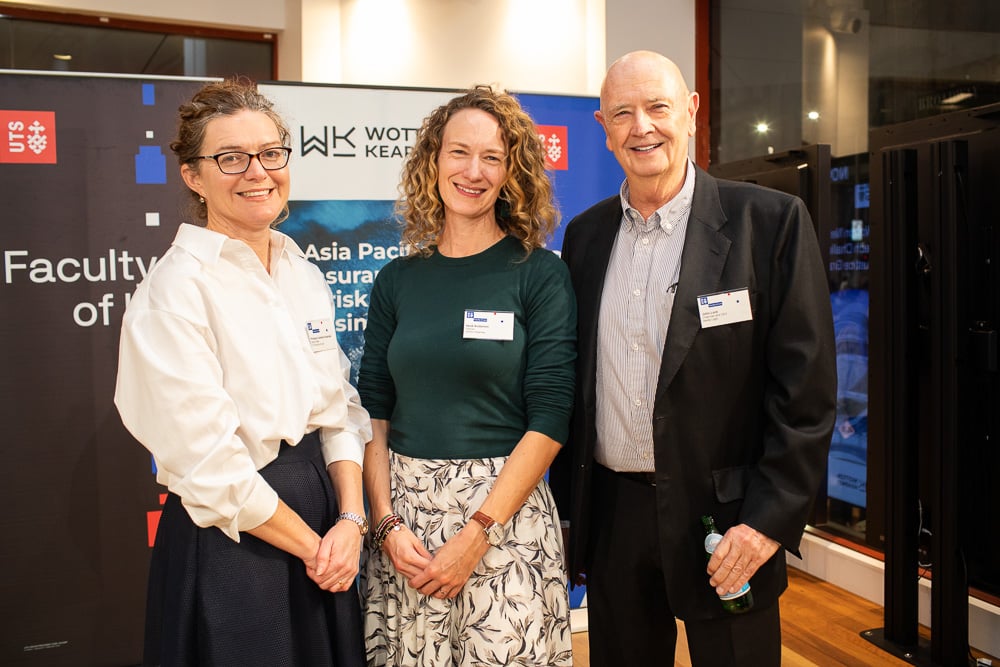
The three judges were introduced: Professor Isabella Alexander, interim dean at UTS Law; Heidi Anderson, head of pro bono at Wotton Kearney; and John Lord, chair and CEO at Neota Logic. They praised the event’s commitment to social justice.
‘The impact of the Challenge really is multi-faceted,’ said Anderson. ‘There's the impact on the users of the apps, to better understand their rights and be empowered to take action. There's the impact on the community organisations being supported, adding capacity as app users are able to self-help. And there’s the impact on students, on their learning, collaboration and direct client experience.’
Following the judges’ remarks, the first team to present comprised students Chloe Nair, Faheemah Dean, Brian Chuahiock, Brooklyn Plunkett and Eliatha Akoto-Appiah (mentored by Wotton Kearney’s Gemma Curcio and Anthony Smith). On behalf of the Canberra Community Law Centre, the team had built a RepairMate app to help public housing tenants.
‘This app turns the overwhelming process of getting public housing repairs into practical steps,’ said Nair.
Housing is not just a legal issue, it’s about safety, dignity and stability. Our app closes the gap between having a legal right and being able to use it.
Next up was Team Dementia Australia - Pamilla Huang, Leo Chau, Charles Bruton and Albi Raphel (mentored by Adem Garana and Danyon Soligo) - with an equally compelling presentation showcasing their Legal Readiness app.
‘This is Margaret, she’s 74,’ said Chau, pointing to a slide with an illustration of an older Australian. ‘Six months ago the doctor told her that she had dementia. Her first reaction wasn’t fear. It was that she wants to stay in control of her future.’ The team then described an app that helps dementia sufferers and their carers assess someone’s legal readiness to make wills, powers of attorney and advance care directives. Given that nearly 450,000 Australians are currently living with dementia, the potential is enormous, as Garry Walters from Dementia Australia recognised. ‘Your app is exciting,’ Walters said. ‘It has the potential to assist people in a critical window of independence to help them initiate informed decisions. Brilliant!’
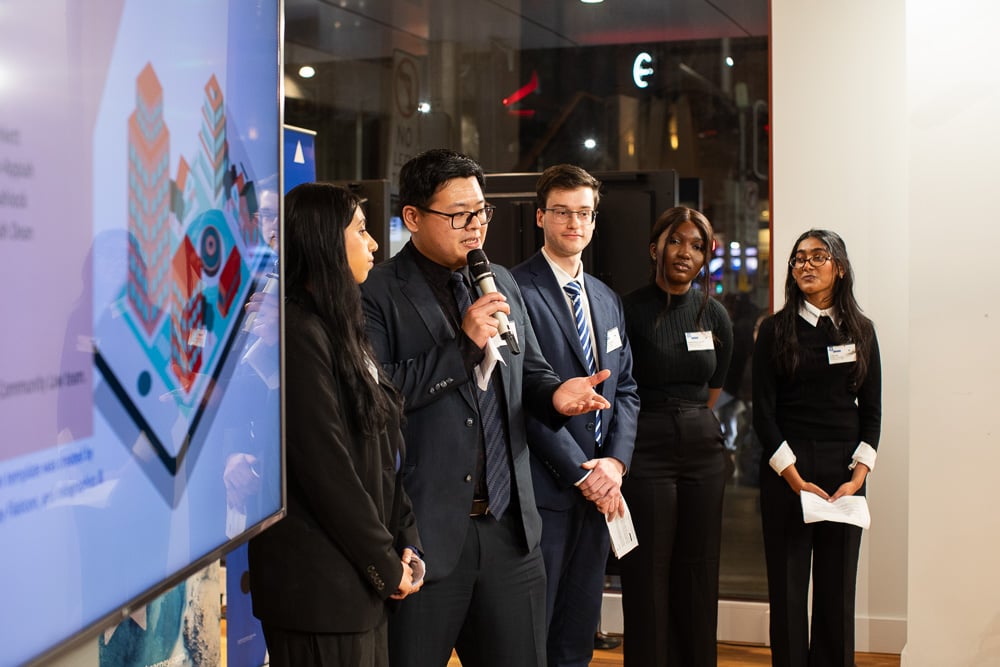
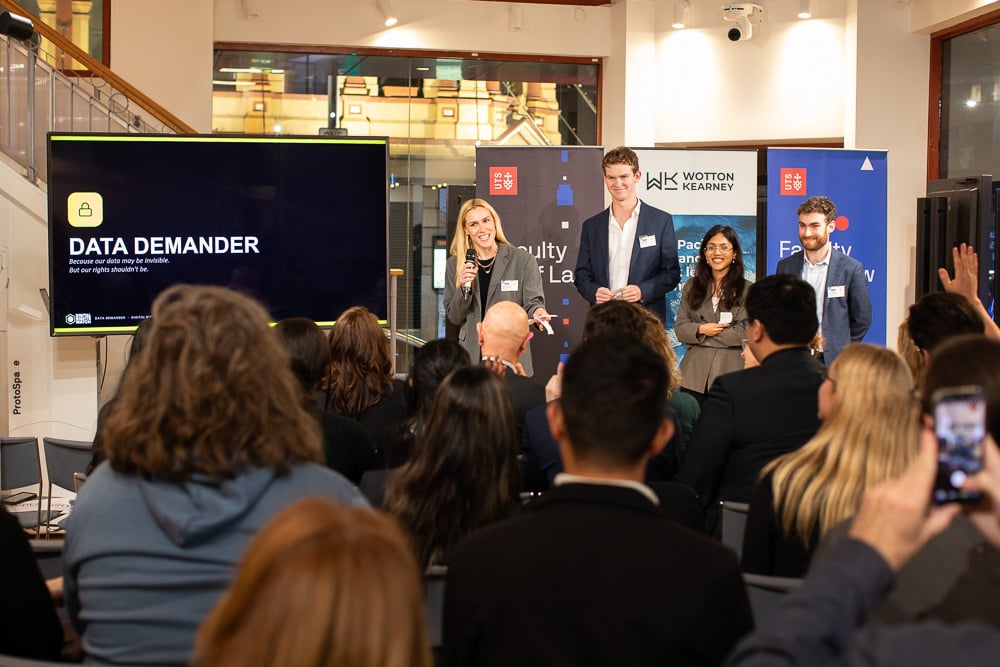
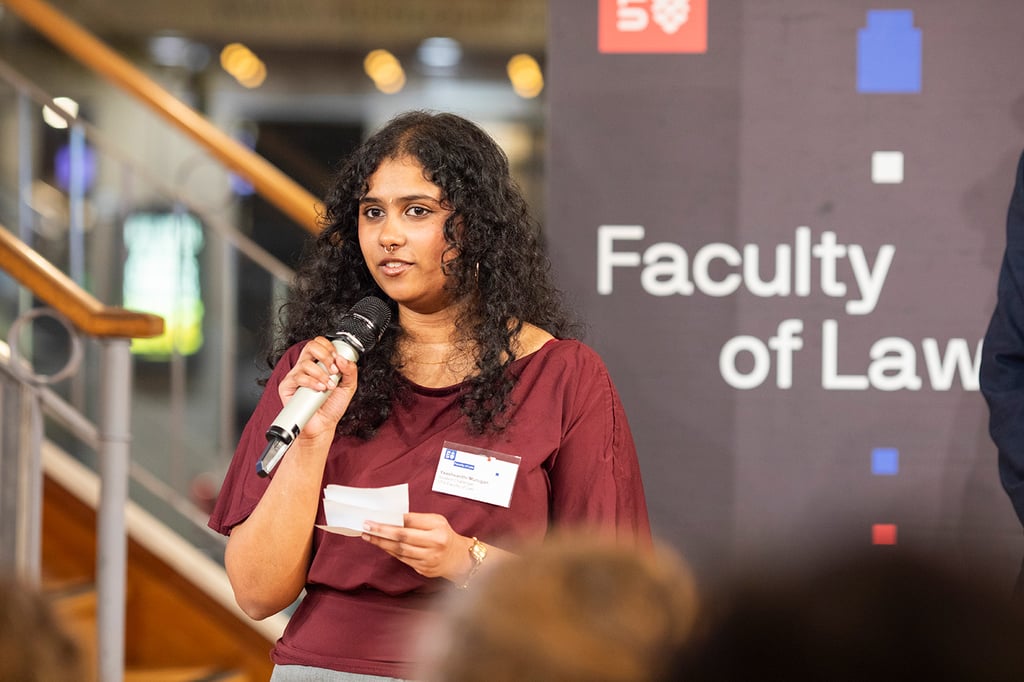
The third team - Ryan Empson, Chiara D'Ambrosio, Yaashvanthi Murugan, Jared Metzger and Preethi Chockalingam (mentored by Cassie Grant and Jack Tynan) - presented the Data Demander app they’d built for Digital Rights Watch.
‘Can we get a show of hands,’ said D’Ambrosio, opening the presentation. ‘Who in this room has either used a dating app, or knows someone who has? And keep your hands up if you didn’t find your perfect match. But don’t worry, because there actually was one successful match: your data and third party buyers.’
D’Ambrosio pointed to a slide proclaiming, ‘It’s a match!’ The screen showed a match between ‘your data - swipes, location, preferences, chats’ and ‘data brokers - analyse, aggregate, monetise, sell and profit.’
Finally, the Super Consumers Australia team - Maya Bernard, Hasti Haghshenas, Lily Gold, Batool Fatima and Alex Harb (with mentors Salma Aly and Jonathon Gilmour) - gave a polished account of their Super Complaint Letter Writer app, which will help people fashion and send a complaint about their super.
‘Our mission was simple,’ said Gold. ‘Better complaints mean better outcomes. We turn a complex, unfamiliar complaints process into a guided five minute task. This tool helps members organise their story by setting out what went wrong, identfying the impact and clearly stating their desired outcome.’
Again, the potential for access to justice is huge.
‘I love that the team took on a big complicated problem, didn't back down, and worked hard to find a way to help as many people as possible,’ said Jessica Spence, director of policy at Super Consumers Australia. They could have carved things out and made their work easier, but that would have made the tool less useful for consumers.’
To build their apps, each team had worked with Neota’s indefatigable Kevin Mulcahy. As noted during the Grand Final, Mulcahy has the wisdom of a professor coupled with the enthusiasm of an undergrad. From his home in Brooklyn, Mulcahy tuned into the Grand Final’s livestream, which started at 4am local time.
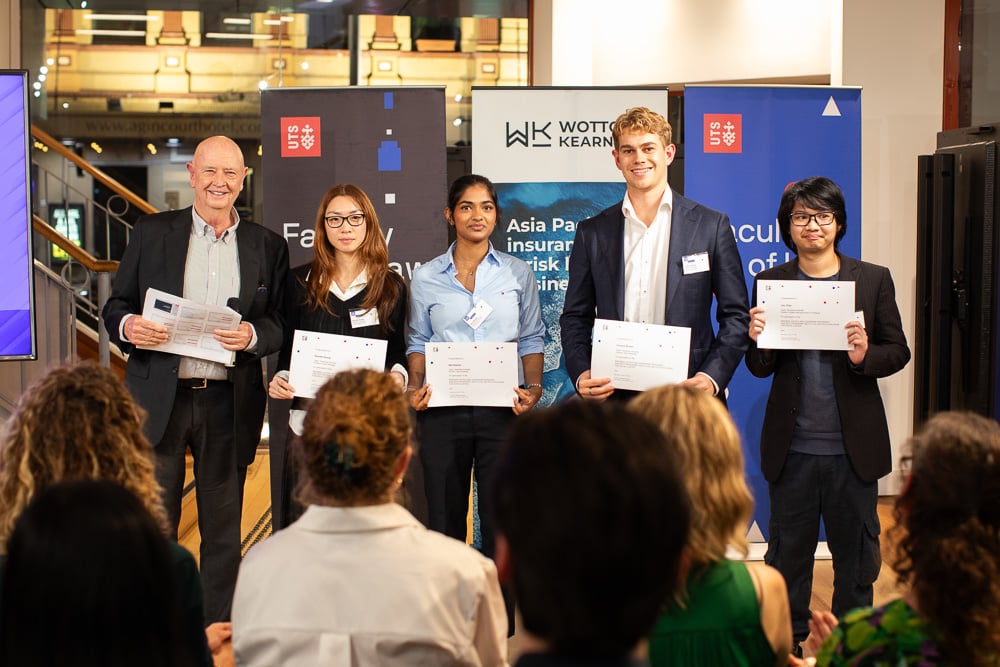
After the judges took 15 minutes to deliberate, John Lord took the microphone to announce that the RepairMate app had been awarded a Special Mention for ‘using tech and law to make people’s homes safer’ and that the Legal Readiness app had been awarded a Special Mention for ‘harnessing legal tech to empower the elderly and vulnerable’.
That’s when confusion and hilarity broke out. After John Lord turned to announcing a third Special Mention, for ‘building legal tech that champions dignity and privacy’, Molitorisz chimed in to fill a pause.
‘And the winner is …’ said Molitorisz.
‘And the winner is …’ said Lord.
‘Digital Rights Watch,’ said Molitorisz.
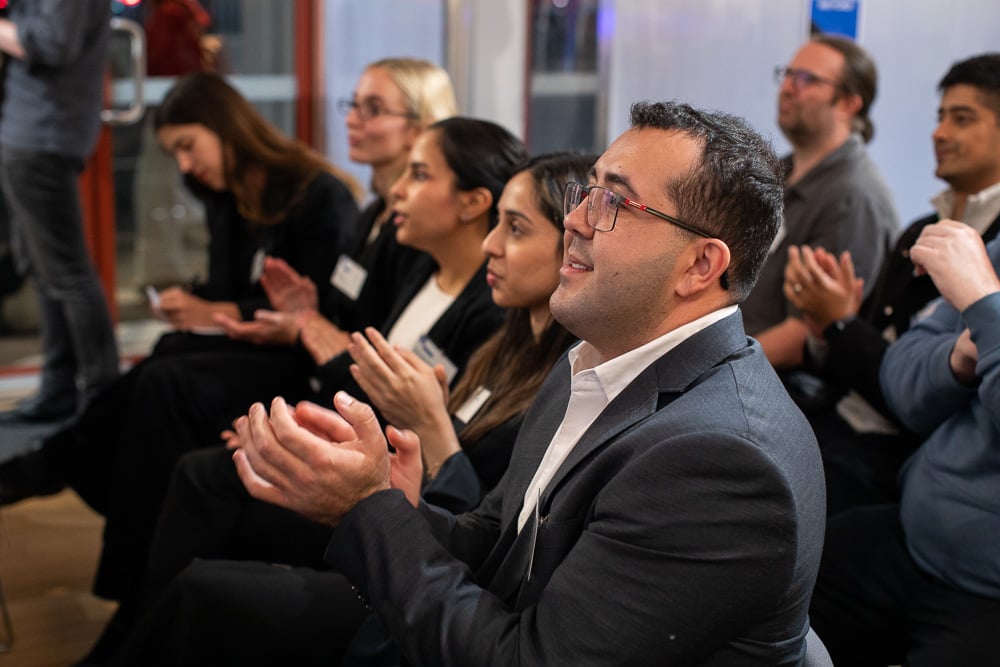
The Digital Rights Watch team erupted in cheers and congratulations.
‘The winner of the Special Mention,’ said Molitorisz quickly, to a room filling with laughter. ‘Not of the whole Challenge! I think I’ve created some confusion here.’
Digital Rights Watch gracefully stepped up to accept their Special Mention, before John Lord awarded a final Special Mention to Super Consumers Australia, for ‘shaping tech that protects Australians’ legal and financial rights’.
Molitorisz then announced that it was time to announce the real winner. ‘Spoiler alert, it’s social justice,’ he said, before handing the microphone to Heidi Anderson.
‘Each team presented an effective and practical solution to help advance a social justice issue,’ Anderson said. ‘It made judging incredibly tough.’
She announced that Digital Rights Watch had, in fact, won the event.
‘We’re so happy,’ said Jared Metzger. ‘For a lot of us, this has been the best experience we've had at university. It’s also made us committed to doing more for social justice.’
The happiest person in the room may well have been his dad, Gideon Metzger.
'I was really quite emotional during the presentation,’ he said. ‘I'd seen how much work, and how many late nights, Jared and the team had put into this.'
Professor Isabella Alexander and Neota’s John Lord admitted judging had been tough, but rewarding.
‘The judges faced an enormous challenge,’ Professor Alexander said. ‘All of the apps were easy to use, beautifully designed, and were immediately beneficial to clients and users. And all of the presentations were professional, clear, and informative.’
And Lord said, ‘There’s not one of these students that you would not be proud to have sitting at your table as part of your professional team. All the best of everything we hope to achieve in multicultural Australia was in evidence. UTS Law in those students is creating role models for generations of diverse young Aussies to look up to.’
Before leaving for the airport, Sulston spent time celebrating with his team.
‘I’m delighted that the judges picked our team in the end, but all the projects were so good that I’d have been quite content to see another team win,’ he said. ‘The UTS students were a joy to work with and I expect them to go on to great things. And beyond the excitement of competition, our new Data Demander app is going to be incredibly useful to help Australians take control of their data, and to help DRW fight for lasting legislative change.’
Explore photos from the Grand Final. View the recording on YouTube or LinkedIn.
Written by:

Associate Professor, Faculty of Law
News
Professor Catherine Kelly appointed Dean of Law
UTS is delighted to welcome Professor Catherine Kelly as our new Dean of the Faculty of Law.

News
Chris Minns’ new organised crime laws may sound tough, but evidence shows they may not be effective
Sydney’s organised crime problem is real and serious. But Chris Minns’ new laws will not necessarily deliver results.
News
Victoria’s First Nations body breaks new ground in support of prisoners’ ‘open air’ rights
For the first time since its creation, Gellung Warl is challenging the Victorian government on a legislative bill that passed parliament.

News
When home is no longer safe for older women
Unpaid care work and financial inequality are leaving older women exposed to housing insecurity as the climate changes.
News
Professor Catherine Kelly appointed Dean of Law
UTS is delighted to welcome Professor Catherine Kelly as our new Dean of the Faculty of Law.
News
Chris Minns’ new organised crime laws may sound tough, but evidence shows they may not be effective
Sydney’s organised crime problem is real and serious. But Chris Minns’ new laws will not necessarily deliver results.
News
Victoria’s First Nations body breaks new ground in support of prisoners’ ‘open air’ rights
For the first time since its creation, Gellung Warl is challenging the Victorian government on a legislative bill that passed parliament.
News
When home is no longer safe for older women
Unpaid care work and financial inequality are leaving older women exposed to housing insecurity as the climate changes.