


- Posted on 22 Jun 2026
The Tower has shaped the UTS identity for almost half a century.
Following the passing of its architect, Michael Dysart, we reflect on how Building 1 continues to influence how our campus works and evolves today.
Designed in the 1960s by the NSW Government Architect’s Office under Dysart’s leadership, the Tower emerged during a period of major expansion in public education infrastructure. Dysart’s work was guided by a belief that architecture should prioritise public purpose, durability and function, alongside visual impact.
Originally planned as part of a much larger campus for the then NSW Institute of Technology, the Tower that stands today represents a small part of that initial vision of seven towers. Today, it remains one of Sydney’s most prominent examples of brutalist architecture, a style defined by strong forms, exposed materials and buildings designed to last.
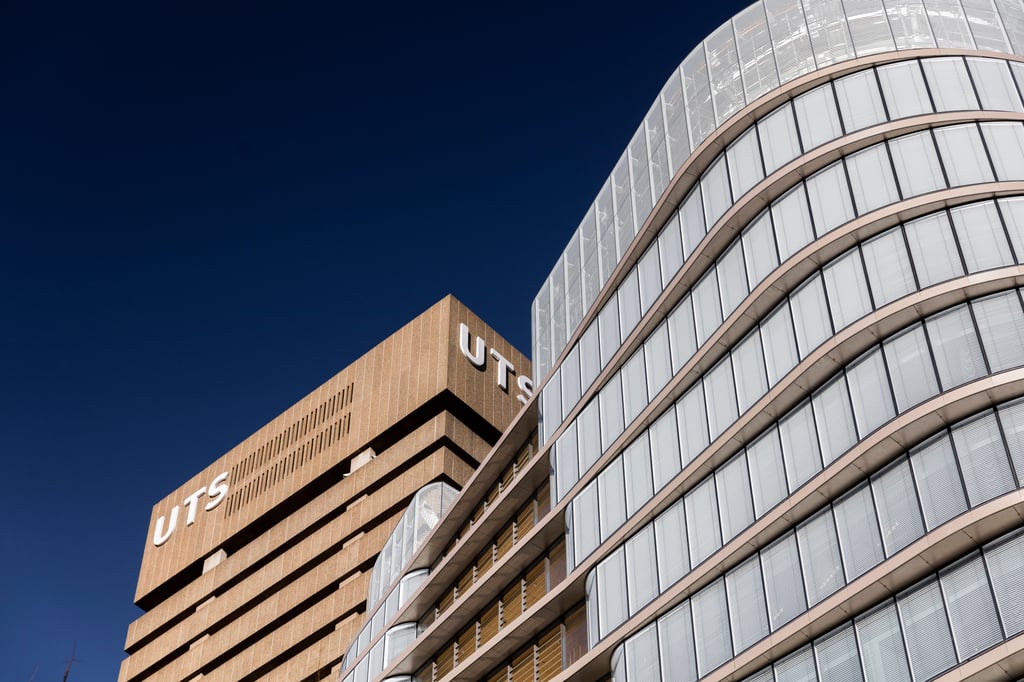
A brutalist icon
Dr Jesse Adams Stein, Senior Lecturer in the UTS School of Design, said that while the Tower’s brutalist design can be divisive, it’s important to consider it within its broader architectural context.
“We have to see Dysart’s design as part of a series of brutalist public university buildings being designed at the same time, not just in Sydney, but around the world,” Dr Stein said.
“Public brutalist architecture was a significant movement, and reactions to it have been polarised ever since.”
“Some people see buildings like the UTS Tower as something to rail against.”
“Others see brutalism as symbolic of a time when architecture was simpler, government built its own buildings, and materials and structures were clearly visible,” she said.
I’m a fan of this delightful, awkward, ugly duckling
Despite longstanding myths, Dr Stein challenges the idea that the Tower was designed to prevent protest or public gathering.
“Just look at the Builders’ Labourers Federation (BLF) action during the construction of the Tower,” said Dr Stein.
The Tower was originally planned to progress at a rate of one floor every three weeks. Due to the persistent BLF strikes and disputes, a single level took 18 months to complete at one stage of construction, and on one occasion, 8 BLF members locked themselves inside two high cranes and refused to come down.
“If people are going to protest, they will find a way,” she said.
“A tower, or towers, aren’t going to stop that.”
Grandeur inside
While the exterior often attracts criticism, Dr Stein believes the interior reveals some of the building’s greatest strengths.
“One of the most wonderful things about the Tower is the open interior floors from Levels 4 to 6,” she said.
You move through compressed spaces and then suddenly enter a cavernous, almost cathedral‑like area. It’s beautiful, but also feels down to earth, like a public celebration of knowledge and education
The careful use of light and space gives the interior a sense of grandeur that many staff and students may overlook when passing through day-to-day.
“It feels monumental in a secular, academic sort of way, making the design oddly appropriate for its function,” Dr Stein said.
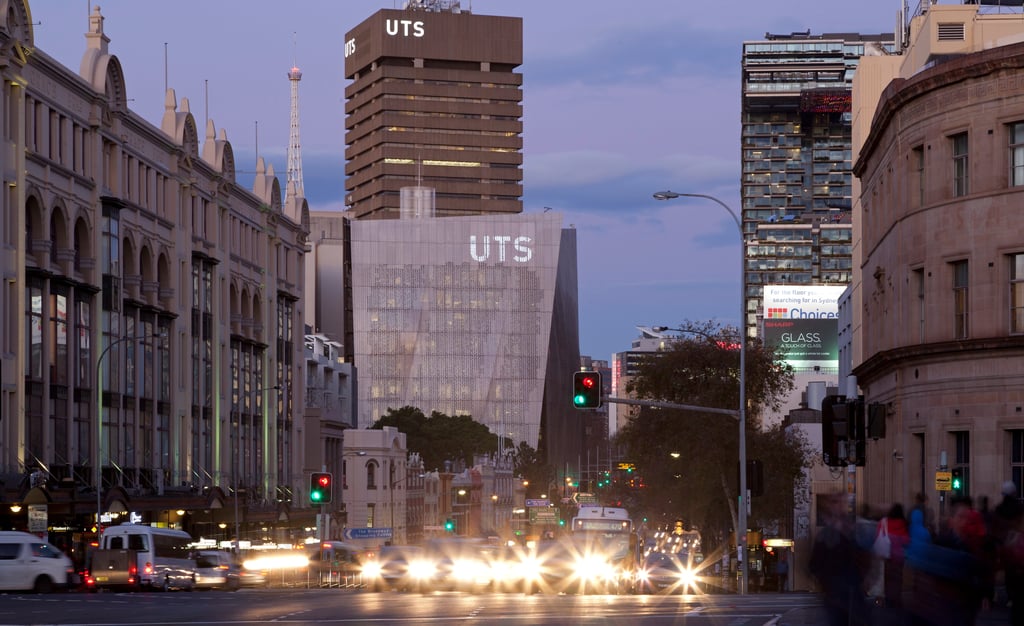
The evolving campus
Today, the Tower sits within a more complex and contemporary UTS campus, surrounded by new architecture that reflects the changing way we learn, work and collaborate. Its meaning has shifted, from a symbol of ambition in the 1960s to a reminder of how universities are continuously evolving.
“Sydney people love to hate brutalist buildings, but they also love to love them,” Dr Stein said.
“The Tower is a landmark. It’s a point of reference and a wayfinding tool, and firmly part of UTS’s identity with its own diehard fans.”
Remembering Michael Dysart’s contribution allows us to reflect on the role architecture plays in shaping public institutions and the people who use them every day.
While the exterior often attracts criticism, Dr Stein believes the interior reveals some of the building’s greatest strengths.
“One of the most wonderful things about the Tower is the open interior floors from Levels 4 to 6,” she said.
“You move through compressed spaces and then suddenly enter a cavernous, almost cathedral‑like area. It’s beautiful, but also feels down to earth, like a public celebration of knowledge and education.”
The careful use of light and space gives the interior a sense of grandeur that many staff and students may overlook when passing through day-to-day.
“It feels monumental in a secular, academic sort of way, making the design oddly appropriate for its function,” Dr Stein said.