


- Posted on 7 May 2026
- 5 minute read
Students in the Transdisciplinary subject TD: Pathways to Societal Transitions work with Lane Cove Council and local stakeholders to explore rapid data centre expansion in Sydney, and how to create a more community-inclusive industry.
UTS students researching data centre expansion across Sydney have caught the attention of Bayside Council, prompting Councillors to pass a motion to bolster local community participation in future data centre development applications.
The recently passed motion calls for tighter planning rules and greater community oversight and influence over how future large-scale digital an AI infrastructure is built in the local government area.
It emerges, in part, from Councillors recent collaboration with UTS student researchers studying the Transdisciplinary Elective subject Pathways to Societal Transition.
“After visiting a data centre in my local area of Mascot, and speaking to Councillors and community members there, it was clear greater public education and engagement about AI infrastructure was needed,” says UTS Bachelor of Design in Visual Communication student Emilia Bezic, who was involved in the student project.
As part of a diverse student team, Emilia worked closely in the subject with Zach Wong (Bachelor of Mathematical Sciences), Kai van Hoven (Information Technology), Alexander Wong (Bachelor of Management) and Isabel Minney (Bachelor of Engineering).
The project they tacked in this subject, in collaboration with local stakeholders, challenged the team to grapple with the real-world impacts of Australia’s fast-growing data centre industry.
Australia’s growing data centre industry
Data centres, the ‘engines of the internet’, are physical, warehouse-like facilities that store and process the digital data. While data centres are critical to unlocking a modern digital society, clusters of this infrastructure in Sydney’s North, West, and Inner-city are sparking concern for impacts on energy transition, water security, utility prices, housing plans and the environment.
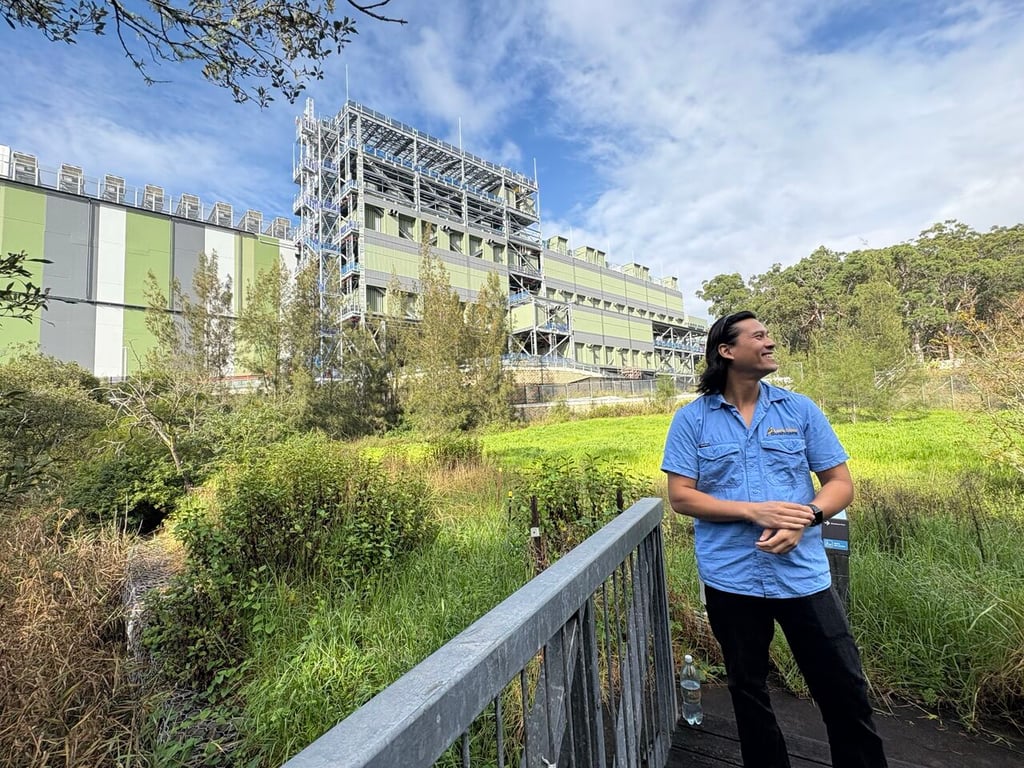
And to further complicate local concerns, data centre planning and investment are largely driven by federal and state governments in close alignment with industry, with limited input from local communities.
Recent Federal and NSW Government expectations for data centre development offer little clarity on local benefits or how cumulative impacts will be managed - a gap underscored by a NSW Parliamentary Inquiry that attracted numerous submissions from councils and residents affected by data centre expansion without meaningful influence over decision‑making.
In Pathways to Societal Transitions, student groups interrogate tensions and opportunities emerging between the data centre industry, governments and local communities in Sydney, and draw on economic, technological, social, and environmental ‘levers’ to co-imagine what a sustainable and community-inclusive data centre industry might look like.
For students like Emilia and her group, their project moved quickly from classroom to real‑world impact.
The team proposed four ‘policy levers’ that could be implemented in planning new data centres, including the drafting of a community benefit agreement, to ensure the creation of community-designated spaces and housing, and participatory planning forums.
“The idea is that alongside digital infrastructure, we also build shared community spaces and support more liveable, sustainable neighbourhoods,” says Emilia.
As part of their final assignment, the students also produced an awareness video for Bayside council and residents.
“The video was a call to action to show what we can do if we start considering the implications of data centres for Mascot,” Emilia says.
The Bayside Councillor we spoke to was so interested in our final work that they asked us to present about data centres at a council meeting. That made us realise how little awareness there still is about these emerging infrastructure projects, and how important these conversations are.
Learning and participating in a real research project
This subject also functions as a live research project investigating how local communities across Sydney are responding to data centre expansion in their locality, and ways that the data centre industry might become more inclusive of community values and priorities.
Led by Dr Bronwyn Cumbo, from the UTS Transdisciplinary School, the subject is designed to develop student critical awareness of the ecology of AI infrastructures.
“When we build a data centre, it is not just a building,” Dr Cumbo explains. “It is a physical representation of a global industry that is reshaping physical and sensory environments ‘on the ground’, local economies, political decisions, and social relations”.
Students are exposed to critical infrastructure theories and apply a range of research methods such as site visits (to a data centre), sensory mapping, interviewing, futuring activities, and thematic data analysis.
They work in interdisciplinary teams to identify key challenges or opportunities emerging through data centre expansion in their nominated community and explores pathways towards futures that better foreground local values, priorities, and benefits. Students also hear from specialists from government and industry who are tackling this challenge right now.
“Our students are looking at how these local communities experiencing data centre expansion are experiencing and making sense of these developments. Their work is part of a longitudinal research project - so we will be able to interrogate how this is changing over time,” Dr Cumbo says.
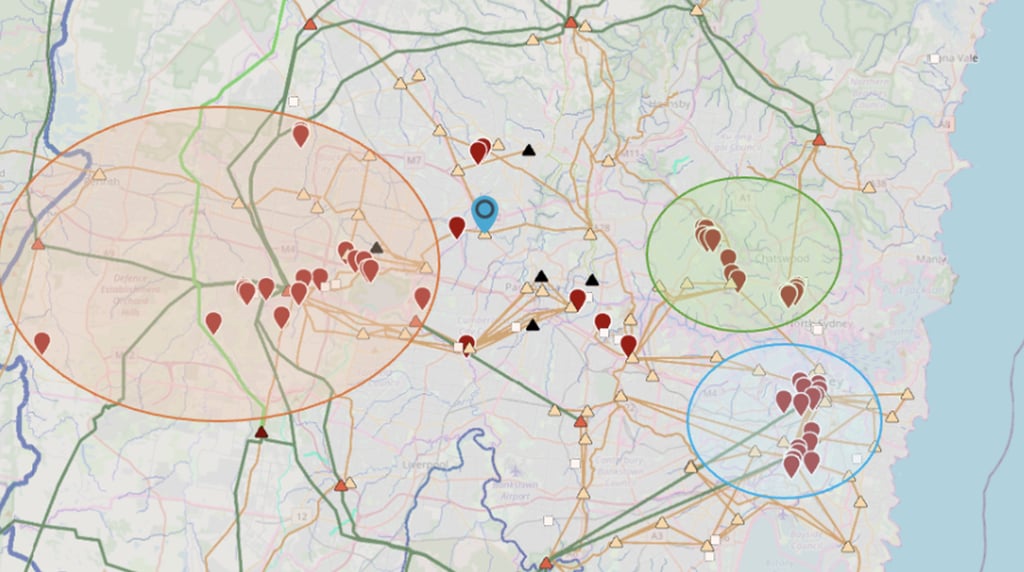
Partnership with Lane Cove community
This subject is delivered in partnership with Lane Cove Council who are experiencing data centre expansion in their local community. This collaboration gives undergraduate students exposure to a real-world decision making environment, and the opportunity to engage in a dialogue with Lane Cove Council staff about their original research findings on this pressing issue.
“Working in a transdisciplinary subject lets you collaborate with people from different backgrounds and tackle problems you wouldn’t usually see in your core degree,” says Emilia. “Partnering with real organisations, like local councils, makes it meaningful, and you produce work you’re proud to put on your CV.”
The subject culminates in a showcase of creative research outputs ranging from short films and maps, to policy proposals and speculative interventions presented back to the community, government and industry partners who have engaged with students throughout the semester.
For Chris Pelcz, Coordinator Strategic Planning at Lane Cove Council, the partnership and showcase presentations offered a chance to hear new perspectives on an emerging, and constantly changing, area of community planning.
We’re always interested in different ideas and different viewpoints, especially from our own residents and these students as emerging professionals,” he says. “The students in this subject presented really innovative ways of communicating complex issues.
The student's field research particularly stood out to partners, grounding their final proposal back to Lane Cove Council staff in a compelling lived-experience narrative.
“Going out on site and seeing what was happening in real time - that was a highlight,” Pelcz says. “The final presentations were incredibly well done, and I’ll be sharing a lot of the students’ insights back to our wider Council team.”
As Australia continues to position itself as a renewable-energy AI hub, UTS subjects like Pathways to Societal Transitions demonstrate the value of embedding education within public challenges by building graduate capability while also contributing meaningful insight to partners.
Written by Francine Crimmins
Program and Partnerships Manager