


- Posted on 5 May 2026
- 2-minute read
Right now, many of these cases claiming unfair treatment are still pending. But the rulings could have big financial implications for governments around the world.
The Chinese-owned firm that operates the Port of Darwin isn’t happy about the federal government’s push to return it to an Australian owner. Now, the situation is escalating, with the stage set for an international legal showdown.
The Albanese government has been in talks with Landbridge Group, whose parent company is headquartered in Shandong province, China, to return the port to an Australian owner, following an election promise.
But in late April, Ye Cheng, the Chinese billionaire who founded Landbridge, initiated proceedings against Australia at a World Bank tribunal, the International Centre for Settlement of Investment Disputes. The government has said it will defend the claim.
This case may take years to resolve. But it’s not the only example of a Chinese company taking on a national government, claiming to be unfairly excluded based on national security or other concerns.
Right now, many of these cases are still pending. But these rulings could have major financial implications if they provide a route for Chinese firms to demand compensation from governments for any losses caused by political decisions.
How we got here
Back in 2015, Landbridge secured a 99-year lease to operate the port from the Northern Territory government, in a deal worth A$506 million.
The decision was not opposed at the time by the Turnbull federal government, although US President Barack Obama raised concerns, with US marines on rotation through the port.
Other groups also raised concerns about leasing the strategically important port to a Chinese firm. In the lead-up to the last federal election, both Labor and the Coalition committed to returning the port to an Australian owner if elected.
In a statement on the new proceedings, Landbridge said the move to return the port to an Australian owner was “discriminatory”. The company said it was “inconsistent with Australia’s obligations” under a major bilateral trade pact, the China-Australia Free Trade Agreement.
In a statement, the federal minister for transport and infrastructure, Catherine King, said the government was “disappointed” by the decision to lodge a case. King said the government has been in “good faith discussions” to reach a “mutually acceptable deal” with Landbridge, and intended to continue these discussions.
An international investment umpire
The International Centre for Settlement of Investment Disputes was established in 1966.
Headquartered in Washington, this body exists to settle disputes between international investors and nation-states under bilateral investment treaties. This includes the China-Australia Free Trade Agreement at the centre of this case.
The centre provides an independent arbitration panel for each dispute, not including the two countries involved.
The panel ultimately decides whether there has been unfair treatment. If so, it rules on whether a government’s proposed action should be halted or reversed, or if a company deserves compensation.
Pending cases
Since 2021, 11 cases have been brought by Chinese companies against different governments around the world. Eight of these are pending.
Many of these cases centre on purely economic claims of being treated unfairly. For example, in one case, a Chinese-owned lithium company is seeking compensation following the Mexican government’s decision to nationalise its lithium mining industry and expropriate the company’s planned mine in Mexico.
But others, like the Landbridge case, centre on claims a government has overreached by excluding a company based on national security concerns.
One of the most high-profile is a case launched by Huawei against the Swedish government in 2022. This came after Sweden banned Huawei and ZTE (another Chinese telecom company) from participating in the country’s 5G rollout, citing national security concerns.
Huawei is seeking compensation of US$569 million (about A$790 million) for the market losses it claims will result from this exclusion.
If the tribunal finds in favour of Huawei in this case, it could lead to further actions launched against countries (including Australia) where Huawei was banned. It could also impact other Chinese companies that have lost markets due to national security concerns.
The question of fairness
In its statement on the new proceedings, Landbridge said it had won the lease through a “fair, open and competitive process”.
It said the government’s own reviews did not find a national security risk.
Landbridge is likely to argue this means the government’s decision to exclude them is arbitrary. They are also likely to argue a forced sale would bring a lower price, and the government therefore owes the company compensation.
Compensation, if awarded, can include not just the current value of the port lease but also potential future earnings that have been forfeited due to a forced sale.
The rules-based order
The increase in Chinese companies using panels like the World Bank’s to resolve their disputes demonstrates their commitment to this international institution that was established with US and Australian support to enforce the rules-based international trading system.
These disputes may not prevent governments from making decisions based on national security. But they may cause them to think twice about the financial implications of those decisions.
Authored by

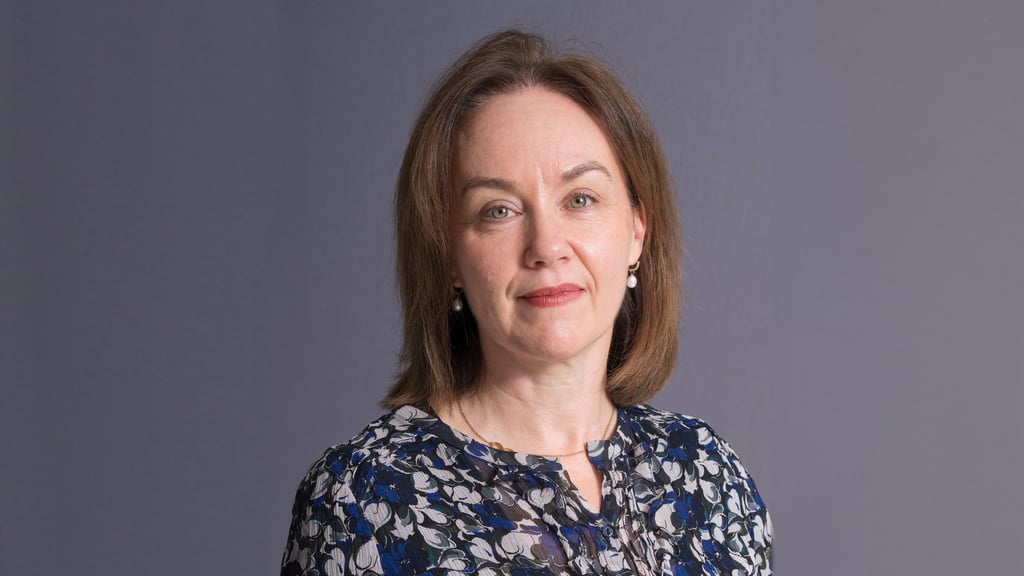
Associate Professor, Faculty of Law
The Conversation
This article is republished from The Conversation under a Creative Commons license.
News by topic
News
Professor Catherine Kelly appointed Dean of Law
UTS is delighted to welcome Professor Catherine Kelly as our new Dean of the Faculty of Law.

News
AI improves long-term flood forecasting
Through the power of advanced artificial intelligence, UTS research could help communities get warnings weeks ahead of floods.

News
What can free‑living Indian street dogs teach us about how to care for pet dogs?
A study of how Indian street dogs live raises questions about what it means to care for pet dogs.

News
La Bola Negra is about the Spanish Civil War – but is unmistakably about our present moment
Set across 1932, 1937 and 2017, new Spanish film La Bola Negra follows three gay men whose lives become connected across generations.
News
Professor Catherine Kelly appointed Dean of Law
UTS is delighted to welcome Professor Catherine Kelly as our new Dean of the Faculty of Law.
News
AI improves long-term flood forecasting
Through the power of advanced artificial intelligence, UTS research could help communities get warnings weeks ahead of floods.
News
What can free‑living Indian street dogs teach us about how to care for pet dogs?
A study of how Indian street dogs live raises questions about what it means to care for pet dogs.
News
La Bola Negra is about the Spanish Civil War – but is unmistakably about our present moment
Set across 1932, 1937 and 2017, new Spanish film La Bola Negra follows three gay men whose lives become connected across generations.