


- Posted on 21 Apr 2026
- 4-minute read
A new study has found that diet, gut health, cardiovascular conditions and surgical history are some of the strongest predictors of Alzheimer’s risk, which could lead to better screening and prevention through simple lifestyle changes.
Alzheimer's disease affects more than 55 million people worldwide, and that number is projected to nearly triple by 2050. It has long been thought of as something that happens in the brain: a slow accumulation of toxic proteins, a gradual loss of neurons, a tragedy that unfolds in the mind. But a new collaborative transdisciplinary study by the University of Technology Sydney and Massachusetts General Hospital/Harvard Medical School published in Alzheimer's & Dementia: Diagnosis, Assessment & Disease Monitoring is pointing somewhere else entirely: the gut.
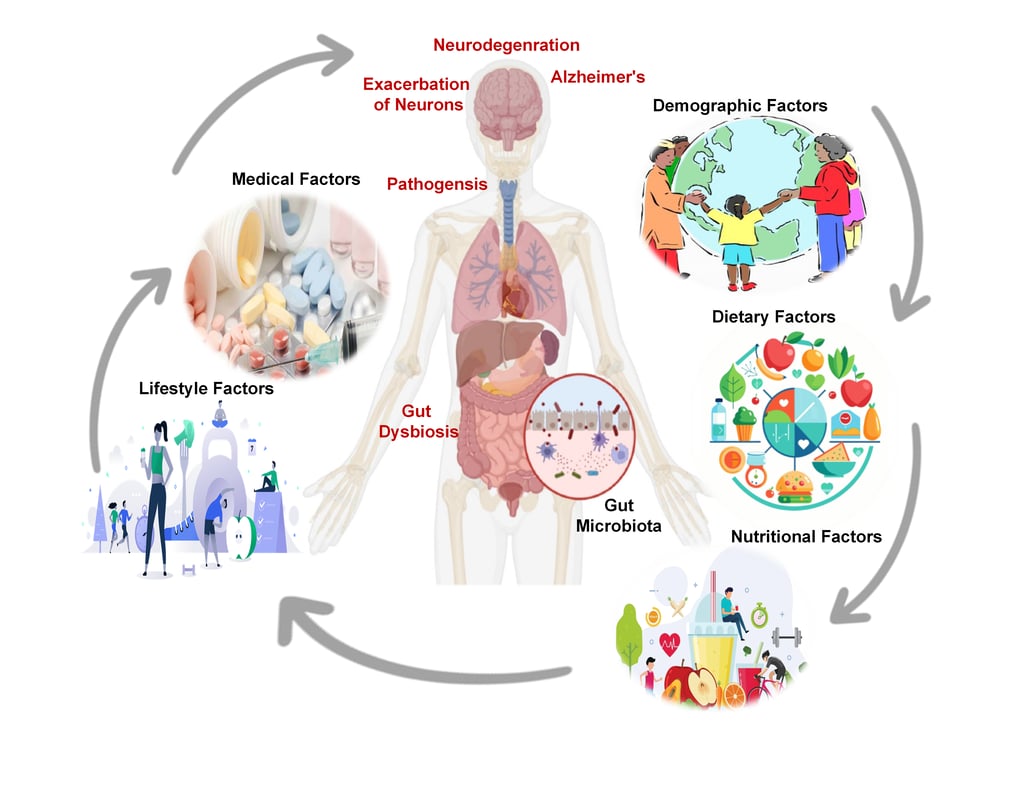
In one of the largest multi-modal machine learning studies of its kind using artificial intelligence (AI) trained on data from nearly 10,000 people, a team of UTS researchers analysed more than 120 everyday factors, including diet, medical history, gut bacteria, and lifestyle, to identify which of them are most strongly associated with Alzheimer's risk. The outcome could lead to an AI framework that could be deployed as a low-cost, community-level screening tool.
The appendix finding that changes the picture
“The most unexpected result in the study was perhaps also among the most revealing,” said Associate Professor Kaveh Khalilpour, co-lead of the project and a specialist in complex socio-technical systems at the UTS Visualisation Institute “People who had their appendix removed – one of the most routine surgical procedures in the world – showed substantially elevated Alzheimer's risk, emerging as one of the strongest contributors in the entire analysis.
“We speculate that it functions as a reservoir of beneficial gut bacteria. When it is removed, the microbiome loses a key recovery mechanism, its ability to replenish healthy microbial communities after illness, infection, or antibiotic use,” he said.
Over decades, that disruption may compound, leaving the gut progressively less able to protect the brain from the inflammatory signals linked to neurodegeneration.
“This finding is particularly compelling, as it indicates that long-term brain health may be shaped by earlier life experiences through their enduring effects on the gut microbiome,” said PhD researcher Tallat Jabeen.
“It reframes how we think about Alzheimer's risk, not as something that arrives with old age, but as something quietly accumulating across a lifetime.”
Diet as a driver, not just a signal
Dietary patterns also emerged as one of the strongest predictors of Alzheimer’s risk, highlighting the role of everyday habits in shaping brain health.
“Rather than individual nutrients, the study found that overall eating patterns were more informative,” said Khalilpour “Diets rich in plant protein, dairy, omega-3 fatty acids, and whole foods were consistently associated with lower Alzheimer's risk. Whereas diets dominated by processed food, refined sugars, and saturated fats pointed sharply in the other direction.
“Notably, overall dietary patterns outperformed individual nutrient measurements, meaning it is not a single vitamin or supplement that matters, but the cumulative, daily effect of how a person eats across years and decades.”
Lactose intake emerged as a particularly striking individual signal, with higher dairy consumption associated with lower predicted risk, that may reflect the gut microbiome's response to fermented and dairy-rich foods, as well as calcium's known neuroprotective properties.
“The implication is significant: if diet contributes to neurodegeneration, it can also, potentially, help prevent it.”, said Ali Zomorrodi, Assistant Professor at Massachusetts General Hospital & Harvard Medical School, and a collaborator of this ongoing project.
The gut-brain axis: where it all connects
To understand the biological mechanism behind these associations, the team analysed gut microbiome data from participants in the same cohort. What they found was a consistent and striking picture of microbial disruption in those with Alzheimer's disease.
“Beneficial bacteria responsible for producing short-chain fatty acids, compounds that maintain the gut's protective barrier and actively suppress neuroinflammation, were significantly depleted,” said Dr Faezeh Karimi, the project lead and a Senior Lecturer at UTS School of Computer Science.
“Microbial diversity was reduced. In their place, a more inflammatory microbial environment had taken hold, one that appears capable of sending damaging signals through the gut-brain axis directly to the brain.”
This is the biological thread that ties the study's findings together. Diet shapes the gut microbiome. The microbiome communicates continuously with the brain via the gut-brain axis. And when that microbial community is disrupted, whether by decades of poor diet, the loss of the appendix, or other medical events, the brain may lose one of its most important lines of defence against neurodegeneration.
Identifying individuals at elevated risk early creates a window for action: dietary change, microbiome-targeted therapy and better cardiovascular management.
A new way of thinking about prevention
What makes this research particularly significant is what it implies for prevention.
Karimi notes that unlike genetic risk factors, the drivers identified in the study are diet, gut health, cardiovascular conditions, and surgical history that exist on a timeline that can be intervened upon.
“Identifying individuals at elevated risk early, before any cognitive symptom has appeared, creates a window for action: dietary change, microbiome-targeted therapy, and better cardiovascular management. That window narrows sharply once Alzheimer's has already announced itself,” she said.
“To illustrate the real-world application: imagine an older adult who had their appendix removed following appendicitis, has eaten a low-dairy, high-sugar diet for much of their life and has no memory complaints today. When their routine questionnaire is entered into the AI model, these factors will show an elevated Alzheimer’s risk. Simple dietary shift, more plant protein, more fish, less sugar could begin to restore the gut balance their brain depends on.
“Further validation through long-term studies is the essential next step. But the direction of the evidence is clear: Alzheimer's may not begin in the brain at all. It may begin quietly and years earlier, in the gut shaped by the food we eat, the bacteria we carry, and the medical history we accumulate across a lifetime.”
Researchers

Associate Professor, Faculty of Engineering & Information Technology

Senior Lecturer, Faculty of Engineering & Information Technology

Graduate Research Student, Faculty of Engineering & Information Technology
News by topic

News
UTS response to NSO report
A statement from The University of Technology Sydney in response to findings of the National Student Ombudsman.

News
Independent review into March protest and event
A message from Vice-Chancellor Professor Andrew Parfitt.

News
UTS coral expert helps reveal global extinction crisis
A landmark international assessment finds nearly half of reef-building coral species are threatened.

News
UTS and 2SER tune into the future
Sydney community radio station 2SER marks 47 years on air and launches annual radiothon.
News
UTS response to NSO report
A statement from The University of Technology Sydney in response to findings of the National Student Ombudsman.
News
Independent review into March protest and event
A message from Vice-Chancellor Professor Andrew Parfitt.
News
UTS coral expert helps reveal global extinction crisis
A landmark international assessment finds nearly half of reef-building coral species are threatened.
News
UTS and 2SER tune into the future
Sydney community radio station 2SER marks 47 years on air and launches annual radiothon.