


- Posted on 16 Apr 2026
- 3-minute read
Set to become one of Australia's largest urban green roof developments, the Harbourside precinct in Sydney’s Darling Harbour will be the testbed for pioneering research on the performance of nature-based solutions in dense city environments.
Developer Mirvac has announced a two-year partnership with a University of Technology Sydney research team and RACE for 2030, the cooperative research centre for energy and carbon transformation, to study the environmental performance of the Harbourside precinct, a $2 billion mixed-use development being delivered as a joint venture with Mitsubishi Estate Co.
Harbourside will integrate 4,700 square metres of green roofs, alongside landscaped terraces and on-site renewable energy systems.
The study will evaluate how these features perform in a central precinct with very high energy demand, testing and demonstrating energy savings and climate benefits where they are needed most.
The findings will provide new empirical evidence to guide nature positive urban design and development, in Australia and around the world.
The UTS team, internationally recognised as leaders in the study of plant-based systems in the built environment, will use a comprehensive set of measurement techniques to capture how Harbourside's green infrastructure delivers combined environmental, social and economic benefits.
The research will be led by Associate Professor Fraser Torpy, Director of the Plants and Environmental Quality Group at UTS, together with engineer Dr Peter lrga and project lead Dr Stephen Matheson.
The research will create practical, transferable knowledge that supports better design of green, climate-resilient precincts across Australia's cities.
Associate Professor Torpy said cities around the world are turning to nature-based solutions such as green roofs, urban forests and green walls to address heat, flooding, energy demand and biodiversity loss, yet evidence about how these systems perform together at scale in dense city environments remains limited.
"With its prominent Sydney Harbour location, Harbourside provides the perfect testbed. It is a highly urbanised location, ideal for pioneering sustainability improvements. The research will create practical, transferable knowledge that supports better design of green, climate-resilient precincts across Australia's cities.
"No Australian study has brought all of this together at this scale before. We will be using:
- Thermal infrared imaging to measure heat-island effects
- Portable gas exchange systems to directly measure carbon fixation by plants on site
- Environmental DNA sampling to build a detailed picture of biodiversity and ecological change across the site
- Building energy modelling to understand how greenery affects building performance.”
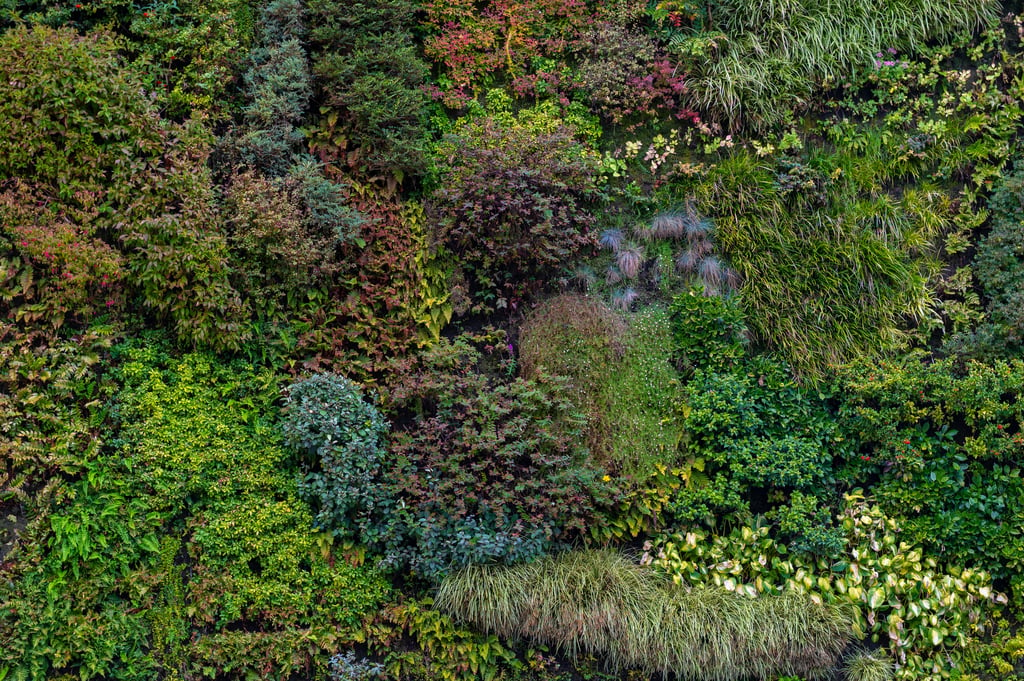
In line with their sustainability goals, Mirvac and MEC are targeting a 6 Star Green Star rating under the latest Green Star Buildings tool for the office component, with 5 Star ratings targeted across the retail and residential components.
Mirvac's CEO of Development, Stuart Penklis, said Harbourside represents the evolution of sustainable placemaking.
"By partnering with UTS and RACE for 2030, we're expanding the role of property development beyond simply delivering buildings. We're contributing to research that will shape the design of future precincts.
"Where the former Harbourside Shopping Centre featured minimal planting, our revitalisation of the precinct will deliver more than 115,000 native and endemic plants. This includes over 250 mature trees, carefully selected in consultation with First Nations advisers, along with a new waterfront garden as part of more than 10,000 square metres of public open space."
Dr Bill Lilley, CEO of RACE for 2030, said, "RACE for 2030 is leading pioneering research into net zero precincts. We are excited to partner with Mirvac and UTS to demonstrate how climate-resilient buildings and precincts can reduce environmental and economic impacts at scale."
When complete, the $2 billion Harbourside precinct will deliver approximately 260 luxury apartments across 48 levels, establishing a new residential landmark on Sydney's waterfront. It will also include 35,000 square metres of premium-grade commercial office and curated retail space.
Public realm enhancements will connect the precinct to the foreshore with walkable public spaces, gardens and direct waterfront access designed to support a lively, mixed-use destination. Construction is well progressed with staged completion of Harbourside expected from mid-2027.
News by topic

News
Professor Catherine Kelly appointed Dean of Law
UTS is delighted to welcome Professor Catherine Kelly as our new Dean of the Faculty of Law.
News
AI improves long-term flood forecasting
Through the power of advanced artificial intelligence, UTS research could help communities get warnings weeks ahead of floods.
News
What can free‑living Indian street dogs teach us about how to care for pet dogs?
A study of how Indian street dogs live raises questions about what it means to care for pet dogs.

News
La Bola Negra is about the Spanish Civil War – but is unmistakably about our present moment
Set across 1932, 1937 and 2017, new Spanish film La Bola Negra follows three gay men whose lives become connected across generations.
News
Professor Catherine Kelly appointed Dean of Law
UTS is delighted to welcome Professor Catherine Kelly as our new Dean of the Faculty of Law.
News
AI improves long-term flood forecasting
Through the power of advanced artificial intelligence, UTS research could help communities get warnings weeks ahead of floods.
News
What can free‑living Indian street dogs teach us about how to care for pet dogs?
A study of how Indian street dogs live raises questions about what it means to care for pet dogs.
News
La Bola Negra is about the Spanish Civil War – but is unmistakably about our present moment
Set across 1932, 1937 and 2017, new Spanish film La Bola Negra follows three gay men whose lives become connected across generations.