


- Posted on 28 Apr 2026
- 2-minute read
A new report launched today by NSW Minister for Skills, TAFE and Tertiary Education, Steve Whan, outlines in detail the jobs needed to support fashion sustainability in Australia into 2030 and beyond.
The report, WORK: Fashion + Sustainability Jobs of the Future was published as a blueprint for improving the sustainability of the industry by The Centre of Excellence (CoE) in Sustainable Fashion + Textiles – a collaboration between the University of Technology (UTS) and TAFE NSW. It brings together the perspectives of representatives in the local industry including brands, retailers, designers, and manufacturers, alongside academic expertise from two of Australia’s leading fashion schools.
The fashion industry is among the world’s most resource-intensive industries. It produces high levels of water pollution, waste, soil contamination and ecosystem degradation, and emits between 8–10% of global carbon emissions.
There’s never been a more important time for the industry to transition to a thriving and sustainable fashion sector. Central to the report is the identification of 20 roles, ranging from business and strategy, design and circularity, to technology and advanced manufacturing that will ensure sustainable practices in the Australian fashion industry. A few of these identified roles already exist, but their significance and reach will increase as the industry continues its sustainability transition.
“These roles provide insights to the skills needed to transition Australia's fashion sector to sustainability and highlight the broad and varied work of the industry,” said lead UTS researcher Dr Lisa Lake, Director of the CoE in Sustainable Fashion + Textiles.
A sustainable fashion future is within reach. Some leaders are already demonstrating these skills, which are highlighted in the report through case studies.
“The sector brings in $27 billion to the Australian economy and employs over 500,000 Australians, 77% of whom are women. Yet, the industry is facing a range of challenges including severe shortages of skilled workers.
“A sustainable fashion future is within reach,” said Dr Lake. “Some leaders are already demonstrating these skills, which are highlighted in the report through case studies.
“An example is Shirley Tam who is profiled in the report and works at UTS as a 3D Knitting Technical Officer, where she bridges research, industry and making. She is an expert in sustainable, production-viable seamless knitting, running experimental sprints that result in repeatable knit outcomes.”
Minister for Skills, TAFE and Tertiary Education, Steve Whan said:
The report shows how NSW can support real jobs in fashion by investing in the skills our workforce needs –combining sustainability, technology and practical training to future‑proof the industry.
“This is about preparing workers and businesses for the future – making sure NSW has the right skills to support sustainable jobs and a stronger fashion industry.”
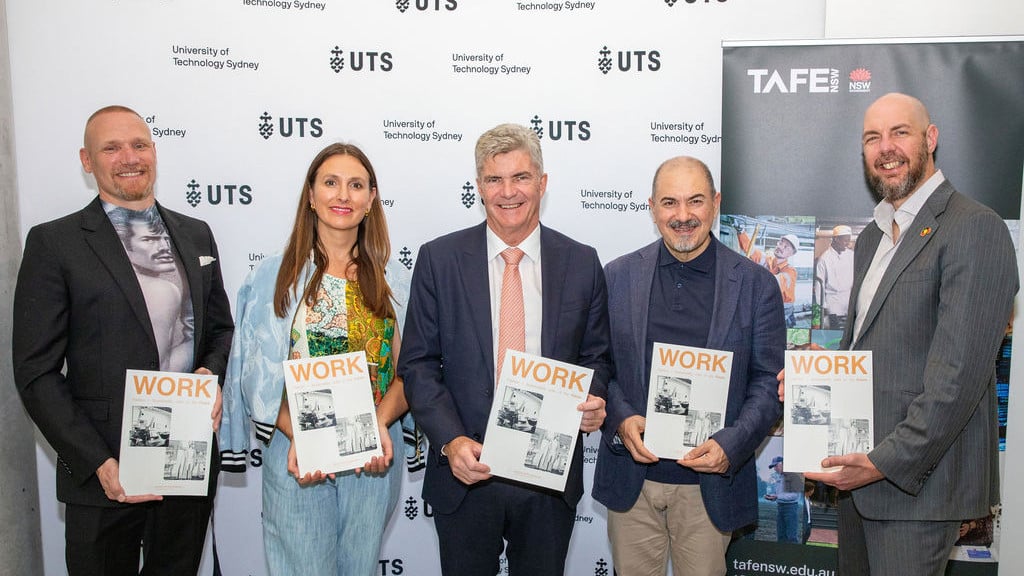
“The WORK report directly supports the NSW Government’s Fashion Sector Strategy, providing a clear workforce blueprint to help position our state as a leader in fashion education, research, and advanced manufacturing.”
TAFE NSW Managing Director, Chloe Read said the Centre of Excellence in Sustainable Fashion and Textiles shows what can be achieved when educators and industry work together to address skills needs.
“This report shows the power of partnership. By bringing together industry, TAFE NSW and UTS, we’re building the skills and pathways needed to support future jobs and help the fashion industry transition to a more sustainable, circular economy.”