


- Posted on 26 Mar 2026
- 6-minute read
Australia’s multi-day music festivals are under strain – not only from rising costs for organisers, but because high ticket prices and the added costs of travel, accommodation and food are pricing many people out.
Less than three weeks out from the event, Bluesfest 2026, one of Australia’s most iconic and long-running music festivals, was cancelled. It is a high-profile reminder that Australia’s multi-day music festivals are under pressure.
But the same forces squeezing organisers are also reshaping audiences: it’s not only ticket prices rising, but the ‘total cost’ of attendance – travel, accommodation including camping, food and drink, and time off work – which is quietly pricing many people out.
The cost of showing up
Music is deeply valued in Australia, and live events are a major source of connection and wellbeing. Creative Australia’s Listening In 2025 research found that for 62% of Australians, music is “really important”, and almost half attended a live music event in the past year. It also reports that cost has become the primary barrier to attendance.
Among music-engaged respondents, 94% said the cost of living is affecting their ability to buy tickets, 61% said they had missed an event they wanted to attend because they couldn't afford the ticket, and 37% said that other costs – transport, accommodation, parking, food and drink – were the barrier.
What Bluesfest’s cancellation reveals
In announcing the 2026 Bluesfest cancellation, organisers pointed to “rising production, logistics, insurance and touring costs, combined with a challenging environment for major live events” alongside reports of softer ticket demand. That combination is increasingly common across the sector.
Festivals rely on early ticket sales to manage huge upfront costs, while audiences facing cost-of-living pressure are less able, and less willing, to commit months in advance. Creative Australia’s Listening In report also found that ticket-purchasing habits are shifting, with financial pressures driving audiences to delay purchases until closer to the event.
But it’s not just the ticket price. When the full cost of attending is uncertain, people hesitate to commit early – and early commitment is exactly what festivals depend on to manage cash flow and absorb the risks of their substantial upfront costs.
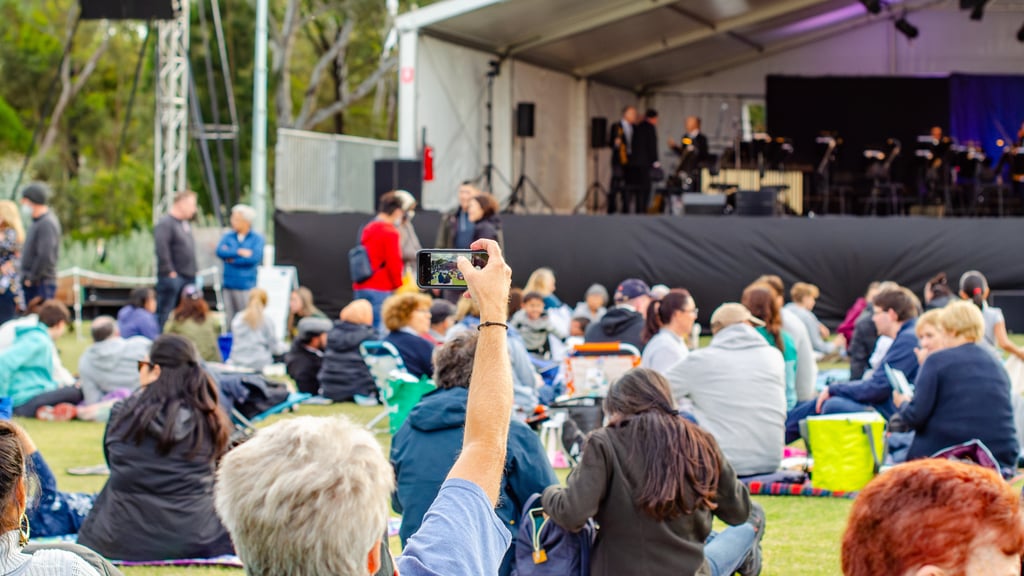
To understand how these pressures play out for audiences, we reviewed public information from 18 multi-day music festivals held in NSW in 2025, examining what festivals communicate about the conditions that shape attendance: pricing structures and concession options, the availability of payment plans, transport and parking, camping and accommodation models, and on-site rules that shape spending.
The ‘total cost’ of a festival: Where affordability is won or lost
1) Ticketing: Flexibility can matter as much as price
Most festivals we reviewed offered some form of discounted pricing, typically for youth, students, or children. But concessions for people on the tightest budgets were rare. Pensioner or senior discounts appeared at just two of the 18 festivals we reviewed: Tamworth Country Music Festival and Wingham Music Festival, both of which reflect strong community and regional roots. Unemployed concessions were offered by exactly one festival, Strawberry Fields, which was also the only festival to extend discounts to CALD (Culturally and Linguistically Diverse) and First Nations communities, and one of the few that offered local resident pricing.
Payment plans and other forms of financial flexibility were also inconsistently communicated. For many would-be attendees, the barrier isn’t only the total amount, but whether they can pay tickets upfront and lock in a lower price early enough. For around a third of festivals in our review, it simply wasn't possible to tell whether a payment plan existed at all.
2) Getting there: Transport and parking can be dealbreakers
Multi-day festivals are frequently held in regional areas, and transport access shapes who can realistically attend. In our review, transport support was inconsistent: some events offered off-site parking and shuttle services, while many assumed attendees would arrive by private vehicle. When public transport isn’t viable and shuttles are limited or not free, affordability becomes inseparable from access to a car and the skill and confidence to drive – an often overlooked factor in who can participate.
3) Where you sleep: Camping models and accommodation scarcity
Accommodation is where costs can rise quickly. Some festivals include camping in the ticket price, while others require separate camping passes or site fees that add substantially to the overall bill. For festivals without on-site camping, the burden shifts to the surrounding accommodation market, which in smaller regional towns is often scarce and expensive. Either way, for multi-day festivals these costs accumulate. The longer the festival, the wider the gap between what the ticket price suggests and what attending actually costs.
4) Once inside: BYO policies
Finally, BYO policies which significantly affect how much people spend on food and drink over multiple days, can turn a manageable trip into an expensive one. Most festivals in our sample permitted BYO food at both festival and campsite areas, making a genuine difference to costs over multiple days. Drink policies were more restrictive: while most prohibited BYO alcohol at festival sites, several also limited non-alcoholic drinks, effectively pushing attendees toward on-site vendors at higher prices. Although rarely framed as accessibility measures, these policies shape the real cost of attendance, just as much as the ticket itself.

Affordability isn’t fixed: Small design choices can widen participation
Rising costs are undeniable, but affordability is shaped by the decisions organisers make about pricing, flexibility, transport, and what people can bring through the gate. Some festivals are making these choices deliberately. Strawberry Fields, for instance, is the only festival in our review to offer concessions specifically for unemployed attendees.
Other approaches that can make a real difference include transparent all-in pricing so essential add-ons aren’t surprises; clearly communicated payment plans that allow people to spread costs rather than commit a lump sum upfront; concessional ticket allocations for people experiencing financial hardship, with numbers capped to remain manageable for organisers; low-cost camping options; transport support where possible; and on-site rules, including BYO policies, that give attendees more control over what they spend once they arrive.
Volunteering programs can also reduce costs, but they are not a sufficient solution on their own: they typically cover only the ticket, leaving participants to fund transport, accommodation, and food independently. For those facing the greatest financial hardship, this may still put attendance out of reach.
Public money, public interest
Many of the music festivals in our review have received public funding through arts grants, regional development programs, tourism bodies, or council support. Bluesfest itself received public funding over many years. When the cancellation came, the questions from the community and their representatives were immediate: where did the money go, what did it achieve, and who benefited?
They are fair questions. And they point to a principle that, surprisingly, is rarely applied or monitored: when festivals receive public support on the basis of the cultural and community value they deliver, there is a legitimate public interest in who actually gets to experience that value.
That does not mean festivals can or should solve structural inequality on their own. Organisers are navigating genuine financial constraints, and no single intervention will make festivals universally affordable. But minimum economic accessibility expectations – transparency about the real total cost of attendance, concessions for people on the tightest budgets, clearly communicated volunteering pathways that meaningfully reduce costs beyond the tickets, and some acknowledgement of the transport barrier – are not incompatible with financial viability.
These are decisions organisers can make, and where public money is involved, it is entirely reasonable to ask that they do. Otherwise, multi-day festivals may survive on public funding whilst simultaneously narrowing their audience to those with the resources to absorb uncertainty – quietly reshaping who gets to belong in Australia's shared cultural life.
Authored by

Associate Dean (Education), Business School

Senior Lecturer, Business School

Senior Lecturer, Business School
News by topic
News
Research puts resilient infrastructure on solid ground
Groundbreaking $24 million research centre will develop sustainable technologies that stabilise the foundations underpinning major infrastructure.

News
UTS researchers develop new AI tool to better predict stroke risk
New AI model analyses DNA to identify genetic risk factors for stroke, paving the way for more personalised prevention and treatment.

News
National First Nations College update
UTS has been working towards building a National First Nations College, an Indigenous-designed, culturally responsive residential community where students can...
News
After neoliberalism – what comes next?
A Trump-led post-neoliberal world order, dominated by four or five powerful nations, could dismantle decades of international cooperation in favour of...
News
Research puts resilient infrastructure on solid ground
Groundbreaking $24 million research centre will develop sustainable technologies that stabilise the foundations underpinning major infrastructure.
News
UTS researchers develop new AI tool to better predict stroke risk
New AI model analyses DNA to identify genetic risk factors for stroke, paving the way for more personalised prevention and treatment.
News
National First Nations College update
UTS has been working towards building a National First Nations College, an Indigenous-designed, culturally responsive residential community where students can...
News
After neoliberalism – what comes next?
A Trump-led post-neoliberal world order, dominated by four or five powerful nations, could dismantle decades of international cooperation in favour of...