


- Posted on 11 Mar 2026
- 3 min read
UTS and Cisco have launched Central Sydney (ICS), marking an important milestone and further expansion of the Innovation Central Network, a major pillar of the National Industry Innovation Network (NIIN).
The NIIN is playing a vital role to accelerate the adoption of digital technology and to strengthen Australia’s national capability to translate artificial intelligence from research into real world application.
ICS anchors the role of UTS in the NIIN alongside other leading Australian universities; by improving the collaboration with industry and government, it is also vital to apply innovation at scale to Australia's primary opportunities and challenges.
Situated at the heart of the NSW Government's Tech Central, ICS provides a platform for industry and government to explore emerging technologies through innovation projects, engage with world-leading experts, access state-of-the-art facilities, and contribute to the development of the next-generation of workforce.

The partnership between Cisco and UTS builds on UTS’s established industry embedded innovation ecosystem and Cisco’s global leadership in digital infrastructure and AI. Through ICS, partners will collaborate on applied research, industry driven projects and work-integrated learning, with a focus on UTS priority areas of AI, cybersecurity, sustainable engineering and connectivity.
Two new roles at UTS have been established through the alliance. The Cisco Research Chair for Sustainable Engineering, Associate Professor Ilaria Barletta, transforms cutting‑edge research into practical, scalable solutions that advance environmental, social and economic sustainability. The NIIN Industry Alumni, Professor Andrew McLean, focuses on connecting university and industry, advancing collaborations with industry and government, offering strategic guidance to NIIN programs, and supporting academics and students.
Cisco Australia’s Regional Manager for NSW Public Sector, Georgia Jenkins said “The opening of Innovation Central Sydney is an important moment in evolving the digital agenda in NSW, bringing together industry and academia to solve real-world challenges.”
Having UTS join the National Industry Innovation Network is a key milestone in accelerating digitisation to promote robust communities in NSW, especially as technologies like AI become increasingly critical to unlocking a resilient future.
UTS Vice Chancellor and President Professor Andrew Parfitt said Innovation Central Sydney positions Australia to move beyond experimentation and into largescale, responsible AI adoption.
“Innovation Central Sydney brings together the people, infrastructure and partnerships needed to translate digital innovation into real world impact. As the latest node of the National Industry Innovation Network, it strengthens Australia’s capacity to adopt AI safely, build skills at scale and deliver outcomes that benefit industry, government and the community,” Professor Parfitt said.
Innovation Central Sydney will serve as a national platform for collaboration, supporting the development of a project pipeline following the launch and positioning Australia to lead in responsible, industry embedded AI innovation.
News by topic
News
Who gets to prosper? New podcast takes on power, inequality and democracy
A new podcast from the Ultimo Institute brings leading thinkers and writers from around the world into conversation about the forces shaping our economies,...

News
Why Jared Diamond’s leadership book on prophets, coaches and kings is flawed but fun
Like Guns, Germs and Steel, this book is ambitious, provocative and imperfect. It’s also difficult to put down.

News
World-first successful wild release of endangered broad-headed snake
A world-first reintroduction program is giving one of Australia’s most endangered snakes hope for survival.
News
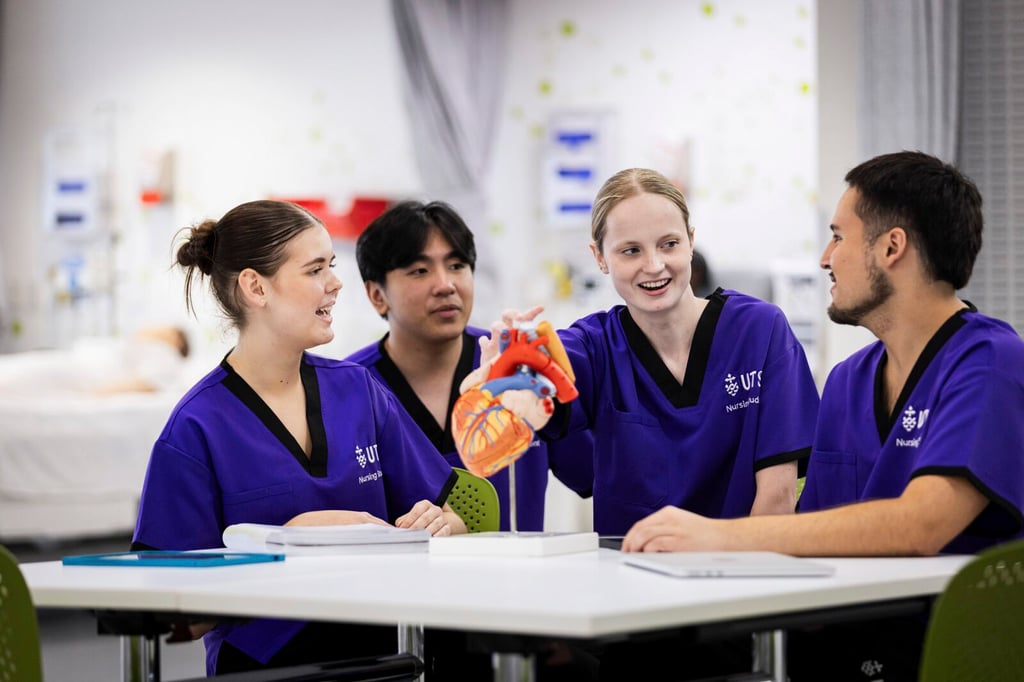
UTS graduates outperform nationally in landing – and keeping – full-time work
Employment rates have climbed for three years running, with law and nursing graduates reaching 100 per cent for employment outcomes.
News
Who gets to prosper? New podcast takes on power, inequality and democracy
A new podcast from the Ultimo Institute brings leading thinkers and writers from around the world into conversation about the forces shaping our economies,...
News
Why Jared Diamond’s leadership book on prophets, coaches and kings is flawed but fun
Like Guns, Germs and Steel, this book is ambitious, provocative and imperfect. It’s also difficult to put down.
News
World-first successful wild release of endangered broad-headed snake
A world-first reintroduction program is giving one of Australia’s most endangered snakes hope for survival.
News
UTS graduates outperform nationally in landing – and keeping – full-time work
Employment rates have climbed for three years running, with law and nursing graduates reaching 100 per cent for employment outcomes.