


- Posted on 17 Apr 2025
- 2-minute read
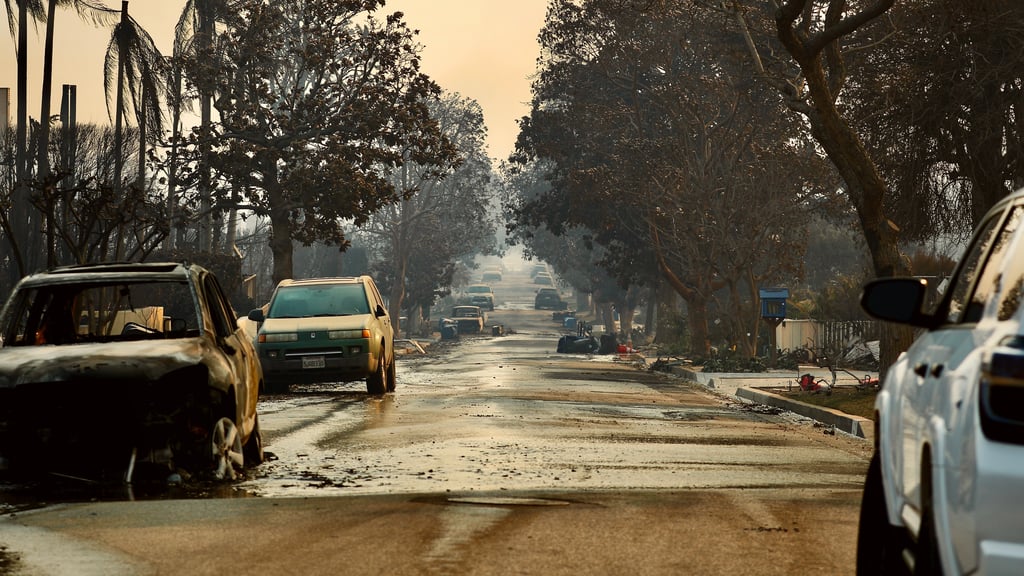
The consequences of wildfires in or near urban areas go beyond the damage to buildings and ecosystems, to the threat of contamination of drinking water according to water quality and treatment experts from the University of Technology Sydney (UTS).
In a research letter published in the journal Science researchers from the UTS Centre for Technology in Water and Wastewater write that wildfires can contaminate drinking water distribution systems, posing substantial and escalating public health risks, with nearly half a billion people globally having experienced wildfires within one kilometre of their homes over the past two decades.
They write that, “Authorities in areas of recent wildfires, such as the 2025 Los Angeles fires, should ensure that drinking water is safe by monitoring and mitigating contamination in water distribution systems.
“Distribution systems transport drinking water from treatment plants to consumers. Water must meet safety standards before leaving a treatment plant, but contamination can occur during transport.
“Over the past decade, more than 50 volatile organic compounds (VOCs), including carcinogens such as benzene, have been detected in water distribution systems after wildfires.
Climate change and urbanisation are intensifying wildfire risks, exacerbating the threat of drinking water system contamination.
“These VOCs likely enter the distribution systems through plastic pipes that have suffered thermal degradation or the infiltration of smoke into depressurised pipes.
“Once inside, VOCs can spread through connected pipes, infiltrate water distribution materials and persist for months, contaminating water supplied to consumers.”
Letter first author, Chancellor's Research Fellow Dr Xuan Li, said such contaminants posed carcinogenic risks to consumers.
“For example, 11 months after the 2017 Santa Rosa wildfire in northern California, 40,000 micrograms per litre of benzene remained in drinking water from distribution systems.
“Even short-term exposure to 26 micrograms per litre of benzene harms children, and long-term exposure increases leukemia risk.
“These contaminants are rarely monitored in water distribution systems, particularly at the consumer end, and communities often remain unaware of these risks.”
The letter's corresponding author Professor Qilin Wang also warned that climate change and urbanisation are intensifying wildfire risks, exacerbating the threat of drinking water system contamination.
“Wildfire-related VOC levels often correlate with the scale of building destruction, underscoring the growing threat that future wildfires pose to water safety, especially in areas such as Los Angeles.
“To address wildfire-driven drinking water contamination, governments must establish clear guidelines, identify wildfire-related VOCs in drinking water distribution systems, set safety limits and enforce robust monitoring and testing protocols.”
The research letter “Wildfires jeopardize drinking water safety” by Xuan Li, Qizi Fu and Qilin Wang is published in Vol 388, Issue 6743 of the journal Science.
News by topic
News
Who gets to prosper? New podcast takes on power, inequality and democracy
A new podcast from the Ultimo Institute brings leading thinkers and writers from around the world into conversation about the forces shaping our economies,...

News
Why Jared Diamond’s leadership book on prophets, coaches and kings is flawed but fun
Like Guns, Germs and Steel, this book is ambitious, provocative and imperfect. It’s also difficult to put down.

News
World-first successful wild release of endangered broad-headed snake
A world-first reintroduction program is giving one of Australia’s most endangered snakes hope for survival.

News
UTS graduates outperform nationally in landing – and keeping – full-time work
Employment rates have climbed for three years running, with law and nursing graduates reaching 100 per cent for employment outcomes.
News
Who gets to prosper? New podcast takes on power, inequality and democracy
A new podcast from the Ultimo Institute brings leading thinkers and writers from around the world into conversation about the forces shaping our economies,...
News
Why Jared Diamond’s leadership book on prophets, coaches and kings is flawed but fun
Like Guns, Germs and Steel, this book is ambitious, provocative and imperfect. It’s also difficult to put down.
News
World-first successful wild release of endangered broad-headed snake
A world-first reintroduction program is giving one of Australia’s most endangered snakes hope for survival.
News
UTS graduates outperform nationally in landing – and keeping – full-time work
Employment rates have climbed for three years running, with law and nursing graduates reaching 100 per cent for employment outcomes.