

- Posted on 31 Oct 2024
- 108-minute read
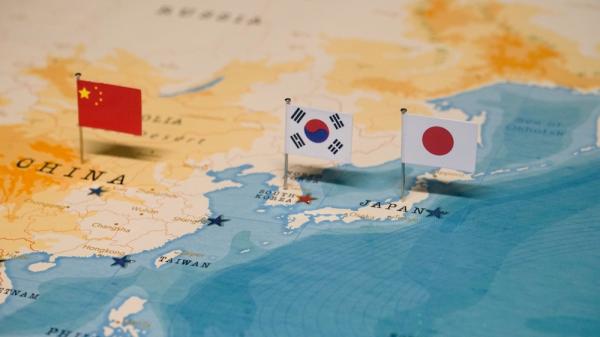
hyotographics / Shutterstock

Corey Lee Bell, Project and Research Officer, Australia-China Relations Institute, University of Technology Sydney

Elena Collinson, Manager, Research Analysis, Australia-China Relations Institute, University of Technology Sydney
Executive Summary
2023 saw the beginning of a marked improvement in Japan-South Korea relations, which for decades had been marred by historical animosities. This upward trajectory continued throughout 2024.
Coinciding with the early stages of the rapprochement, both nations’ relationships with the People’s Republic of China (PRC) deteriorated on several fronts.
Soon after, the two nations moved closer to the US, reinvigorating a trilateral partnership focused on closer security and economic cooperation.
This report finds that:
- The recent rapprochement between Japan and South Korea was driven not only by shared security concerns, but also by challenges posed by the PRC’s technological rise to the two nations’ strategically weighted advanced manufacturing sectors.
- This followed the PRC shifting from a largely complementary trade partner to both nations, to a competitive threat that overshadowed the two nations’ own longstanding trade rivalries, particularly in advanced technology sectors.
- It also followed growing economic security fears, fuelled in part by Beijing’s use of economic coercion and by the PRC’s supply chain dominance in critical minerals essential to the two nations’ semiconductor and electric vehicle (EV) industries.
- In response to these concerns, a focus of Japan-South Korea bilateral meetings has been cooperation to diversify supply chains and strengthen cutting-edge technology industries (i.e., tech industry ‘external balancing’).
- The alignment of this agenda with Washington’s tech war with Beijing helped strengthen the Japan-South Korea-US trilateral partnership, through which Japan and South Korea have gained access to US industry subsidies and supply chains (i.e., tech industry ‘bandwagoning’).
- Japan and South Korea’s tech industry cooperation could provide new opportunities for exports, investment and technology transfer for Australia’s critical minerals sector, potentially facilitating a downstream shift in tech industry value chains and buffering the impact of US-PRC tech wars.
The gravity of the trilateral partnership in Washington makes Japan and South Korea key partners for advancing Australia’s economic interests and perspectives on regional security to Washington. These include:
- Promoting friendshoring and subsidy/technology sharing over protectionism.
- Protecting US allies’ economic interests in PRC trade.
- Advocating for targeted trade restrictions over comprehensive tech/trade decoupling policies targeting the PRC.- A widening technological sovereignty drive means the Tokyo-Seoul rapprochement could be a precursor to new forms of interplay between industry, security and foreign policy – for which Canberra should develop preemptive diplomatic and industry policy measures.
1. Introduction
2023 saw the beginning of a marked improvement in Japan-South Korea relations, which for decades had been marred by historical animosities. This upward trajectory continued throughout 2024.
After a 12-year freeze, ‘shuttle diplomacy’ – regular mutual visits by the two nations’ leaders – resumed in 2023. Japanese Prime Minister Kishida Fumio and South Korean President Yook Suk Yeol’s summit in Seoul in September 2024, their last meeting before Prime Minister Kishida left office, marked the 12th time the two leaders met in their official capacities.1
Coinciding with the early stages of the rapprochement, both nations’ relationships with the People’s Republic of China (PRC) deteriorated on several fronts. Ties remain relatively cool despite the resumption, after a four-and-a-half year hiatus, of the PRC, Japan and South Korea annual trilateral summit in May 2024, which resulted in few substantive agreements.2
These concurrent developments have generally been attributed to a deepening strategic alignment between Japan and South Korea built around shared security concerns about the PRC, as well as its ally North Korea and ‘no limits’ partner Russia – factors that have also been attributed to the two nations’ subsequent strengthening of their trilateral partnership with the US.3
This was indeed a significant driving force. Both nations in the lead-up to and the early stages of the Japan-South Korea rapprochement expressed similar concerns about Beijing’s hostility towards Taiwan, its muted response to
North Korean missile launches, its participation in joint Sino-Russian air force incursions into their Air Defence Identification Zones (ADIZ) and its aggressive pursuit of territorial claims in the South and East China Seas.4
At the same time, concerns were also rising in Japan and South Korea about the economic dimension of the PRC’s rise. This had seen it in recent years rapidly shift from being a largely complementary trade partner to an increasingly potent competitor; a transformation that was beginning to overshadow the democratic nations’ own longstanding trade rivalries.
The PRC’s rapid technological rise has seen it approach, and in some areas surpass, the advanced industrial strengths of its neighbours. In its ascent, moreover, Beijing has brought to bear an asymmetrical sum of fiscal, regulatory, demographic and strategic resources to dominate, in particular, emerging high-tech industries that are pivotal components of Japan and South Korea’s own economic plans and national development visions. This could be seen as posing another, non-traditional kind of threat from the PRC; one that jeopardises both nations’ economic strategies and modernist self-identities as advanced industrial powerhouses.5
These concerns are also a key component of Japan and South Korea’s understanding of an evolving economic-security nexus. The two nations’ economies are among the world’s most dependent on the PRC. Both nations have in recent years also been the target of economic coercion from Beijing,6 with South Korea targeted with a concerted campaign of economic retaliation in the wake of Seoul’s decision in 2016 to allow the installation of US Terminal High Altitude Area Defence (THAAD) anti-missile systems in South Korea,7 while Japan has been periodically subjected to coercive measures in response to maritime and other disputes.8 PRC critical mineral export restrictions, intellectual property theft by the PRC, supply chain disruptions caused by COVID-19 and the Russia-Ukraine War, and US-led tech industry sanctions targeting the PRC and Russia, have further shifted Japan and South Korea’s assessment of the risk factor of relying excessively on PRC supply chains and export markets.9 At the same time, there has been a growing awareness that foreign relations objectives traditionally pursued through kinetic warfare are increasingly being linked to potent forms of systemic power associated with asymmetric sovereign capacities and supply chain dominance, in the technologies driving the advancement of economies.
Based on these factors, this report discusses how the PRC’s shift from a once complementary trade partner to a prime competitor to Japan and South Korea’s technology sectors has played a key role in motivating and shaping the two nations’ rapprochement and increased mutual enthusiasm for participation in the US-driven trilateral partnership. It shows, in particular, how both of these partnerships could in part be construed as coordinated economic responses to asymmetric threats to Japan and South Korea’s status as technology industry powerhouses, focusing on two key technology sectors that will drive the economies of the future: (1) electric vehicles (EVs); and (2) semiconductors.
This report is structured as follows:
Section 2 overviews key developments in the rapprochement and briefly explores the significance of a ‘China factor’ as a motivator for closer Japan-South Korea ties.
Section 3 explores the origin and evolution of ‘complementarity vs competition’ as a core paradigm for Tokyo and Seoul’s appraisal of trade relations with the PRC and how the Japan-South Korea rapprochement coincided with growing concerns in both countries about Beijing becoming a potent competitor in the advanced/high-tech manufacturing sector.
Section 4 discusses how the rise of the PRC’s EV sector posed a growing challenge to Japan and South Korea’s economically significant automotive industries.
Section 5 reviews how heavy state support for the PRC’s semiconductor sector and growing US-PRC trade tensions have become a source of latent threats to Japan and South Korea’s strategically weighted semiconductor industries.
Section 6 discusses how these concerns resonated with the focus of the Japan-South Korea rapprochement on technology industry cooperation (i.e., high industry tech ‘external balancing’), particularly in the areas of EV technologies and semiconductors.
Section 7 explores how these factors facilitated and shaped Japan and South Korea’s increased engagement in the Washington-led US-Japan- South Korea trilateral partnership.
Section 8 examines the sustainability and potential ramifications of the rapprochement and trilateral partnership’s tech industry agenda, focusing on implications for Australia’s critical minerals sector and proposed policy responses.
2. Tokyo and Seoul’s rapprochement and the PRC factor
On September 6-7 2024, outgoing Japanese Prime Minister Kishida Fumio visited Seoul for a summit with South Korean President Yoon Suk Yeol.
The visit was Kishida’s penultimate overseas trip as Japan’s prime minister,10 reflecting the weight Tokyo has placed on improving ties with Seoul, a relationship which had long been beset by territorial disputes and historical animosities.
During the summit, Prime Minister Kishida stated that ‘over the past two years we have succeeded in opening up a new chapter in Japan-ROK bilateral relations’.11 Kishida and Yoon called for the two nations to sustain the momentum behind the improvement in relations in the face of leadership changes in Japan and the US.12
Seoul has indicated that it aims to ‘continue the positive trend in Korea-Japan relations’13 and maintain ‘close’ communication and cooperation with Kishida’s replacement Ishiba Shigeru, who won leadership of the Japan’s ruling Liberal Democratic Party on September 27 2024 and is known for dovish views on Japan-South Korea ties. While, at the time of writing, discussions are continuing over who will assume power in the wake of an indecisive Japanese general election, South Korean officials and analysts have expressed the view that whatever the outcome, it is unlikely that bilateral relations will deteriorate significantly.14
Seoul and Tokyo had made mending ties, and advancing cooperation, a diplomatic priority since early 2023, after a rocky start between Kishida and Yoon in 2022.15
On March 1 2023, Yoon, in an address marking the 104th anniversary of the March 1 Independence Movement, stated that Japan had transformed from a ‘militaristic aggressor’ into a ‘partner’ that shared the same ‘universal values’.16
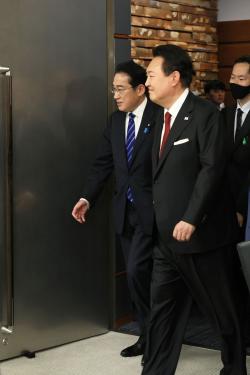
Japanese Prime Minister Kishida Fumio and South Korean President Yook Suk Yeol head to the Japan-South Korea summit plenary meeting at the prime ministerial office in Tokyo, Japan on March 16 2023 (Prime Minister’s Office of Japan)
On March 16 2023, he travelled to Tokyo for an 85-minute meeting with Kishida, marking the resumption of leader-level bilateral exchange between the nations following a 12-year suspension.17 Yoon spoke of a ‘new start’ in Korea- Japan relations,18 instructing his chief secretaries to immediately begin work on increasing security, economic and technological cooperation with Tokyo.19 Kishida said he hoped to ‘carve out a new era’ in the relationship.20 The Tokyo summit was soon followed by a reciprocal visit by Kishida to Seoul on May 7.21
The leaders met again on May 21 2023 on the sidelines of the Hiroshima G7 summit, with Kishida noting that this third meeting in two months was ‘a clear sign of the progress’ in the bilateral relationship.22 Another meeting took place on July 12 2023, on the sidelines of the NATO summit in Vilnius, where Kishida acknowledged Japan and South Korea’s shared efforts ‘to pave the way for a new era in the Japan-ROK bilateral relations’. He also ‘welcomed the progress of cooperation between the governments and the private sectors of both countries’.23 The two leaders also met on the sidelines of the G20 summit in New Delhi on September 1024 and on the sidelines of the APEC Leaders’ Week in San Francisco on November 16.25 In 2024, the two leaders participated in bilateral talks on at least four more occasions.26
Beginning March 2023, Japan and South Korea’s administrations also engaged in a flurry of activities to further strengthen ties, including working to re-establish regular ministerial and official exchange, particularly in the finance, foreign policy and defence portfolios,27 reinstating each other on their lists of preferential trade partners,28 resuming stalled talks on a currency swap arrangement,29 scheduling discussions on cooperation in semiconductor manufacturing30 and more.31
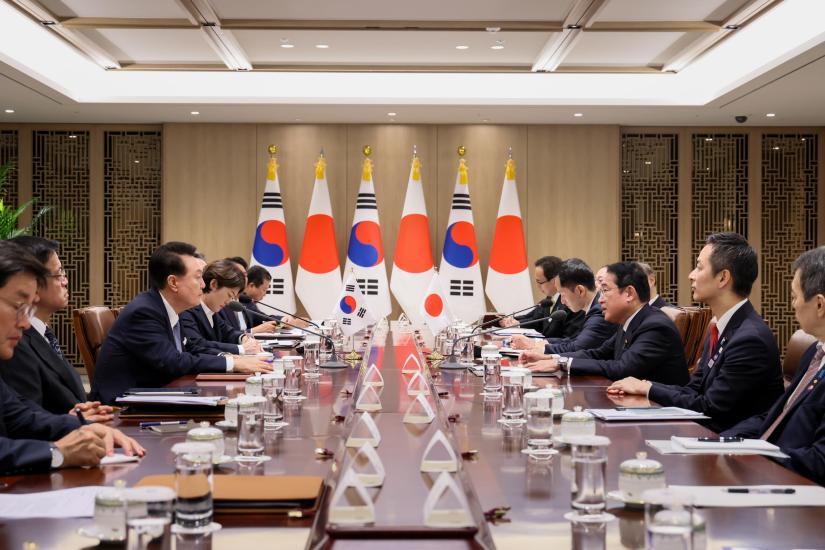
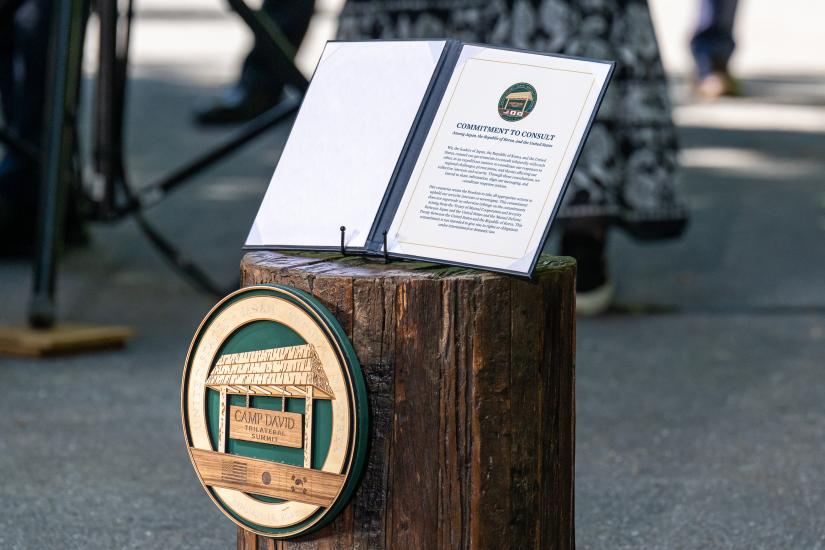
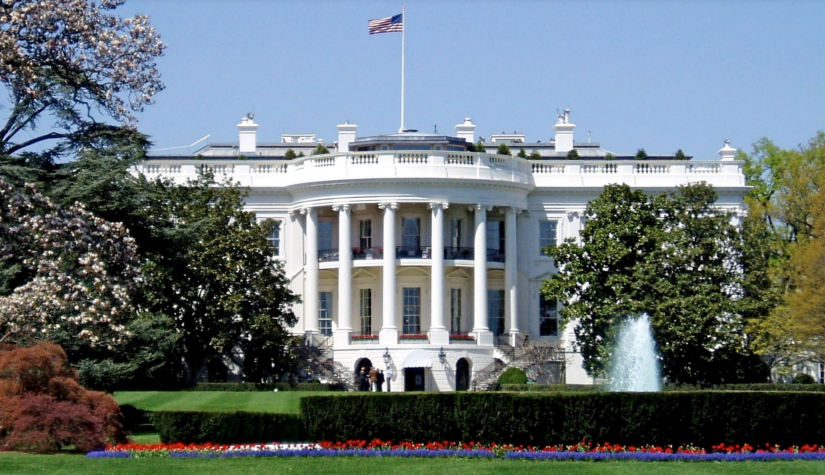
On the back of these developments, Kishida and Yoon joined US President Joe Biden at the US presidential retreat Camp David in Maryland on August 18 2023, to ‘inaugurate a new era of trilateral partnership’. This involved, among other initiatives, an agreement to consult on shared security challenges and expand cooperation on supply chain resilience.32 The three leaders had previously met for trilateral talks on two occasions in 2022,33 but Camp David represented the first- ever stand-alone trilateral summit, reflecting trilateral institutionalisation.34 The aim, US Ambassador to Japan Rahm Emanuel said, was to ensure a ‘new normal’ in trilateral relations.35
Shared security concerns have been prominently cited as the main propellant of the Japan-South Korea rapprochement and the reinvigorated Japan-South Korea-US trilateral partnership.
One key driver was the evolving threat posed by North Korea,36 which, on the back of a record number of weapons tests in 2022, entered 2023 with its leader Kim Jong Un calling for an ‘exponential’ expansion of its nuclear arsenal, followed by displays37 and tests38 of increasingly sophisticated weapons.
The second major driver was concerns about Beijing, which had become increasingly authoritarian at home and aggressive abroad.
Japan-PRC ties deteriorated after Kishida defied his ‘dovish’ pre-inauguration image with robust criticisms of Beijing.39 Against the backdrop of frequent incursions by the PRC into Japan’s Air Defence Identification Zone (ADIZ) and Exclusive Economic Zone (EEZ), Tokyo in late 2022 officially designated the PRC as an ‘unprecedented strategic challenge’ in an update to its National Security Strategy.40 Japan’s 2023 Defence White Paper reflected this change in stance, asserting that the PRC’s military build-up and activities had become a ‘serious concern’ and ‘the greatest strategic challenge’ facing the nation.41
Seoul, in the meantime, experienced increasing tensions with Beijing under Yoon’s presidency as it moved to strengthen ties with Washington, expressed an openness to increase US THAAD missile deployments and adopted a more vocal stance on the South China Sea and Taiwan.42 A diplomatic rift emerged following remarks by Yoon that ‘the Taiwan issue is not simply an issue between China and Taiwan’ but rather ‘a global issue’.43
These parallel concerns go some way to explaining the impetus driving Japan and South Korea’s rapprochement. However, these developments also coincided with rising, albeit less widely reported, concerns in Tokyo and Seoul about economic threats posed by the PRC.
As the PRC rapidly rose as a technological power, it was seen in both Tokyo and Seoul to be shifting from being a highly complementary trading partner specialising in labour-intensive manufacturing segments to the source of primary and potentially existential challenges to the two nations’ status as cutting-edge technology designers and manufacturers. Augmenting these anxieties were growing concerns that both nations’ heavy reliance on PRC supply chains,44 and critical minerals/rare earths in particular,45 posed a growing threat to their economic security.
These developments suggests a key second driver of the Japan-South Korea rapprochement: that the PRC’s technological rise was overshadowing longstanding trade tensions between the two nations and prompting a coordinated response against a shared and more potent challenger to their status as regional and global tech industry leaders.
3. The evolving economic challenge posed by the PRC
The notion of assessing the general tenor of trade with the PRC as a binary of complementarity or competition became prominent in Japan in the beginning of the 21st century. In the two decades since, the PRC’s technological rise has seen a marked shift whereby the trade relationship has increasingly come to be less complementary. In the more immediate lead-up to the Japan-South Korea rapprochement, longstanding unease about a rising economic threat posed by the PRC ‘hollowing out’ Japanese industry was augmented by concerns that Beijing was explicitly aiming for market dominance in Japan’s signature advanced manufacturing strengths.
Seoul’s economic anxieties about the PRC began to mirror those of Tokyo as South Korea became a technological and economic near peer with Japan. Key among them was a similar narrative of trade competition with the PRC increasingly overshadowing complementarities, in addition to concerns that the PRC’s dominance in emerging technologies threatened the viability of South Korea’s tech industry-focused economic strategy.
Both Japan and South Korea have been particularly focused on the challenges that the PRC’s booming EV sector poses to their economically critical automobile industries (see Section 4) and by PRC supply chain chokeholds and industry subsidies to their semiconductor supply and industrial sovereignty (see Section 5).
3.1 PRC trade complementarity vs competition: The view from Japan
The economic impact of the PRC’s industrial rise became a growing concern among Japanese firms towards the end of Japan’s so-called ‘lost decade’ (1991-2001).46 By 2002, reports from Japan’s Cabinet Office noted that over half of Japanese business were concerned that PRC firms’ price competitiveness posed challenges to domestic firms and could even ‘hollow out’ the nation’s manufacturing industry,47 with some voicing anxieties that the PRC’s rapid technological rise might see it ‘competing with Japan… in IT- related and other goods that dominate Japanese exports’.48
These concerns were initially set aside by the government and other analysts.49 In their efforts to highlight the overall benefit of closer trade ties with the PRC, a new primacy was given to a paradigm for evaluating the general tenor of bilateral trade ties: that of an overarching duality of complementarity and competition, with an assessment that the former outweighed the latter.50
Part of this assessment was based on the observation that the most acute competitive challenges to domestic manufacturers were often posed not by PRC firms but rather by Japanese businesses that had shifted labour-intensive processes to the PRC.51 The Japanese government therefore encouraged other Japanese firms to improve their competitiveness by leveraging the PRC’s labour cost advantages while continuing to invest in innovation at home52 – ideas that were reflected in unfolding and subsequent industry trends.53
Yet after the PRC’s economy surpassed that of Japan in 2010, the PRC’s ongoing shift into knowledge-intensive processes and growing locational advantages54 prompted suggestions, including from government bodies and think tanks,55 that the scale was beginning to tip from complementarity to competition, with the ‘hollowing out’ of Japan’s industrial base being identified by some as a more serious possibility.56
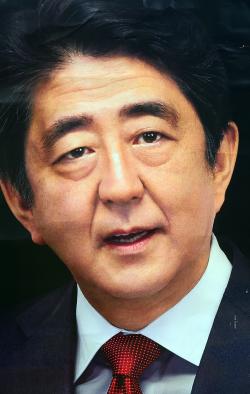
Japanese Prime Minister Abe Shinzo on a political campaign poster in Hachioji, Japan, July 2016 (Attila Jandi / Shutterstock)
These and other rising challenges saw the Japanese government under Abe Shinzo (2012- 2020) incentivise Japanese manufacturers to ‘reshore’ to Japan and adopt a raft of structural reforms to strengthen the nation’s innovation and tech sector, including developing a startup ecology and introducing hard key performance indicator (KPI) targets.
These measures, however, had limited success in reversing the trend. Leading into the 2020s, the contrast between the PRC’s rise and Japan’s relative decline in science and technology, including in key areas such as research funding and output, supercomputers and quantum technologies, received growing attention.57
There was also growing unease that the PRC was targeting leadership in areas that overlapped with Japan’s advanced technology strengths,58 not only through industry subsidies, but also intellectual property theft and market disinformation.59 In response, Tokyo began to adopt firmer measures in relation to the PRC’s technological rise.
The first of these, following the US lead, was export controls of military and dual-use technologies.60
The second was a strengthened domestic subsidy program to onshore the production of advanced digital, green energy and other technologies.61
These government initiatives were supported by large sections of Japan’s traditionally anti-interventionalist business community, reflecting heightening private sector concerns about threats emanating from the PRC. In a 2020 poll of 3000 Japanese businesspeople, 46 percent of respondents said that Japanese companies ‘should reduce’ cooperative investments with PRC companies and research entities. Almost one-third agreed that Japan ‘should sever’ economic ties with the PRC completely, with just over one third disagreeing.62
In May 2022, Tokyo enacted broad scoping economic-security legislation, the Economic Security Promotion Act. The legislation included provisions for providing government support for research and development on cutting-edge technologies and other measures to preserve Japan’s technological sovereignty, as well as sanctions for leaking critical Japanese technologies and intellectual property.63 That same year, Takaichi Sanae, a long-time critic of Beijing’s trade practices, assumed the position of Japan’s Minister of State for Economic Security, overseeing the implementation of the act.
But perhaps the most influential concern, voiced in the immediate lead-up to the Japan-South Korea rapprochement, was that PRC tech industry competition was no longer primarily the result of an organic technological rise, but was directly targeting Japan’s most important strategic sectors. In a February 2023 NHK news report, government and industry sources expressed concerns that ‘The PRC is strengthening its strategy of domesticating production so that Japan’s signature [advanced] manufacturing products become ‘made in China’.’ This was further described as being part of a plan to ‘[heighten] supply chain dependency on the PRC’ in order to ‘fight back and deter against’ foreign nations’ capacity to place curbs on the PRC’s foreign policy.64
These developments prompted a spate of government warnings to Japanese firms operating in the PRC to be wary of industrial espionage or forced technology transfer agreements.65 Over 2023 there was a subsequent 15.3 percent drop in Japanese investment into the PRC.66 A September 2024 poll found that almost half of Japanese firms based in the PRC are planning to cap or reduce investment in 2023, prompting a London based geo-economist to state, ‘We are now past Japan’s peak economic engagement with China’.67
3.2 PRC trade complementarity vs competition: The view from South Korea
In the 2020s, South Korea, which during this time reached economic and technological near parity with Japan, began to see clear parallels with Japan’s experience in its own shifting trade relationship with the PRC.
In December 2021, the Korea Internatioal Trade Association (KITA), the largest business organisation in Korea, noted that the ‘trade structure between [South Korea and the PRC] has been shifting from a complementary one based on specialisation to one of mutual competition.’68 It also noted, however, that this was mainly confined to medium-high technology categories, as opposed to South Korea’s strategically prioritised high technology industries including semiconductors, electronics and communications.69
Yet in February 2023, the Korean Centre for International Finance, a think tank funded jointly by the Korean government and the nation’s central bank, the Bank of Korea, released a report which said:70
Since 2016, when the PRC strongly pushed its Made in China 2025 plan to foster advanced manufacturing and advance its industry in order to expand procurement from domestic sources, the elasticity of ROK exports to the PRC declined, and the existing export coupling synergy weakened. This means that ROK-PRC exports have already shifted from complementarity to competition.
These findings were cited later in the year by the South Korean National Assembly Budget Office’s Economic Outlook for 2024 and the Medium-Term.71 Resonating with the findings of earlier Japanese reports, the Outlook stated that South Korea’s ongoing 12-month deficit with the PRC – the first since 2008 – was caused by the PRC ‘changing its industrial structure from the established structure of converting intermediate goods imports into final product exports to converting raw material imports into intermediate goods exports’. It attributed ‘the reduction of the relative weight of South Korea’s exports to the PRC’ to a shift from a ‘complementary and coupled relationship to a competitive relationship’.72
Strengthening these fears were growing concerns that South Korea was losing its technological edge. A May 2023 survey of 300 business by the South Korea’s Chamber of Commerce and Industry showed widespread perceptions that the technological gap between South Korean and PRC industries was shrinking, with nearly 40 percent of respondents saying that PRC industries were less than three years behind South Korea in ‘technological competitiveness’ (기술 경쟁력) 73 – a Korean-devised measure that combines indicators for technological superiority with those relating to marketability and commercial feasibility. Almost the same number felt that the two nations were at a comparable level.74
Moreover, in May 2023, a KITA report showed that the PRC’s competitiveness had extended to the very emerging technology industries that had been targeted by South Korea as growth drivers. Overviewing competitive threats to five key emerging industries – next generation semiconductors, next generation displays, EVs, secondary or rechargeable batteries and biohealth – the report noted that the PRC was the greatest threat overall, with ‘the largest global export share in three items: next generation chips, next generation displays and secondary batteries’.75 It observed further that the PRC’s lead over South Korea in export market share has since 2016 has increased for each of the five emerging technologies and ‘competition with China for leadership… is expected to continue for the medium to long term.’76
In line with these shifting circumstances and views, 2023 saw South Korean foreign direct investment (FDI) into the PRC plummet 78 percent, including a marked reduction in the PRC’s share of South Korean exports in advanced industry commodities.77 The first half of the year also saw marked reductions in PRC-bound exports in the two other categories, semiconductors and electric vehicles.78
4. The stakes for Japan and South Korea’s automotive industries
4.1 Rising competition from PRC electric vehicle makers
A key symbol of the PRC’s shift from trade complementarity towards becoming a prime competitor to Japan and South Korea’s advanced manufacturing industries were the contrasting fortunes of the three nation’s automotive sectors.
This was particularly evident in the respective trajectories of their sales performance in the world’s largest car market – the PRC – during and in the lead-up to the rapprochement.
According to the China Association of Automobile Manufacturers, PRC carmakers saw a 23 percent growth in domestic sales in 2022, with their share in the domestic market rising from 47 percent to 53 percent in the first quarter of 2023.79 Growth in EV sales – dominated by PRC models – was a major factor behind the rise.80 Eighty percent of EVs sold in the PRC in 2022 were produced by Chinese automakers and by December 2023, nine of the top 10 selling models were Chinese (with Tesla in second place).81 Following the ongoing rising market share of plugin vehicles, Chinese cars are predicted to capture 59 percent of the PRC domestic market in 2024, rising to 72 percent in 2030.82
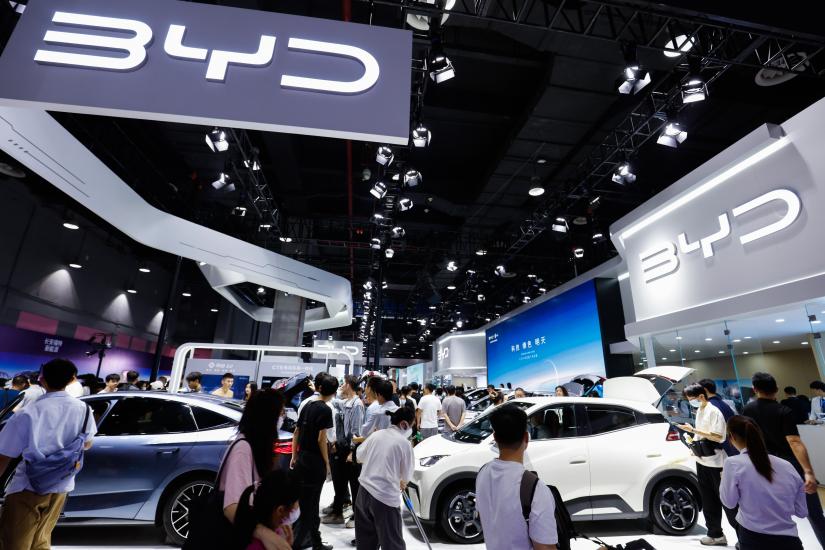
The competitive advantages of PRC EV makers has been augmented by the PRC’s dominance over the supply chain of critical minerals for batteries, as well as battery production.83 There are additional concerns that this control could be weaponised against the PRC’s competitors, with the PRC, on national security grounds, restricting the export of high grade graphite, a key material in EV battery supply chains, in December, followed by antimony, which is used to enhance battery performance, in August 2024.84
The burgeoning rise of the PRC’s EV industry was a central feature driving a marked decline in Japan and South Korea’s PRC-bound exports, bleaker prospects which saw a reduction of their industrial footprint in the world’s largest car market, as well as growing competitive challenges internationally. This is expected to continue, with the PRC carmakers forecast to capture a third of the global market in 2030.85 With Boston Consulting Group last year forecasting that EVs would make up one-fifth of global light vehicle sales by 2025 and almost 60 percent by 2035,86 the rise of PRC EVs could have broader implications for Tokyo and Seoul, whose respective automotive industries have important symbolic, political and economic significance.
4.2 Competitive challenges facing Japanese automakers
Throughout the 21st century, Japan has been a global top three producer of vehicles and one of the top two passenger vehicle producers.87 In 2014, Japan’s Ministry of Economy, Trade and Industry termed the automotive sector Japan’s ‘national industry’. It forecast the sector to play a key role in the government’s plan for the nation’s ‘rejuvenation’.88
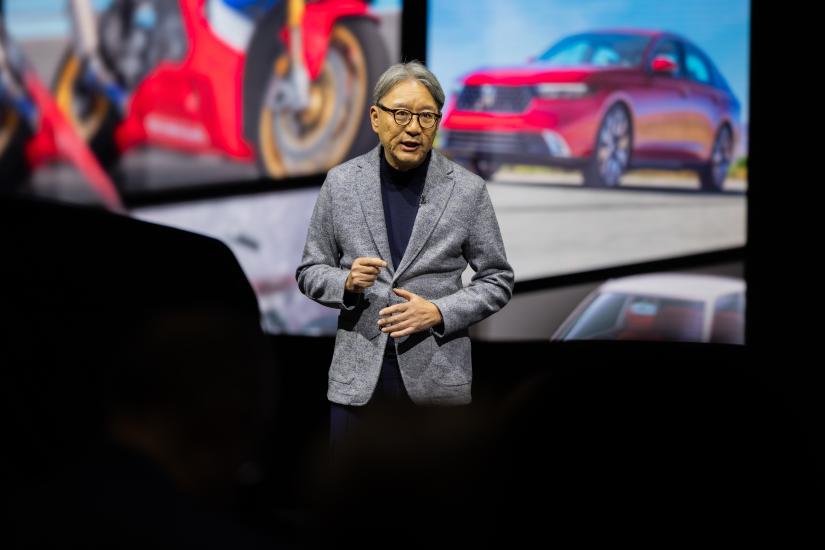
The industry continues to be of significance to Japan’s economy and political economy more broadly. Vehicle and vehicle parts were Japan’s second highest export category by value in 2022 (after dropping from first place in 2021), only behind the aggregated category of machinery, mechanical appliances and nuclear reactors/ boilers.89 According to the 2023 Forbes Global 2000 list, Japan’s three largest companies by sales, each with earnings over US$100 billion, were carmakers: Toyota, Mitsubishi and Honda.90 And according to 2018 figures, the automotive and automotive parts industry directly and indirectly sponsored the employment of about 5.4 million people, or around eight percent of Japan’s workforce.91
However, Japanese industry appraisals in 2023 presented the view that PRC competitors posed a daunting challenge, with Honda’s head Toshihiro Mibe stating that PRC producers were ‘ahead of us more than we thought’.92
These perceptions reflected sobering PRC sales figures for Japanese automakers. Japanese vehicle exports to the PRC had slumped 4.7 percent in 2022 and this slump accelerated towards the end of that year, with December sales falling nearly 30 percent year on year (YoY).93 The trend continued into 2023 with total sales of Japanese auto brands in the PRC first quarter YoY sales falling by 32 percent, ‘more than double the pace of the overall market contraction’, according to Reuters.94 In October 2023, Mitsubishi announced that it would end production in the PRC.95
An additional problem for Japanese carmakers in 2023 was that their PRC competitors had already leveraged their success in the world’s largest car market to build the requisite production capacity and capital to aggressively expand internationally.
Figures released by the Japan Automobile Manufacturers Association in January 2024 showed that the PRC overtook Japan as the world’s biggest vehicle exporter in 2023, assisted by its dominance in EVs.
According to the International Energy Agency, the PRC in 2022 already achieved a share of roughly 35 percent of the rapidly growing global EV export market, up 10 percentage points in a single year, while Japan saw its share drop from around 25 percent to less than 10 percent in four years (2018- 2022).96 By mid-2023 one-third of the PRC’s car exports were EVs, compared to only four percent in Japan.97 At the same time PRC EV exports, which had already ballooned eightfold over the five years leading to 2023, began rapidly expanding in Japan’s EV export strongholds.98
More challenges lie ahead. PRC carmakers are expanding abroad and are forecast to take 33 percent of the global market share by 2030.99 Yet the major impact could come from the PRC’s lead in EV technologies, particularly as the world hastens its transition away from gasoline cars. According to Japan and the global transition to zero emission vehicles, a report compiled by the Climate Group in mid-2022, Japan’s sluggishness in the EV market, which Chinese carmakers are dominating, means Japan’s car industry risks losing 1.7 million jobs and billions in profits, which could prompt a 14 percent drop in the nation’s GDP.100
4.3 Competitive challenges facing South Korean automakers
South Korea’s automotive industry also plays a pivotal role in shaping the country’s national brand, industry structure and economic fortunes.101
The industry in 2020 accounted for roughly three percent of the nation’s GDP and over 11 percent of employment in the manufacturing sector. The 2023 Fortune 2000 listed two automotive industries in the nation’s top three (Hyundai at 2, KIA at 3), while Samsung, which tops the list, is a supplier of high- tech automotive components.
The industry has also long been a key symbol of South Korea’s rise as an advanced manufacturing hub, with two Korean companies in the global top 20 car makers in 2022 and nine Korean companies among the top 100 auto parts makers in 2021.
In recent years Seoul has aimed to make South Korea a global top three producer of what it calls ‘new vehicles’ (i.e., environmentally friendly vehicles), with the aim of capturing a 12 percent global market share in the EV market by 2030. In September 2023, the South Korean Ministry of Trade, Industry and Energy said it would ‘spare no support’ to ‘foster electric vehicles as a key export engine’ through a US $8.2 billion investment.102
In terms of global competitive pressures, South Korea’s automotive industry fared better than Japan in the lead-up to the two nations’ rapprochement.103 South Korean carmakers also made gains in EV sales, which crossed the previous annual record of US$5.42 billion (2022) in only two months in 2023. February’s exports were 83.4 percent higher than those of the same month in the previous year and were followed by near double YoY growth in EVs in May.104
At the same time, however, South Korean automakers’ difficulties against domestic competitors in the PRC were reaching a new threshold.
In 2022, South Korean car sales in the PRC fell 27.3 percent.105 This brought Korean cars’ PRC market share to less than two percent, down six points from 2016,106 with the PRC accounting for 0.1 percent of South Korea’s EV global exports.107
By early 2023, PRC carmakers had also eroded the share of Korean competitors in other key EV export markets, particularly in Southeast Asia and Australia.108 The PRC also made inroads in South Korea’s domestic market, taking nearly a half share of South Korea’s new energy buses and trucks sales, forcing Korean production to roughly halve between 2015 and 2022.109 In an interview in June 2023, a representative from the Korea Automotive Technology said that Korean carmakers were ‘slightly falling behind’ PRC competitors in the strategically important European market.110
5. The stakes for Japan and South Korea’s semiconductor industries
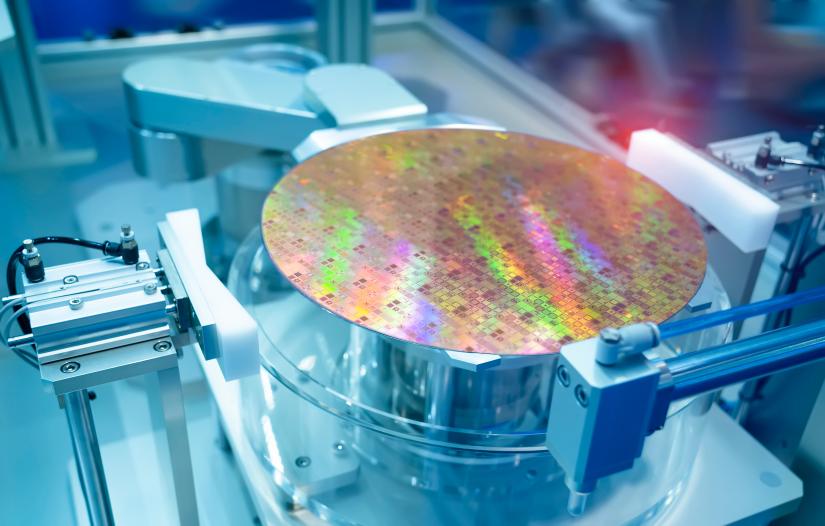
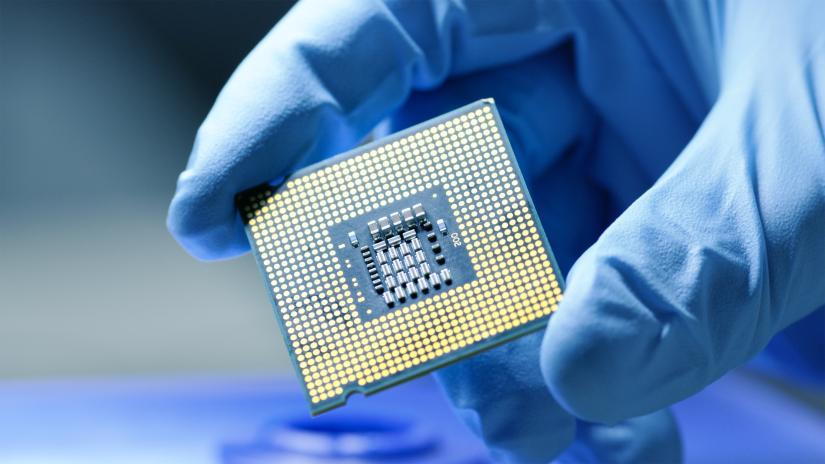
In addition to competitive pressures to their automotive industries, concerns in Japan and South Korea are also growing around PRC challenges to their semiconductor industries, which are heavily weighted in both countries’ economic planning. Relative to the automotive/ EV industries, the nature of these challenges is more latent than pressing and involves a complicated mix involving intellectual property theft, supply chain concentration concerns, security concerns and opportunity costs or collateral damage from US-PRC competition for semiconductor supremacy.
5.1 The PRC’s advancements in cutting edge semiconductors
The PRC has consistently been the world’s largest semiconductor exporter by volume. But arguably of greater concern to Japan and South Korea has been Beijing’s concerted attempt to mobilise its enormous fiscal and regulatory resources to become a tech leader in the industry.
A 2017 report from the European Union Chamber of Commerce stated that the China Manufacturing 2025 plan mobilised ‘hundreds of billions of euros of funding in the form of subsidies, funds and other channels of support’111 for high tech industries including semiconductors, while a 2019 OECD report found ‘government involvement’ in the semiconductor industry ‘to be especially large in one jurisdiction’ (i.e., the PRC), with ‘non-market forces… considerably stronger in China than in the other economies’.112
In 2014, Beijing launched the China Integrated Circuit Industry Investment Fund, also called the ‘Big Fund’, which planned to establish three state-supported investment funds dedicated to supporting the domestic chip industry within 10 years – the first (2014) with a registered capital of CN¥139 billion yuan, the second (2019) at CN¥204 billion and the third (2024) valued at CN¥355 billion yuan (for a combined value of roughly US$100 billion). In the lead-up to the rapprochement in late 2022 it was announced that Beijing was working on an additional CN¥1 trillion yuan (approximately US$140 billion) support package.113
In addition to falls in Japan and South Korea’s exports to the PRC, the semiconductor industries of both nations have raised concerns about PRC competitors benefiting from unauthorised transfers of semiconductor technologies. Seoul has been battling what has been described as aggressive attempts to poach talent and information from South Korea’s semiconductor industry using ‘both legal and illegal means.’114 Similar concerns were being harboured in Japan, particularly in relation to its semiconductor manufacturing equipment industry.115
Some of these fears about the PRC’s rise as a core competitor in the semiconductor sector have begun to materialise. In August 2023, for example, PRC chip-maker Semiconductor Manufacturing International Corporation surprised competitors by achieving mass production of a 7-nanometer chip with expectations that it will achieve a large-scale production of 5-nanometer chips – one generation behind Apple’s cutting edge 3-nanometer chip – within the next few years. In the first two months of 2024, PRC chip exports increased almost 30 percent.116
Augmenting qualms about competitive challenges stemming from the PRC in the advanced semiconductor sector are supply chain security concerns as well as the possibility of Beijing using semiconductor supremacy to gain a military edge.
According to the Mercator Institute for China Studies, Beijing has been ‘building up both the legal framework and the market power to exploit dependencies in the semiconductor industry’,117 in which it has become the leading supplier of raw material inputs.118 In August 2023, Beijing began restricting the export of gallium and germanium119 – rare earths used in the production of semiconductors – and implemented an export ban on rare earths processing technology.120 Both Japan121 and South Korea’s122 automotive industry output had previously been impacted by semiconductor supply shortages caused by the PRC’s strong measures to combat the COVID-19 pandemic.
5.2 Impact on South Korea’s semiconductor industry
In 2023, South Korea’s semiconductor exports were valued at US$131 billion, with the industry seeing a US$25 billion trade surplus. Its share of overall exports was over 20 percent for that year, down from a high of 25 percent in 2021.123
Reflecting the importance the government attaches to the industry, several subsidy schemes have been introduced to support the industry, including former president Moon Jae- in’s US $380 billion ‘K-Semiconductor Belt Initiative’124 (later rescinded), the 2022 Korean Chips Act (K-Chips Act) and a recent US$19 billion government support package.125 President Yoon has described international competition in the sector as a ‘war’.126
As was the case of the automotive industry, the lead-up and early stages of the Japan-South Korea rapprochement coincided with large drops in South Korean semiconductors to the PRC. The growth rate of PRC-bound exports collapsed in 2022 (from 22.9 percent in 2021 to 3.7 percent),127 and in January 2023 South Korean PRC-bound export volumes dropped by almost half YoY (46.6 percent).128 This trend continued through to the rapprochement period, with particularly steep YoY drops in April (38 percent)129 and July (over 40 percent).130 South Korean semiconductor exports to the PRC hit a seven-year low in 2023,131 before rebounding in 2024.132
The PRC remains a key market for South Korean semiconductor exports.133 Yet the PRC’s drive for chip self-sufficiency134 and the prospect of intensifying US export restrictions on advanced semiconductors, casts a cloud over the industry’s long-term prospects in the PRC market.
In 2024 the PRC is continuing to rapidly ramp up production capacity (18 new projects and 13 percent YoY capacity growth in 2024),135 with forecasts that it could ‘dominate’ the legacy chip market and pose a competitive threat to top end producers in the coming years.136 South Korea also faces the prospect of enormous opportunity costs to its heavily weighted advanced semiconductor sector should it defy future US export restrictions targeting the PRC, with South Korea’s competitiveness in advanced semiconductors heavily reliant on its position in an industry symbiosis with the US and Japan, which provide cutting edge design services and semiconductor manufacturing equipment.137
5.3 Challenges for Japan’s semiconductor ‘renaissance’
As with the case of South Korea, a similar gravity is afforded technological sovereignty in the semiconductor industry in Japan, which is pursuing a ‘renaissance’ in an industry138 it dominated in the 1980s. Japan remains, however, a leading player in the semiconductor manufacturing equipment sector and materials sectors,139 in which its global market share is 32 percent and 56 percent respectively.140
Japan’s subsidies for its semiconductor industry are the highest in the world on a per-capita basis (roughly 0.7 percent of GDP), reflecting its resolve to develop the industry. A recent statement from Japan’s Ministry of Economy, Trade and Industry announced policies to develop the industry as a ‘national project’ comparable to ‘policies on securing energy and food’, saying leadership in the industry was needed ‘to ensure Japan remains strategically essential and strategically independent amid the conflict for technological hegemony between the US and China’.141
Japan’s sales of semiconductor manufacturing equipment to the PRC also fell more than 30 percent for the first half of 2023 against the backdrop of the implementation of US export restrictions,142 following a 16 percent fall in the last quarter of 2022.143 While the reduction follows US restrictions, Japan’s export bans directed at the PRC could be motivated by fears of the PRC targeting the appropriation/ transfer of semiconductor manufacturing commodities, such as photoresist technology,144 with PRC industry executives arguing that Japan’s export controls could ‘go further’ than those imposed by Washington.145
6. High-tech industry ‘external balancing’
Corresponding with concerns about competitive challenges posed by the PRC’s technological rise, a key focus of high-level meetings between Japan and South Korea in 2023 was strengthening collaboration in high-tech sectors and their supply chains, with an emphasis on EV technologies and semiconductors. This lends credence to the premise that the Japan-South Korea rapprochement may have in part been pursued as a high-tech industry ‘external balancing’ strategy – i.e., a strategy of cooperating with a partner to reduce the capability asymmetries posed by a greater power.
This economic emphasis, while arguably understated in international press coverage, was evident from the very beginning of the rapprochement.
For instance, South Korean President Yoon’s solution to the forced labour compensation deal, which laid the foundations for the rapprochement by blocking reparation actions against Japanese countries,146 functioned to reduce sovereign risk perceptions among Japanese investors.
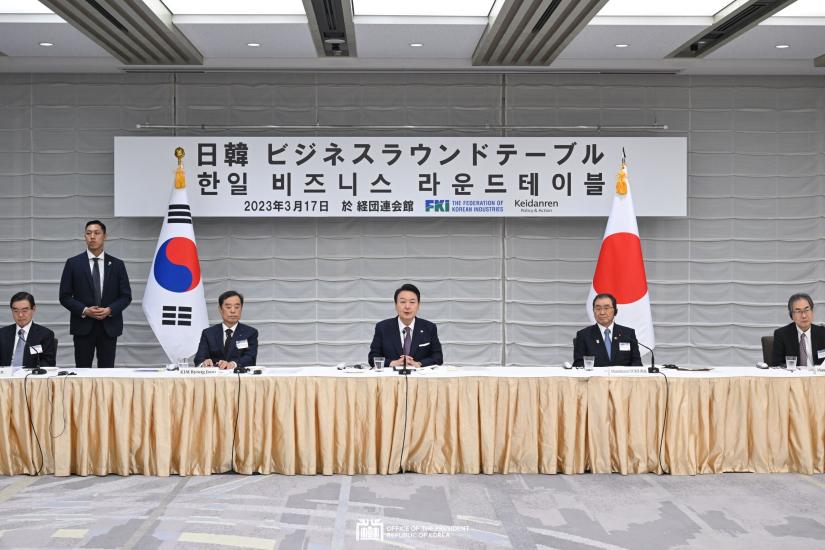
The symbolic ‘future partnership fund’ jointly announced by the Keidanren (Japan Business Federation) and the Federation of Korean Industries147 as an alternative to compensation also soon switched from primarily tackling social issues to strengthening industrial cooperation in areas including semiconductor supply chain resilience.148
In a similar vein, in the wake of the first leaders’ summit, Tokyo’s immediate response was not a security agreement but an economic measure – the lifting of a protracted export ban on South Korean goods crucial for the production of semiconductors.149 And prior to the March 2023 leaders’ summit, Yoon said that he hoped that the two nations’ business communities could ‘cooperate to build secure supply chains in advanced industries areas including semiconductors, batteries and electronic vehicles’ and ‘respond in unison to global concerns’.150
This economic focus continued throughout the early rapprochement period. Immediately after the March summit, for instance, Yoon met with South Korean and Japanese business leaders, including the heads of each nation’s premier industry bodies. Yoon told meeting participants, ‘We need to cooperate especially in the fields of cutting- edge technologies and new industries of digital transition, semiconductors, batteries and electric vehicles’,151 and noted that ‘the governments of the two countries will do everything to help you interact freely and create innovative business opportunities’.152
On March 24 2023, South Korea’s Minister of Economy and Finance and Deputy Prime Minister Choo Kyung-ho announced plans to support cooperation in new industries and enhance supply chain cooperation between the two nations though a new semiconductor cluster near Seoul, as well as other measures including establishing a joint Japan-South Korea R&D venture fund and a cooperation network to facilitate joint bidding for overseas infrastructure projects.153
The following month, South Korea’s POSCO Group signed a deal with Honda to produce cathode materials for battery electric vehicles.
On May 18 2023, Yoon met again with Japanese business leaders, after which he stated, ‘Mutually complementary co-operation is possible between South Korean companies, which possess excellent manufacturing technologies, and Japanese companies, which are highly competitive in materials, components and equipment’.154
Later that month, Kishida met with the head of Samsung’s device solutions division, who shared the company’s plan to build a JP¥30 billion (US$215.9 million) research and development facility for semiconductors in Japan.155
In March 2023, the head of Korea’s LG Energy Solutions told reporters that the company was engaged in talks with Toyota for a joint EV battery venture.156 A deal was signed in October that year.157 A similar venture between LG Energy Solutions and Honda had been announced one week after US President Biden signed the Inflation Reduction Act (IRA) into law in mid-2022,158 with a joint venture EV battery plant opened in Ohio in February 2023.159
Cooperation on semiconductors was also advanced in July 2023 during the Korea-Japan Industrial Cooperation Forum.160 In the same month, South Korea’s battery manufacturer SK announced plans to heavily invest in semiconductor materials, components and equipment in both Japan and the US, beginning with Japanese semiconductor material and component companies.161
7. The rapprochement and the Japan-South Korea- US trilateral partnership: High-tech industry ‘bandwagoning’?
The previous sections show how the Japan- South Korea rapprochement facilitated efforts to increase high-tech industry collaboration against the backdrop of rising anxieties about competitive and supply chain security threats to that sector stemming from a rising PRC.
This, in turn, arguably also facilitated tech industry cooperation playing a greater role in the two nation’s trilateral partnership with the US. Notably, in August 2023, supply chain security and ‘robust cooperation in the economic security and technology spheres’162 – foremost among them semiconductors and EV technologies – were highlighted as key elements of the partnership during a trilateral leaders’ meeting at Camp David in August 2023 – a meeting which was described by Kishida, Yoon and Biden as ‘inaugurat[ing] a new era of trilateral partnership.’163
The economic motive for this grouping appears to be in part driven by the PRC’s rapid and disruptive rise as a tech industry superpower, in conjunction with its supply chains dominance in the critical commodities that feed this industry, which threatens the US, as another established tech power, in ways that are similar to Japan and South Korea. Washington’s responses to this challenge, however, went further than was the case of the Asian democracies, involving the mobilisation of significant fiscal resources and punitive regulatory measures to prosecute what has been described as a ‘tech war’ against the PRC. To the extent that gaining preferential access to or protection from these measures was a motivating factor for Tokyo and Seoul, their cooperation to strengthen the trilateral partnership could thus be described as reflecting a high-tech industry ‘bandwagoning’ strategy – one in which the smaller nations (i.e., Japan and South Korea) tapped into the asymmetric capabilities of a greater nation (i.e., the US) to head off the tech industry challenges of a third party (i.e., the PRC).
US ‘tech war’ measures, particularly subsidies to boost technological sovereignty, presented a challenge to Japan and South Korea’s industries. Tokyo and Seoul were also reluctant to become entrapped in US-PRC competition and have opposed some of the more robust aspects of Washington’s responses to the PRC’s rise that were deemed to adversely impact their own economic interests in trading with the PRC – in particular South Korea, which has shown reluctance in fully participate in the Chips 4 Alliance, and which has resisted sacrificing the interests of its semiconductor manufacturers in the PRC.164 However, aside from the spillover of shared security concerns, significant economic developments likely played a key role in motivating Tokyo and Seoul to overlook these risks to some extent and lean towards the US as a core advanced tech industry partner. Key among them was that:
- The shift from trade complementarity to competition with the PRC saw the US become the largest market for Japanese exports for the first time in four years in 2023. Since 2021, the PRC’s share of South Korean exports has been steadily dropping, with the US’ share increasing.165
- Tokyo-Seoul solidarity increased their prospects of accessing new US industry subsidies, helping reduce asymmetries posed by the PRC and at the same time mitigate the threat of US protectionist policies.
7.1 The US vs the PRC as economic partners: A shifting security-economic equation
While the PRC remains an important trading partner for both Japan and South Korea, Tokyo and Seoul’s decision to strengthen tech industry cooperation with each other and the US coincided with a significant trade factor – in both cases, in part due to shrinking trade complementarities with the PRC, Japan and South Korea saw the US start to overtake the PRC as the most important destination for their exports and, in particular, their advanced manufacturing/technology goods.
For Japan, PRC-bound exports fell dramatically in 2022 in the lead-up to the rapprochement, as exports to the US grew, bringing to two superpowers’ Japanese import volumes to near parity (with South Korea in third place). In the first quarter of 2023, coinciding with the early stages of the Japan-South Korea rapprochement, exports to the US grew 9.4 percent, led by a boost in shipments of cars.166 In 2023, the US overtook the PRC as Japan’s largest export market.167
South Korean foreign policy has long been associated with the slogan ‘USA for security, PRC for the economy’ (안미경중). Yet this paradigm was challenged in the lead-up to and during the rapprochement.
According to the Bank of Korea, the US became South Korea’s largest goods export market in 2022,168 and the largest overall export market in the first quarter of 2024 – a 21-year first.169 This shift was led by weakening demand for semiconductors in the PRC170 and rising car exports to the US.171 Shifts in balance of trade were particularly notable in the lead-up to the rapprochement. In the first quarter of 2023, Seoul recorded its largest ever trade deficit (US$7.9 billion) with the PRC (following a US$10 billion deficit for 2022),172 while it achieved a healthy trade surplus with the US (over US$15 billion) over the first four months of the year.173 Noting perceptions that this trend could prove resilient, a study by the Center for Strategic & International Studies said that the causes of South Korea’s trade deficits with the PRC are ‘not transitory but more structural’, driven predominantly by the PRC’s technological rise.174 PRC-bound exports have nonetheless since rallied, with the PRC reclaiming the title of top export market in the first half of 2024.175
The US also grew in significance for both nations as a source of inbound investment. In 2022, the US was Japan’s biggest source of FDI, with a 21.7 percent share valued at JP¥1.4 trillion (roughly US$9.7 billion), while the PRC’s share was marginal.176 In South Korea, US-sourced investment in 2023 (US$6.1 billion) roughly double the figure of PRC-sourced FDI (US$3.1 billion).177
At the same time, Japan and South Korea’s aspirations to increase their standing as global leaders in the semiconductor industry made an important aspect of their economic complementarity with the US – particularly, their symbiotic relationship in advanced semiconductor manufacturing – a key motivation for increased trilateral collaboration. In February 2024, Kishida stated that ‘Japan’s component and materials technology, Korea’s mass production technology and America’s AI chips are all required. And if there is one element missing, there will be no innovation.’178
7.2 Tapping into US subsidies
A second likely reason for the tilt towards trilateral technology cooperation with the US was the prospect of tapping into generous US industry subsidy programs – in particular, the IRA and the CHIPS and Science Act, both of which became law in 2022.
A notable challenge Japan and South Korea faced from the PRC was an inability to match the latter’s capacity for subsidising and providing regulatory support for its advanced industries.
Beijing is estimated to have spent about US$57 billion to support EV purchases between 2016- 2022,179 and a further US$72 billion four-year package of tax breaks to boost weakening sector growth in 2023.180
For a rough scale comparison, South Korea in 2020 invested roughly US$330 million in funding to develop eco-friendly vehicles,181 and in June 2023 Japan raised government support for EV secondary battery supply chain security to over US$2.2 billion.182
And while Japan’s subsidies to its semiconductor industry are the highest in the world as a percentage of GDP, their total, at less than US$30 billion dollars, still fall far short of those provided by the PRC.183
Similarly, in 2021, the Korean government under Moon Jae-in attempted to establish a KR₩510 trillion fund (roughly US$380 billion in today’s exchange rates) for a ‘K-Semiconductor Belt Initiative’,184 however, the program faced legal issues and political opposition and was replaced in 2022 by a less ambitious Korean version of the CHIPS Act with an unspecified budget. In 2023, a fund of KR₩2.8 trillion (around US$2 billion) was made available to support South Korea’s semiconductor industry in the 2024 budget,185 and in mid-2024 a US$19 billion package was made available to try to keep South Korea in the race in what President Yoon called an environment of ‘all-out national warfare’ for semiconductor supremacy.186
Greater incentives, however, were on offer by Washington, courtesy of decisions to extend significant domestic subsidies to the nation’s security partners. In August 2022, Washington introduced the IRA, which provided nearly US$370 billion subsidies and incentives for clean energy production, including secondary batteries and EV assembly. The US’ CHIPS and Science Act – also legislated in mid-2022 – set out to provide US$52 billion to subsidise the domestic design and manufacturing of computer chips through tax credits and set aside about US$200 billion to support science and development activities to spur innovation.
7.3 High tech ‘bandwagoning’? Signs of cooperation
It is notable, on this front, that coinciding with the Japan-South Korea rapprochement and the subsequent reinvigoration of the two nations’ trilateral partnership with the US that the rapprochement facilitated, Japanese and South Korean firms were successfully able to tap into these subsidies directly and/or through partnering with US firms – propelling, in part, a broader shift towards closer trilateral private sector collaboration.
The rapprochement arguably played a key role in this. Firstly, by shifting from competitors to partners, both Tokyo and Seoul removed the prospect of each other leveraging their status as key US allies to oppose the other’s preferential access to US subsidies. Secondly, by forming a united front, the allies could increase their leverage vis-à-vis Washington for a better deal.
This strategy was particularly successful for South Korean firms, which in 2023 became the largest foreign beneficiaries of IRA programs, as well as major beneficiaries of the CHIPS Act, through a spate of US-bound investments in semiconductor187 and EV/EV battery plants. The scale of the investments undertaken was such that South Korea was propelled to the status of the top foreign creator of US jobs via direct investment.188
In relation to the EV industry, on March 31 2023, the US Treasury announced it had excluded requirements in relation to a battery material for EV cars to be eligible for tax credits under the IRA – a position Seoul said had ‘substantially’ reflected its position and that would help Korean businesses ‘view the IRA as a new opportunity and respond to it proactively’.189 By July that year, around a third (US$22 billion) of all manufacturing investments under the act had gone to South Korean companies,190 including a loan of US$9.2 billion – dubbed the ‘biggest government investment in the auto industry’ since the 2009 recession – to a joint venture between South Korea’s SK On and Ford to build battery manufacturing plants in the US.191 Samsung also received tax breaks to build a US- based EV factory.192
Other developments included a further expansion of LG Energy Solutions and US carmaker General Motors partnership to build battery plants in the US,193 while Hyundai also announced plans to expand battery supply partnerships in the US to tap into IRA EV tax credit subsidies.194
Japan’s business community had been relatively more retrospect about diverting internally directed investments to the US. Yet aside from the joint Honda-LG investment, Toyota in 2022 announced that half of a US$5.3 billion investment to boost EV battery output would go to a new US-based battery plant. In March 2023, a trade deal was struck between Japan and the US on EV battery minerals aimed in part to reduce both nations’ dependence on PRC supply chains and combat ‘non-market policies and practices’195 – the first such critical minerals agreement signed by Washington.
Similar developments in cooperation have occurred in the semiconductor sector.
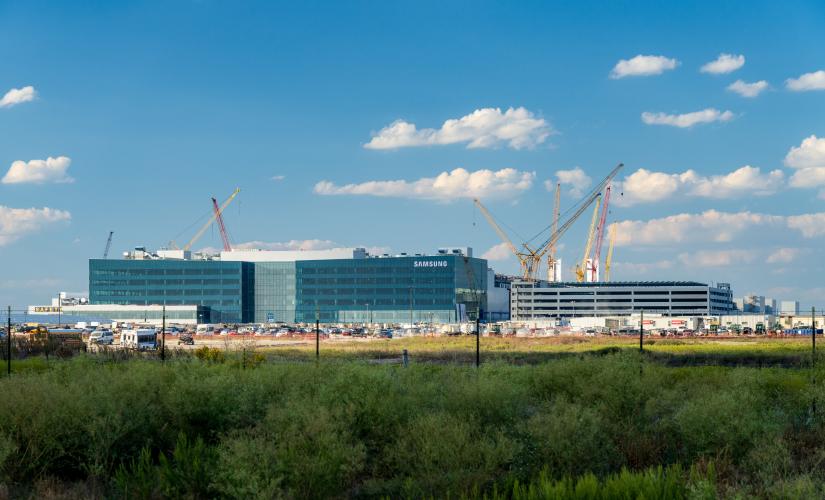
For example, in April 2024, Samsung received a US$6.4 billion CHIPS grant, with the company committing to bringing its most advanced chip manufacturing technology to its new site in Texas.196
Japan also benefited from stronger trilateral ties.197 Samsung and SK Hynix’s proposed investments in manufacturing plants in Japan in the immediate wake of the rapprochement198 come alongside potential investments from US firms Intel and Micron – part of US$14 billion of proposed investments announced up to mid- 2023199 – which, according to the Financial Times, ‘could transform Japan’s prospects of re-emerging as a semiconductor powerhouse.’200 Building on the focus on semiconductor industry collaboration in the Japan-US Commercial and Industrial Partnership announced in November 2021,201 a spate of other developments occurred: Intel indicated an intention to expand cooperation with Japanese SME suppliers, Applied Materials pledged to increase collaboration with Japanese semiconductor maker Rapidus and cooperate with Japanese material suppliers and assist with human resources development, while IBM committed to deepening cooperation with Japanese firms and Tokyo University to pursue developments in quantum computing.202
In building on the bilateral Japan-South Korea rapprochement, the revitalised trilateral Japan- South Korea-US partnership could be seen as a strategy through which Japan and South Korea mitigated simultaneous threats from the PRC as well as the US – both of whom mobilised their vast fiscal, regulatory and systemic power resources to develop their domestic EV and semiconductor sectors. While ‘bandwagoning’ opens junior partners to tap into the benefits of the larger power’s capacities, often at some expense to their interests and agency, Tokyo and Seoul’s post- rapprochement solidarity arguably helped reduce negotiating asymmetries vis-à-vis Washington on issues of mutual concern, enabling them to reduce the costs (i.e., concessions to South Korea’s semiconductor interests in the PRC) and increase the benefits (i.e., access to US subsidies) of trilateral cooperation. In so doing, it also potentially put them in a position to blunt some of the sharper elements of Washington’s approach to technological/economic competition with Beijing which could detrimentally impact their trade relationships with the PRC, as well as the broader region’s prosperity and security.
8. Implications for Australia
The concept of technological sovereignty becoming a new shaper of more traditional realist international relations strategies, such as ‘balancing’, ‘bandwagoning’ and (tech/trade war) ‘entrapment’, could potentially have wider reaching ramifications, including for Australia.
There are important caveats. First, compared to the factors traditionally seen to shape these strategies – for instance, geography, comprehensive power and real and latent military capacity – tech industry/trade dynamics are relatively more mutable and are thus likely to prove a less stable foundation for profound shifts in international strategy. Yet for nations with aspirations for technological sovereignty or ‘strategic sector’ security, these considerations could, for a period of time, at least potentially strengthen or weaken existing security-based partnerships with greater powers, or alternatively augment/alleviate levels of antagonism against potential threats. It is possible, moreover, that decisions by great powers to dominate advanced industries, or alternatively share technology and facilitate value chain migration among partners, could tip the balance of alliance leanings in formerly equidistant smaller/middle powers. This dynamic could now be in play, for instance, in Malaysia, which is being courted by both the PRC and the US and its allies as an alternative hub for semiconductor production chain processes.203 This also raises the question whether a prospective comprehensive technological sovereignty drive, which could be advanced as part of an ‘America first’ agenda espoused by current US Republican presidential candidate Donald Trump, could adversely impact US partnerships.
Second, such drivers are only likely to apply to the extent that states view technological leadership as a national imperative. In the case of the political culture of the PRC, Japan and South Korea, each are in this sense heavily influenced by deep-rooted techno-nationalist beliefs, including the notion that scientific and technological advancement is pivotal for expanding national agency, whose roots extend as far back as the modernisation drive of Japan’s Meiji Restoration (1868-1889).204 The distinctively parallel techno-economic visions prompted by these similar beliefs could be a factor underlying East Asia’s long history of mutual trade tensions propelling diplomatic rifts, vis-à-vis the more complementary economic ecology that helped foster greater political unity in modern Europe.
Despite this, in recent years the push for technological and industrial sovereignty has widened globally, prompted by factors including recent supply chain disruptions and fears of PRC overproduction. And like Japan and South Korea, other advanced economies with established technology/advanced manufacturing sectors are also responding to growing pressures from the PRC’s tech and advanced manufacturing industry rise, with PRC EVs, in particular, being subject to an increasing array or tariffs and other protectionist measures.205 Sovereign capacity in other strategic sectors,206 including semiconductors,207 are also increasingly being understood through the lens of extending national security and national agency. Many nations pursuing these policies, moreover, are unlikely to individually have the fiscal capacity to match the industry subsidies of the greater powers, which could bolster the appeal of tech industry ‘external balancing’ and ‘bandwagoning’ strategies.
To the extent that this could become a more significant driver of foreign policy, one concern is that the ongoing shift from PRC trade complementarity to competition with other advanced economies in Europe and elsewhere could reduce the buffer effect that mutually beneficial trade has hitherto had on ideological and security tensions between advanced democratic nations and the PRC, raising the risk of escalations.
Conversely, trade rivalries in critical technologies could increasingly in themselves become a source of tension between nations, feeding momentum for a broader economic decoupling.
Such developments will likely present challenges but also opportunities for critical mineral supplier nations such as Australia – which, to a greater degree than almost all of its democratic allies and partners, has retained a highly complementary trade relationship with the PRC.
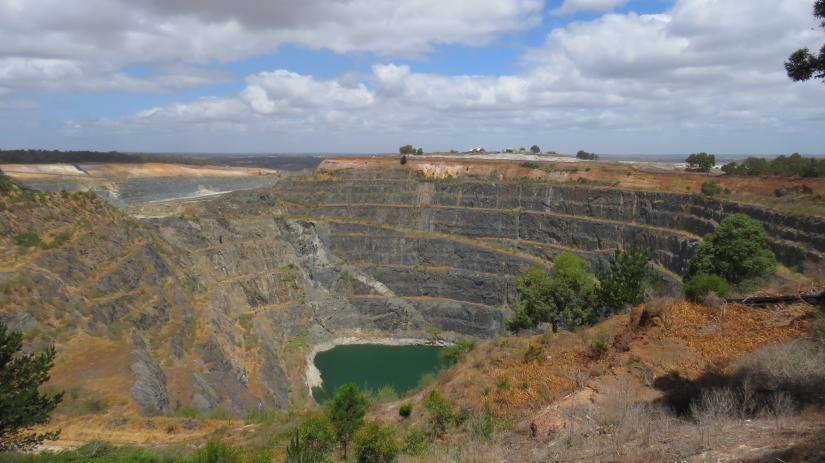
On the positive side, an increase in the plurality of advanced tech manufacturers able to compete against the PRC could benefit the trade position of critical mineral extractors.
At the same time, the securitisation of tech competition could result in Australia’s allies and partners, particularly groupings of tech industry collaborators, placing pressure on Canberra to cut off or place limits on the nation’s lucrative critical minerals export trade with the PRC.
In view of these broader trends, there may be a need to respond to the coming together of critical mineral importing tech industry powers (such as the reinvigorated Japan-South Korea-US trilateral partnership) through increasing solidarity with suppliers. While the multifarious nature, roles and extraction processes of critical mineral/rare earth elements obviate the prospects for a ‘critical minerals OPEC’ in the post-fossil fuel era, regular engagement with other major extractors of the key minerals Australia exports, such as the ‘lithium triangle’ producers in South America, could help mitigate competing ‘tech blocs’ applying political pressure on supplier nations and could possibly lead to the formation of mechanisms that could alleviate trade tensions between the US and the PRC.
Moreover, while the widening technological sovereignty drive threatens to weaken the multilateral liberal trading order, its geopolitical and anti-trade impact could be mitigated by recognising that, in the post-fossil fuel world of the near future, a certain degree of industrial capacity in some key technologies (such as green technologies) and the retention of reserves of certain critical minerals (as now being implemented by South Korea), could replace fossil fuel stockpiling as legitimate, core components of national resilience strategies. As a major supplier of critical minerals, Australia could consider coming together with other nations to discuss regional/national stockpiling policies and additional supply chain resilience strategies in relation to the critical technologies of 21st century economies, starting with the regional approach being adopted by Japan and South Korea. By being part of these discussions, Australia could increase economic opportunities and reduce the prospects of existential concerns driving the spread of tech industry sovereignty policies that could have an adverse impact of the international trading order and geopolitics.
8.1 Possibilities for Australia- Japan-South Korea cooperation
While animosities towards Tokyo among South Korea’s main opposition party raise valid concerns about the durability of the Japan-South Korea rapprochement, a now consolidated trend of shifting public sentiments towards Japan among South Korean youths,208 and wide support for the rapprochement among South Korea’s influential industry lobby bodies, means that even if close security ties are rolled back, there are some prospects that the industry collaboration component of the rapprochement may prove resilient.209 There is, as such, a strong case for Australia to continue to invest in closer ties with the two nations to prepare for the implications of future developments that could stem from the maturation of the rapprochement, supplementing cooperative efforts already in train.
8.1.1 New opportunities for Australia’s critical minerals sector
Japan210 and South Korea211 have each expressed openness in varying degrees to critical minerals cooperation with Australia, making and continuing to explore opportunities for investment in Australia’s critical minerals/rare earths mining sectors.212 However, a consolidated move to diversify supply chains away from the PRC and ramp up advanced tech industry output could present potentially lucrative trade and investment opportunities for Australia’s critical minerals sector.
South Korea plans to mandate stockpiles of critical minerals including lithium213 and radically expand EV battery production could, in particular, could provide a needed boost to Australia’s lithium miners, who have been heavily impacted by a sustained decline in price for the commodity.214 If this occurs, with Beijing instituting restrictions on sharing critical mineral refinery technology, Japan and South Korea, which aside from the PRC are global leaders in material production for cathodes and anodes,215 could play an important role in helping Australia’s industry transition downstream into the lithium battery production chain, with Australia leveraging locational advantages as a supply source.
8.1.2 Leveraging a Japan-South Korea united front to promote shared interests and perspectives on trade to Washington
Another key argument in favour of strengthening ties with Tokyo and Seoul is that the combination of their growing solidarity and their importance to Washington’s technological competition agenda,216 could enhance, to some extent, their capacity to sway Washington on trade and security issues that could also impact Australia.
It is of import to Australia that the trilateral partnership, as an increasingly important platform for shaping the US’ technology capacity building and supply chain policies, is exclusively membered by tech powers that are net-importers of critical minerals such as lithium. Strengthening ties with Tokyo and Seoul could be a conduit through which Canberra’s interests, as an important producer of critical minerals, are not undermined by policies, such as supply chain security initiatives, that could reduce market plurality or otherwise place undue political pressure over exporters of these commodities.
Australia could also coordinate with Japan and South Korea to urge Washington to continue to pursue friendshoring, technology sharing and subsidy access agreements to allies, above ‘America first’ protectionist policies aimed at fuller-spectrum US technological sovereignty and supply chain self-sufficiency, which could stymie Australia’s own aspirations for tech industry value chain migration and adversely impact Australia’s economic interests.
Moreover, since Japan and South Korea, like Australia, have important trading relationships with the PRC, Canberra could also encourage a united front vis-à-vis Washington against undue restrictions on PRC tech sector trade ties. Australia, for instance, would suffer a significant economic impact if its lucrative critical minerals exports to the PRC were impacted by trade restrictions.
Finally, Canberra could encourage Tokyo and Seoul to reinforce to Washington their shared position that tech competition should be positive where possible as opposed to punitive (i.e., driven more by capacity seeding as opposed to anti-trade measures such as tariffs and import bans) and that trade restrictions should be constrained to a select group of high-end military and dual- use commodities (i.e., a ‘small field, high fence’ approach). As Pacific middle powers, the three nations have a shared interest – and a common cognisance of this interest – in preventing intensifying tech industry trade tensions from spilling over into broader forms of decoupling, economic isolation or economic warfare strategies, each of which may not only have an impact on the integrity of the global liberal trading order but could be detrimental to peace and security in the region.
Endnotes
- Prime Minister’s Office of Japan, ‘Press conference by Prime Minister Kishida regarding the Japan-Republic of Korea summit’, September 6 2024 <>https://japan.kantei.go.jp/101_kishida/statement/202409/06kaiken2.html>.
- See, e.g., Edward Howell, ‘Landmark summit brings little progress on regional security in northeast Asia’, Chatham House, May 30 2024 <>https://www.chathamhouse.org/2024/05/landmark-summit-brings-little-progress-regional-security-northeast-asia>; ‘A long-neglected trilateral resumes — to expected results’, Japan Times, May 31 2024 <>https://www.japantimes.co.jp/editorials/2024/05/31/long-neglected-trilateral-resumes/>; Maria Siow, ‘China-Japan-South Korea summit fails to cover key security issues despite having ‘right optics’’, South China Morning Post, May 31 2024 <>https://www.scmp.com/week-asia/politics/article/3264885/china-japan-south-korea-summit-fail-cover-key-security-issues-despite-having-right-optics>; Thisanka Siripala, ‘Japan, China, South Korea trilateral summit was a missed opportunity’, The Diplomat, May 31 2024 <>https://thediplomat.com/2024/05/japan-china-south-korea-trilateral-summit-was-a-missed-opportunity-for-bold-negotiations-on-divisive-issues/>.
- See, e.g., Nectar Gan, Gawon Bae and Junko Ogura, ‘Japan and South Korea agree to mend ties as leaders meet following years of dispute’, CNN, March 16 2023
- See, e.g, Rieko Miki, ‘Japan ruling parties call China ‘challenge’ in defence strategy’, Nikkei Asia, December 13 2022 <>https://asia.nikkei.com/Politics/Japan-ruling-parties-call-China-challenge-in-defense-strategy>; ‘Japan defence: China threat prompts plan to double military spending’, BBC, December 16 2022 <>https://www.bbc.com/news/world-asia-64001554>; Colin Clarke, ‘South Korea’s Indo-Pacific strategy broadens focus from northern threat’, Breaking Defence, January 6 2023 <>https://breakingdefense.com/2023/01/south-koreas-indo-pacific-strategy-broadens-focus-from-northern-threat/>; ‘S Korea, Japan scramble jets due to China-Russia joint air patrol’, Al Jazeera, June 7 2023 <>https://www.aljazeera.com/news/2023/6/7/s-korea-japan-scramble-jets-due-to-china-russia-joint-air-patrol>.
- For a useful study on the development of the relationship between technological industry strength and the South Korean concept of seonjinguk 선진국(advanced nation) as a pillar of national identity, developmentalist political ideology and economic policy tenet, see Jongtae Kim, Eurocentrism and Development in Korea (New York: Routledge, 2018). See also Jongtae Kim, ‘South Korea’s developmentalist worldview: Representations and identities in the discourse of seonjinguk’, Asian Journal of Social Science 42, (2014), pp. 383-408. In the latter, seonjinguk is described as ‘having high income, advanced technology and big, competitive companies’ (p. 394) and is ‘a main discursive source that keeps Korea still under the project of modernisation, with the achievement of the status of seonjinguk as its historical national mission’ (p. 384). For authoritative but dated studies on the development and evolution of Japanese techno-nationalism, see Richard Samuels’ Rich Nation Strong Army (New York: Cornell University Press, 1996). For an alternative viewpoint, see Simon Partner’s Assembled in Japan: Electrical Goods and the Makings of the Japanese Consumer (Berkley and Los Angeles: University of California Press, 1999). For modern introductions, see Seohee Ashley Park’s ‘The evolution of Japan’s technonationalism: shifted in paradigm of technonationalism from developmentalism-oriented industrial policy to security-oriented geostrategy’, Asian Journal of Political Science, 31 (2) (2023), pp. 87-105; and Dominic Kelly, ‘The social origins of Japanese nuclear power: a Gramscian analysis’, International Politics, 54 (2017), pp. 182-202. In discussions on the development and legacy of post-war techno-nationalism in Japan, Albert Allgaier, citing Modern Japanese Studies Professor Shingo Shimada, discusses Japan as an example of ways in which ‘Technology as an agent of modernity becomes a vital subject in this process of re-affirmation of cultural particularities’. See ‘Nihon-Robotto-Ron: A deconstruction of the Japanese ‘Robot Kingdom’ phenomenon’, Vienna Journal of East Asian Studies, 7 (2015), p. 4.
- For an overview of PRC economic coercion measures, including those targeting Japan and South Korea, see Peter Harrell, Elizabeth Rosenberg and Edoardo Saravalle, China’s Use of Coercive Economic Measures, Center for a New American Security, June 1 2018 <>https://www.cnas.org/publications/reports/chinas-use-of-coercive-economic-measures>. For case studies involving Japan and South Korea, see, respectively, pp. 42, 46-47.
- See, e.g., Ji-young Lee, The Geopolitics of South Korea-China Relations: Implications for U.S. Policy in the Indo Pacific, RAND, November 18 2020 <>https://www.rand.org/pubs/perspectives/PEA524-1.html>.
- For a Japanese summary assessment of the nature and legality of the PRC’s economic coercion see Junji Nakagawa, ‘How to address economic coercion: China’s ban on Japanese seafood imports violates international law’, Research Institute of Economy, Trade and Industry, October 31 2023 <>https://www.rieti.go.jp/en/papers/contribution/nakagawa-junji/03.html> (translated by the Research Institute of Economy, Trade and Industry from Junji Nakagawa, ‘Chūgoku no yunyū teishi, gokusaihō ihan keizaiteki iatsu ni dō mukiau’ 中国の輸入停止、国際法違反 経済的威圧にどう向き合う, Nikkei, September 14 2023 <>https://www.nikkei.com/article/DGXZQOCD042GB0U3A900C2000000/>).
- Japan has pursued policies to de-risk from the PRC for almost two decades, although the push to do so has intensified in the wake of the aforementioned developments. For an introduction to the earlier ‘China plus one’ policy, see Kinzai Institute for Financial Affairs, ‘Chyaina.purasuwan to ha nanika’ チャイナ・プラスワンとは何か (What is ‘China plus one’?), part 16 (chapter 2) of Shien no maeni shitteokitai Kaigaishinshutsu no haikei to kīwādo 支援の前に知っておきたい海外進出の背景とキーワード (The Background and Keywords concerning Overseas Expansion that one Should be Aware of before [Seeking] Government Assistance) (volume 1 of Kaigaishinshutsu hien gyoumu AtoZ wo no taikeiteki katsu tetteiteki ni kaisetsu 海外進出支援業務のAtoZを体系的かつ徹底的に解説 (Systematic and Comprehensive Explanation on the A to Z of Government Assistance for Overseas Expansion), 2012), pp. 76-83.
- Prime Minister Kishida’s final overseas visit was to the US on September 21 2024 to attend the Quad summit. See Ayaka Kudo and Hiroshi Tajima, ‘Outgoing Japan PM Kishida makes final overseas trip for talks with President Biden, Quad nations’, Asia News Network, September 24 2024 <>https://asianews.network/outgoing-japan-pm-kishida-makes-final-overseas-trip-for-talks-with-president-biden-quad-nations/>.
- Prime Minister’s Office of Japan, ‘Press conference by Prime Minister Kishida regarding the Japan-Republic of Korea summit’, September 6 2024 <>https://japan.kantei.go.jp/101_kishida/statement/202409/06kaiken2.html>.
- Hyonhee Shin and Hyunsu Yim, ‘Japan's Kishida, South Korea's Yoon call to sustain momentum in improved ties’, Reuters, September 6 2024 <>https://www.reuters.com/world/asia-pacific/japan-pm-kishida-seeks-solidify-south-korea-ties-farewell-visit-2024-09-06/>.
- Sarah Kim, ‘Seoul says cooperation with Tokyo to continue in 'positive' direction after Ishiba's election’, Korea JoongAng Daily, September 29 2024 <>https://koreajoongangdaily.joins.com/news/2024-09-29/national/diplomacy/Seoul-says-cooperation-with-Tokyo-to-continue-in-positive-direction-after-Ishibas-election/2144418>.
- Sakura Murakami, John Geddie and Tim Kelly, ‘Shigeru Ishiba to be Japan's leader, winning on fifth attempt’, Reuters, September 28 2024 <>https://www.reuters.com/world/asia-pacific/japans-ldp-picks-new-leader-replace-outgoing-pm-kishida-2024-09-26/>. Helen Regan and Yumi Asada, ‘Japan plunged into political uncertainty after voters deliver dramatic defeat to longtime ruling party’, CNN, October 28 2024 <>https://edition.cnn.com/2024/10/27/asia/japan-ruling-party-loses-majority-election-intl/index.html>; Kang Gu-yeol, ‘Il, Han-gwae gwangye hyonsang yuji ganeungssong [Il Jamindang champae]’ 日, 韓과의 관계 현상 유지 가능성 [日 자민당 참패], (The prospects of maintaining the status-quo in Japan’s relationship with Korea [the crushing defeat of Japan’s Liberal Democratic Party]), Segye Ilbo, October 28 2024 <>https://www.segye.com/newsView/20241028514125>; An Chae-won, 'Jamindang champae’ro hondone ppajin Ilbon jongchi... Han-Il gwangye yonghyangeun’ 자민당 참패’로 혼돈에 빠진 일본 정치…한일 관계 향은? (Japanese politics has fallen into chaos due to the ‘crushing defeat of the Liberal Democratic Party’: What impact does this have on Japan-South Korea relations?), The300, October 28 2024 <>https://the300.mt.co.kr/newsView.html?no=2024102816305732757&MRO_P>.
- Keishi Nishimura, ‘Kishida, Yoon not on same page in awkward first meeting in U.S.’, The Asahi Shimbun, September 23 2022 <>https://www.asahi.com/ajw/articles/14725922>.
- Government of the Republic of Korea, ‘President Yoon Seok-yeol's 104 anniversary March 1st commemorative remarks’, March 1 2023 <>https://www.mofa.go.kr/www/brd/m_4076/view.do?seq=369829>.
- Ministry of Foreign Affairs of Japan, ‘Japan-ROK summit meeting’, March 16 2023 <>https://www.mofa.go.jp/a_o/na/kr/page1e_000593.html>; Mari Yamaguchi, ‘Japan, South Korea renew ties at Tokyo summit’, Associated Press, March 17 2023 <>https://apnews.com/article/japan-south-korea-summit-yoon-kishida-b325f9fcfa4261e97953d05b963fd62c>.
- Presidential Office of the Republic of Korea, ‘President Yoon hails ‘new start’ in ties with Japan, attends dinner’, Ministry of Foreign Affairs of the Republic of Korea, March 22 2023 <>https://overseas.mofa.go.kr/eng/brd/m_5674/view.do?seq=320787>.
- Kim Tong-hyung, ‘Yoon, Kishida vow better Seoul-Tokyo ties following summit’, Associated Press, May 8 2023 <>https://apnews.com/article/south-korea-japan-yoon-kishida-2451347b173896fd04ea633d7fe3986e>.
- Keisha Nishimura, Kiyohide Inada, Narumi Ota, ‘Kishida offers ‘personal feeling’ to settle wartime labourers issue’, The Asahi Shimbun, May 8 2023 <>https://www.asahi.com/ajw/articles/14902787>.
- Prime Minister’s Office of Japan, ‘Visit to Republic of Korea: First day’, May 7 2023 <>https://japan.kantei.go.jp/101_kishida/actions/202305/07korea.html>; ‘Japan’s Kishida meets Yoon at summit to deepen ties’, Deutsche Welle, May 7 2023 <>https://www.dw.com/en/japans-kishida-meets-yoon-at-summit-to-deepen-ties/a-65540738>.
- Ministry of Foreign Affairs of Japan, ‘Japan-ROK summit meeting’, May 21 2023 <>https://www.mofa.go.jp/a_o/na/kr/page1e_000700.html>; ‘Japan’s Kishida, South Korea’s Yoon meet for 3rd time’, The Japan News, May 21 2023 <>https://japannews.yomiuri.co.jp/politics/g7-summit/20230521-110960/>.
- Ministry of Foreign Affairs of Japan, ‘Japan-ROK summit meeting’, July 12 2023 <>https://www.mofa.go.jp/a_o/na/kr/page1e_000723.html>.
- Ministry of Foreign Affairs of Japan, ‘Japan-ROK summit meeting’, September 10 2023 <>https://www.mofa.go.jp/a_o/na/kr/page1e_000767.html>.
- Ministry of Foreign Affairs of Japan, ‘Japan-ROK summit meeting’, November 16 2023 <>https://www.mofa.go.jp/a_o/na/kr/page1e_000810.html>.
- Kishida and Yoon held discussions over the telephone on April 17 2024. See Ministry of Foreign Affairs of Japan, ‘Japan-ROK summit telephone talks’, April 17 2024 <>https://www.mofa.go.jp/a_o/na1/pageite_000001_00281.html>. On May 26 2024, the two leaders met in Seoul prior to the PRC-Japan-South Korea trilateral summit meeting. See Ministry of Foreign Affairs of Japan, ‘Japan-ROK summit meeting’, May 26 2024 <>https://www.mofa.go.jp/a_o/na/kr/pageite_000001_00372.html>. On July 10 2024, the leaders met in Washington on the sidelines of a NATO summit. See Prime Minister’s Office of Japan, ‘NATO summit and bilateral summit meetings: First day’, July 10 2024 <>https://japan.kantei.go.jp/101_kishida/actions/202407/10nato.html>. On September 6 2024, Kishida travelled to Seoul for a summit meeting with Yoon. See Ministry of Foreign Affairs of Japan, ‘Japan-ROK summit meeting’, September 6 2024 <>https://www.mofa.go.jp/a_o/na/kr/pageite_000001_00556.html>.
- See, e.g., Leika Kihara and Jihoon Lee, ‘Japan, South Korea revive stalled economic talks as global risks rise’, Reuters, May 3 2023 <>https://www.reuters.com/markets/asia/japan-south-korea-finance-ministers-meet-1st-bilateral-meeting-7-years-2023-05-02/>; Yosuke Onchi and Yukihiro Sakaguchi, ‘Japan, South Korea rebuild defence ties, with U.S. backing’, Nikkei Asia, March 17 2023 <>https://asia.nikkei.com/Spotlight/Japan-South-Korea-rift/Japan-South-Korea-rebuild-defense-ties-with-U.S.-backing>; Sarah Kim, ‘Korea, Japan agree to develop ‘future-oriented security cooperation’, Korea JoongAng Daily, April 17 2023 <>https://koreajoongangdaily.joins.com/2023/04/17/national/diplomacy/Korea-Japan-twoplustwo-dialogue/20230417155113877.html>; Kaori Kaneko, Tim Kelly, Hyonhee Shin and Hyun-young Yi, ‘Japan, South Korea to speed up talks over pending military issues’, Reuters, June 4 2023 <>https://www.reuters.com/business/aerospace-defense/japan-south-korea-speed-up-talks-over-pending-military-issues-2023-06-04/>.
- Kiyohide Inada, ‘S. Korea returns Japan to its preferential trade partner list’, The Asahi Shimbun, April 24 2023 <>https://www.asahi.com/ajw/articles/14892690>.
- Sang-Yong Park, ‘S. Korea to discuss bilateral currency swap with Japan’, The Korean Economic Daily, June 9 2023 <>https://www.kedglobal.com/economy/newsView/ked202306090006>.
- ‘Korea to take steps to firm supply chain tie–up in new chip cluster with Japan’, Maeil Business News Korea, March 24 2023 <>https://pulse.mk.co.kr/news/english/10695539>; Kazuaki Nagata, ‘Japan and South Korea ramp up chip collaboration amid U.S.-China tensions’, The Japan Times, June 2 2023 <>https://www.japantimes.co.jp/news/2023/06/02/business/japan-south-korea-chips-collaboration/>.
- On May 16-17 2023, the Japan-Korea Economic Association (Japan) and the Korea-Japan Economic Association (South Korea) hosted the 55Japan Korea Economist Convention, the first since 2019. A joint statement from the convention called for an expansion of the bilateral economic partnership and regular engagement between the two nations’ economists. See Naoki Hashizume, ‘Ni/Kan keizaijin kaigi ga 4 nen burini taimen kaisai, shinsangyō bunya de no renkei kakudai he’ 日韓経済人会議が4年ぶりに対面開催、新産業分野での連携拡大へ (In-person Japan-South Korea Economist Convention held after 4 year hiatus, [recommends] expanding cooperation in emerging industries), Japan External Trade Association, May 18 2023 <>https://www.jetro.go.jp/biznews/2023/05/31a3429888c27ba1.html>. In May 2023, Japanese and South Korean officials also attended the 2nd Japan-Korea Energy Cooperation Dialogue after a hiatus of five years. See Ministry of Economy, Trade and Industry of Japan, ‘The 2nd Japan-Korea Energy Cooperation Dialogue Held’, May 25 2023 <>https://www.meti.go.jp/english/press/2023/0525_002.html>. There were also moves in May 2023 to strengthen youth exchange. See Choi Si-young, ‘S. Korea, Japan to launch college exchange program’, The Korean Herald, May 26 2023 <>https://www.koreaherald.com/view.php?ud=20230526000483>.
- The White House, ‘The spirit of Camp David: Joint statement of Japan, the Republic of Korea and the United States’, August 18 2024 <>https://www.whitehouse.gov/briefing-room/statements-releases/2023/08/18/the-spirit-of-camp-david-joint-statement-of-japan-the-republic-of-korea-and-the-united-states/>; The White House, ‘Fact sheet: The trilateral leader’s summit at Camp David’, August 18 2023 <>https://www.whitehouse.gov/briefing-room/statements-releases/2023/08/18/fact-sheet-the-trilateral-leaders-summit-at-camp-david/>.
- The White House, ‘Readout of President Biden’s trilateral with President Yoon Suk Yeol of the Republic of Korea and Prime Minister Fumio Kishida of Japan’, June 29 2022 <>https://www.whitehouse.gov/briefing-room/statements-releases/2022/06/29/readout-of-president-bidens-trilateral-with-president-yoon-suk-yeol-of-the-republic-of-korea-and-prime-minister-fumio-kishida-of-japan/>; The White House, ‘Phnom Penh statement on US–Japan–Republic of Korea trilateral partnership for the Indo-Pacific’, November 13 2022 <>https://www.whitehouse.gov/briefing-room/statements-releases/2022/11/13/phnom-penh-statement-on-trilateral-partnership-for-the-indo-pacific/>.
- Scott A. Snyder, ‘The trilateral summit at Camp David: Institutionalising U.S.-Japan-South Korea coordination’, Council on Foreign Relations, August 17 2023 <>https://www.cfr.org/blog/trilateral-summit-camp-david-institutionalizing-us-japan-south-korea-coordination>.
- William Brangham, Morgan Till, Stephanie Kotuby, Dan Sagalyn and Nana Adwoa Antwi-Boasiako, ‘Ambassador Rahm Emanuel outlines goals of Biden’s summit with Japan and South Korea’, PBS News, August 17 2023 <>https://www.pbs.org/newshour/show/ambassador-rahm-emanuel-outlines-goals-of-bidens-summit-with-japan-and-south-korea>.
- References to threats from North Korea, for instance, featured prominently in the joint statement from the Camp David trilateral summit meeting, in which the leaders voiced their ‘commitment to the complete denuclearisation of the Democratic People’s Republic of Korea (DPRK)’ and ‘strongly condemn the DPRK’s unprecedented number of ballistic missile launches, including multiple intercontinental ballistic missile (ICBM) launches and conventional military actions that pose a grave threat to peace and security on the Korean Peninsula and beyond’. See The White House, ‘The spirit of Camp David: Joint statement of Japan, the Republic of Korea, and the United States’, August 18 2023 <>https://www.whitehouse.gov/briefing-room/statements-releases/2023/08/18/the-spirit-of-camp-david-joint-statement-of-japan-the-republic-of-korea-and-the-united-states/>.
- Jesse Johnson, ‘North Korea unveils apparent new ICBM in nighttime military parade’, Japan Times, February 9 2023 <>https://www.japantimes.co.jp/news/2023/02/09/asia-pacific/north-korea-missile-parade/>; Jean Mackenzie and Kathryn Armstrong, ‘North Korea: Kim Jong Un reveals ‘nuclear attack submarine’’, BBC, September 8 2023 <>https://www.bbc.com/news/world-asia-66747891>.
- Weapons tests undertaken in 2023 include the launching of the Hwasong-15 intercontinental ballistic missile (ICBM), submarine-launched missiles, a nuclear-capable underwater drone. For the Hwasong-15 see ‘North Korea confirms test of intercontinental ballistic missile, warns of more powerful steps’, CBS News, February 19 2023 <>https://www.cbsnews.com/news/north-korea-missile-icbm-state-media-kcna/>. For the submarine-launched missile tests see ‘North Korea test-fires missiles from submarine as US-South Korean drills begin’, ABC News, March 13 2023 <>https://www.abc.net.au/news/2023-03-13/north-korea-launches-missiles-submarine-us-south-korean-drill/102088440>. For the nuclear capable underwater drone test, see ‘North Korea claims to have tested ‘radioactive tsunami’ underwater drone weapon at sea’, ABC News, March 24 2023 <>https://www.abc.net.au/news/2023-03-24/north-korea-claims-radioactive-tsunami-weapon-tested-at-sea/102143902>.
- See, e.g., Eli-Katharaina Pohlkamp, ‘Tough dove: Japan’s China policy under its next leader’, European Council of Foreign Relations, October 1 2021 <>https://ecfr.eu/article/tough-dove-japans-china-policy-under-its-next-leader/>; Andrea A. Fischetti and Antoine Roth, ‘Japan’s new Prime Minister: from China dove to China hawk’, Tokyo Review, October 6 2021 <>https://www.tokyoreview.net/2021/10/japans-new-prime-minister-from-china-dove-to-china-hawk/>; Sakura Murakami and Eduardo Baptista, ‘Xi, Kishida meet as tensions grow over Taiwan, East China Sea’, Reuters, November 18 2022 <>https://www.reuters.com/world/asia-pacific/japan-pm-says-conveyed-concerns-chinas-xi-about-peace-taiwan-strait-2022-11-17/>; Mari Yamagushi and Huizhong Wu, ‘Japan protests China’s detention of citizen, maritime action’, Associated Press, April 3 2023
- Rieko Miki, ‘Japan ruling parties call China ‘challenge’ in defence strategy’, Nikkei Asia, December 13 2022 <>https://asia.nikkei.com/Politics/Japan-ruling-parties-call-China-challenge-in-defense-strategy>.
- Ministry of Defence of Japan, ‘Defence of Japan 2023’, p. 1, accessed on September 21 2023 <>https://www.mod.go.jp/en/publ/w_paper/index.html>.
- See, e.g., The White House, ‘Leaders’ joint statement in commemoration of the 70th anniversary of the alliance between the United States of America and the Republic of Korea’, April 26 2023 <>https://www.whitehouse.gov/briefing-room/statements-releases/2023/04/26/leaders-joint-statement-in-commemoration-of-the-70th-anniversary-of-the-alliance-between-the-united-states-of-america-and-the-republic-of-korea/>; Hayley Wong, ‘China summons South Korean diplomat over statement by Yoon Suk-yeol and Joe Biden on Taiwan, South China Sea’, South China Morning Post, April 28 2023 <>https://www.scmp.com/news/china/diplomacy/article/3218755/china-summons-south-korean-diplomat-over-statement-yoon-suk-yeol-and-joe-biden-taiwan-south-china>; Hyonhee Shin, ‘South Korea, China clash over U.S. missile shield, complicating conciliation’, Reuters, August 12 2022 <>https://www.reuters.com/world/asia-pacific/skorea-says-thaad-missile-system-is-means-self-defence-news1-2022-08-11/>; Julian Ryall, ‘South Korea’s Indo-Pacific strategy pivots toward US’, DW, November 16 2022 <>https://www.dw.com/en/south-koreas-indo-pacific-strategy-pivots-toward-us/a-63775752>.
- See, e.g., ‘S.Korea summons Chinese ambassador over reaction to Yoon's Taiwan remarks’, Reuters, April 21 2023
- According to a report by the Federation of Korean Industries released in early 2022, Japan and South Korea were almost three times more reliant on PRC supply chains than the global average of 10.4 percent, with Japan’s reliance valued at 28.9 percent and South Korea 29.3 percent. Trade data for Japan for that year showed supplier overconcentration in 40 percent of consumer and industrial products, roughly eight times the G7 average, with PRC the most heavily relied upon supplier, having over a 50 percent supplier share for 1,406 of the approximately 4,300 products studied. See Anna Nishino, ‘Japan relies on Chi
Authors
Dr Corey Lee Bell is a Project and Research Officer at the Australia-China Relations Institute, University of Technology Sydney.
Elena Collinson is head of analysis at the Australia-China Relations Institute, University of Technology Sydney.