- Posted on 19 Jun 2024
- 17-minute read
The growing use of Artificial Intelligence (AI) in today’s world has had a significant impact on the legal sector. It’s not only changing the way lawyers work but also creating a demand for new laws to be made. Here, we'll explore three key ways AI is impacting the field of law.
1. AI is changing the way our laws are broken
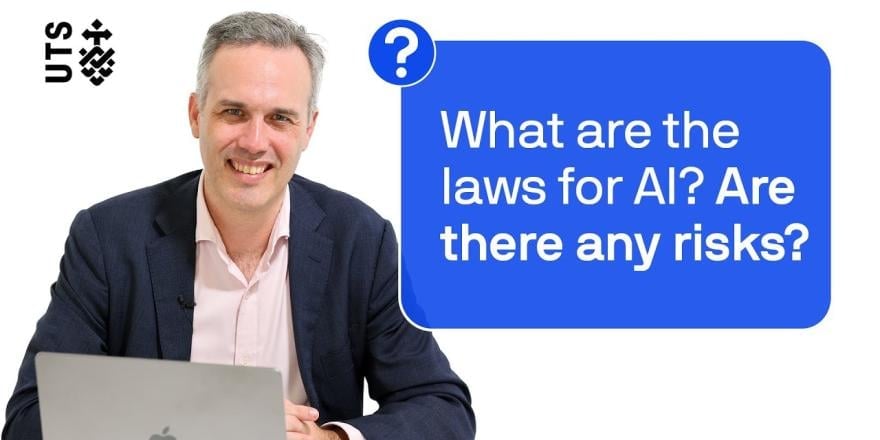
As more and more workplace decisions rely heavily on AI, it's imperative to consider the legal implications. Professor Ed Santow, a Human Rights Lawyer and one of the founders of the Human Technology Institute at the University of Technology Sydney (UTS), explains that one of the biggest risks with AI is its opaque decision-making process.
“When a machine makes a decision, sometimes no one is entirely sure of how it arrived at the result. In these cases, we need to ensure that any decision-makers in the process are truly accountable. If we can't understand the rationale behind a decision, we question its fairness, accuracy, and compliance with the law,” he said.
Individuals are also increasingly using generative AI applications in their work or personal lives – including when they are making important decisions or handling sensitive client information. It's important to consider that inputting this kind of data into generative AI systems could unintentionally lead to breaching legal or ethical obligations.
To help protect against this, Professor Santow emphasises the importance of creating responsible AI technologies, that integrate human rights protections into their design, development, implementation, and oversight.
2. Impact of AI on Intellectual Property (IP) laws
In today's AI-driven world, Intellectual Property (IP) laws are more crucial than ever. When we safeguard IP, we help nurture new ideas to flourish, and innovation and creativity to thrive. Protecting IP gives creators the power to control and benefit from their hard work.
Due to AI’s content creating abilities, it throws open many questions around IP law and governance. For example, who owns the content AI generates? IP laws were established for human creators, so it's not clear who should get the rights to things like AI-generated art or music. Also, AI's capacity to replicate existing works makes it difficult to know if something is truly a new concept – or if it’s infringing on copyright laws.
Another concern is its potential to use restricted data, leading to uncertainties about liability. These are just some of the challenges and are great examples of why we need updated IP laws that address the nuances of AI.
3. AI and the law landscape in Australia
Australia is behind the European Union (EU), and countries such as USA, Canada, and China in terms of introducing and updating laws for AI.
Australia currently lacks laws specifically for AI. Professor Santow explains our laws are "technology neutral" meaning they apply to all types of technology – whether it's basic software programs or advanced AI systems with deep neural networks. For example, when making decisions on approving home loans, laws that protect against discrimination are in place whether a bank uses traditional methods or complex AI algorithms.
He further explains how our technology neutral laws currently only address about 80% of the rise in AI. As a result, new laws will be necessary to address any emerging areas such as self-driving cars or sophisticated AI technologies that are able to think on behalf of humans.
Recognising this need, the Australian government has begun the process of updating laws to accommodate new AI technologies.
The federal government has also committed to modernising our privacy laws and aligning it with leading countries around the world. This means stricter rules on when personal information can be shared and how long companies or governments can keep that data after an agreed transaction.
Keeping up with AI
As AI rapidly evolves, our legal sector must keep up. That way we get to enjoy the benefits of AI and other technologies in a safe way. Together, they can offer innovative solutions to business and social challenges and help contribute to a better society.
Want to learn more about AI and the law? Check out our Curiosities series on YouTube