

- Posted on 2 Apr 2024
- 6-minute read
University of Technology Sydney researchers are leading a trial of technology that could help protect communities during severe weather events by harnessing artificial intelligence and the mobile phone network to predict the possible impacts of flooding.

The NSW State Emergency Service (SES) has partnered with UTS researchers and TPG Telecom to develop and test network sensing technology, which extracts localised weather information including rainfall, water levels and river flows using signals transmitted on the communications network.
Artificial intelligence can then be used to predict risks to infrastructure and communities, paving the way for the SES to potentially use the data for the rapid dissemination of information to affected communities through targeted alerts.
While still in development, the technology could be transformational for emergency services. Currently, accurate real-time information can be challenging to obtain due to the number of flood sensors, sensor network coverage and network outages during weather events.
Testing of the technology is underway along Sydney’s Parramatta and Georges Rivers and will continue as a centrepiece project of UTS and TPG’s new Network Sensing Lab which, which was officially opened recently by NSW Minister for Customer Service and Digital Government Jihad Dib.
“Researching this technology is an opportunity to pioneer a new era of flood and storm intelligence. This work represents a significant step in the NSW Government’s efforts to combat risks to lives and properties during severe weather events,” Mr Dib said.
This landmark partnership between UTS, TPG Telecom, NSW SES and the NSW Government has the potential to place NSW and Australia at the forefront of how new telecommunication technologies can help in addressing climate challenges and saving lives. UTS Vice-Chancellor Professor Andrew Parfitt
“As we face increasingly severe weather influenced by climate change, we are supporting the NSW State Emergency Service with technology that could help communities access important storm and flood information quicker.
“The new technology will improve data-driven decision-making for first responders, filling an information gap that could make an important difference in emergency situations.”
University of Technology Sydney Vice-Chancellor Professor Andrew Parfitt said the project was a manifestation of UTS’s mission to translate research into societal impacts, contributing to NSW and Australia’s economic sustainability, prosperity and community resilience.
“Thanks to NSW Government support, our world-leading wireless research team, led by Distinguished Professor Jay Guo, can build on six years of research establishing the foundation for the flood and storm intelligence sensing system now in development,” Professor Parfitt said.
“Network sensing can potentially transform the way our emergency personnel manage and mitigate flood and storm risks, but there are other applications for the technology that also will be explored in the new TPG-UTS Network Sensing Lab.
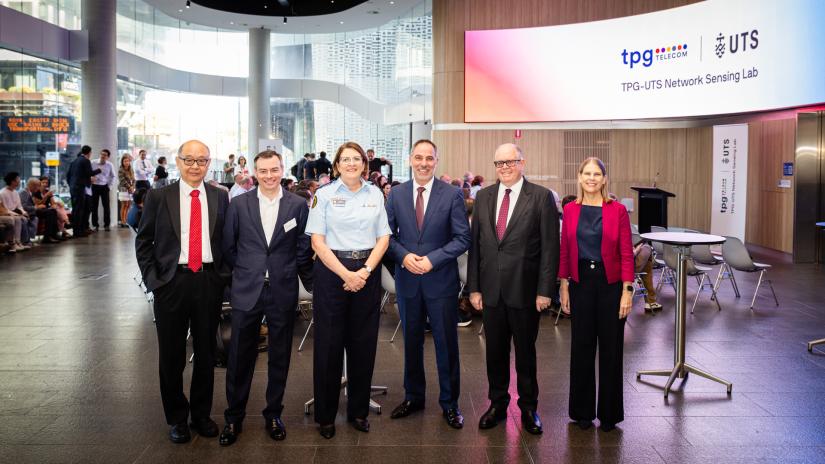
“This landmark partnership between UTS, TPG Telecom, NSW SES and the NSW Government has the potential to place NSW and Australia at the forefront of how new telecommunication technologies can help in addressing climate challenges and saving lives.”
“The TPG-UTS Network Sensing Lab will translate research into industrial solutions,” said Distinguished Professor Jay Guo.
"There are limitless opportunities for network sensing technology aside from rainfall monitoring and flood protection.
“They include traffic management, object and intruder detection for smart transport, collision avoidance, search and rescue and health and sports monitoring.”
The Flood and Storm Intelligence Sensing project is funded through Transport for NSW’s Smart Places Acceleration Program, a special reservation of the Digital Restart Fund, administered by the Department of Customer Service.
The project builds on cross-agency work on improving flood warnings, and the State Disaster Mitigation Plan which flags early warning systems as a priority for the NSW Government.