

- Posted on 1 Nov 2023
- 6-minute read
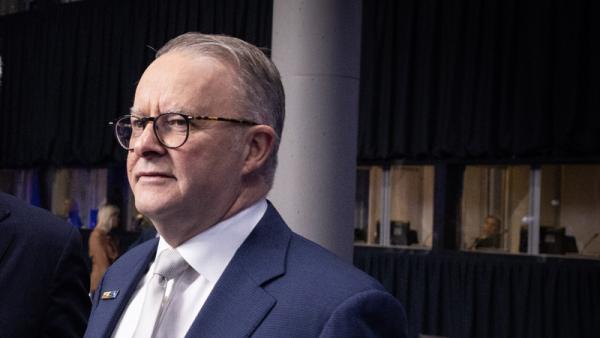
NATO North Atlantic Treaty Organization / Flickr

Elena Collinson, Manager, Research Analysis, Australia-China Relations Institute, University of Technology Sydney
This article appeared in the Taiwan Center for Security Studies' Security Commentarieson November 1 2023.
After years of rancour, Canberra and Beijing have over the last 18 months engaged in more cordial government-to-government relations, crystallising politically in Australian Prime Minister Anthony Albanese scheduled visit to Beijing from November 4 to 7. He will be the first Australian Prime Minister to travel to the People’s Republic of China (PRC) in seven years.
While bilateral civility has paved the way towards a relatively warmer relationship, there remains a chasm between the articulated intended aims of each nation in terms of its future direction.
A shift in Beijing’s rhetoric was noticeable from around July, when PRC Foreign Minister Wang Yi told his Australian counterpart that bilateral relations had ‘stabilised, improved and developed’, calling for the ‘advancement’ of the relationship. In the meantime, Australian ministers continue to characterise the relationship as one still moving towards stabilisation.
The question is, therefore, can the Australia-China relationship progress much beyond its current détente?
To be sure, a raft of irritants have now been ironed out, with both sides having worked towards cultivating a climate of goodwill in the weeks immediately preceding and following the confirmation of the visit.
Over August and September, PRC authorities lifted trade restrictions on Australian barley and hay imports, and returned Australia to its Approved Destination Status list. The Australia-China High Level Dialogue resumed, having last been held in 2020, with the Australian delegation receiving a warmer than expected welcome. The usually bellicose Global Times editorialised before the Dialogue that it was a ‘momentous event’ between the nations.
Australian citizen Cheng Lei was released after more than three years of detention by the PRC, returning to Australia on October 11. Just over a week later, the Australian government quietly announced via departmental statement that it ‘was not necessary to vary or cancel’ Landbridge’s 99-year lease of the Port of Darwin. The governing Australian Labor Party had flagged its opposition to the lease since 2015.
Subsequently, Australia’s Anti-Dumping Commission made a preliminary recommendation that measures on wind towers from the PRC expire in April next year, one of the goods categories the PRC is currently disputing at the WTO. Around the same time, Beijing agreed to commence a review of its punitive tariffs on Australian wine, with Australia simultaneously suspending its World Trade Organization (WTO) complaint on the matter. This then appeared to pave the way for the addition of attendance of the China International Import Expo in Beijing to Albanese’s November itinerary, an event he was originally not scheduled to attend. In view of these developments, it is unlikely there will be any major ‘announceables’ in the wake of Albanese’s PRC visit. There is, however, the possibility of the issuance of a joint communique, which would allow for a floor of sorts to be placed under the relationship.
Since assuming office, the Albanese government has eschewed the open talk of war embraced by the previous conservative government. It has emphasised the importance of trade with the PRC, and maintained adherence to the one China policy. It has also held off on placing targeted sanctions on PRC officials and entities implicated in human rights violations in Xinjiang, despite having called for such measures while in opposition.
As for Beijing, as tensions with the US simmer, steadier relations with a key US ally is undoubtedly in its strategic interest. So, too, access to a steady supply of resources. Indeed, the PRC’s Ambassador to Australia had in September exhorted against ‘decoupling and chain breaking’.
However, a number of structural factors constrain the extent to which relations can advance.
Chief among these is Australia’s closer strategic alignment with the US, evinced most clearly in the AUKUS security partnership, as well as in the nation’s Defence Strategic Review. The Albanese government has firmly committed to moving cooperation between Australian and US forces from interoperability to interchangeability. The alliance, Deputy Prime Minister and Defence Minister Richard Marles said in December last year, is ‘essential to our worldview’ and ‘completely central to our national security’. This was reinforced in an April speech by Foreign Minister Penny Wong, who stated that the US was ‘central to balancing a multipolar region.’
An expanding PRC presence in the Pacific Islands region, including through infrastructure lending and the establishment of security agreements, has been cause for concern in Australia, which has in response worked towards strengthening and extending its own ties with Pacific Island nations. Efforts here have been marked by competition, with prospects for cooperation – once tentatively flagged as a possibility by Australia’s Minister for International Development and the Pacific, Pat Conroy – slim.
Australia is also acutely focused on de-risking its economic relationship with the PRC, particularly in relation to investment in its critical minerals sector. The Australian government’s recently released Critical Minerals Strategy seeks to address concerns over the PRC’s dominance of global supply chains through the generation of increased investment and collaboration with likeminded partners. On recommendation from the Foreign Investment Review Board, the Australian Treasurer this year blocked two applications from companies controlled by PRC nationals to, respectively, raise ownership in, and take over, critical minerals producers. And just last week, Prime Minister Albanese announced a $2 billion boost to critical minerals financing, with a view to helping ‘build supply chains with the US’.
The Albanese government has thus far striven to maintain the status quo, established by previous governments, vis-à-vis Australian China policy, although it has coupled this with the banishment of the megaphone. There has been no substantive change in approach, nor is there likely to be, at least in a manner that favours Beijing. The structural issues at play, moreover, are only likely to intensify.
Taken together, all signs point to a fragile rapprochement. How long this will last remains to be seen. This period may well represent the zenith of Australia-China relations for the foreseeable future.
Author
Elena Collinson is head of analysis at the Australia-China Relations Institute, University of Technology Sydney.