

- Posted on 20 Oct 2023
- 5-minute read
Join us at the UTS Behavioural Lab Conference, a dynamic event dedicated to bridging the gap between behavioural science researchers and practitioners. Discover how insights from behavioural science drive innovative solutions for policymakers and businesses.
Conference focus
Behavioural Science for Sustainable Futures: Nudging Change in a Changing Climate
Invited speakers
- Professor John Duffy, University of California, Irvine
- Professor Matthew Hornsey, The University of Queensland
- Dave Trudinger, Clare PowerNSW Behavioural Insights Unit at NSW Department of Customer Service
- Professor Sara Dolnicar, The University of Queensland
Conference program
Welcome
- Welcome and introduction from the Director, A/Professor Adrian Camilleri and Nathalie Spencer Asia Pacific Chapter Lead, GAABS
Conference Opening
- Acknowledgement of Country and conference opening, Professor Prabhu Sivabalan, Acting Pro-Vice Chancellor (Enterprise Learning)
TRADE, VOTING AND ESG POLICIES: THEORY AND EVIDENCE
- Professor John Duffy, University of California, Irvine (UCI), an affiliate of the Institute of Social and Economic Research (ISER) at Osaka University and co-director of UCI's Experimental Social Science Laboratory (ESSL)
Blitz presentations by UTS Economics DISCIPLINE GROUP
- Dr Nathan Kettlewell: “Encouraging university students to use a mental health smartphone app”
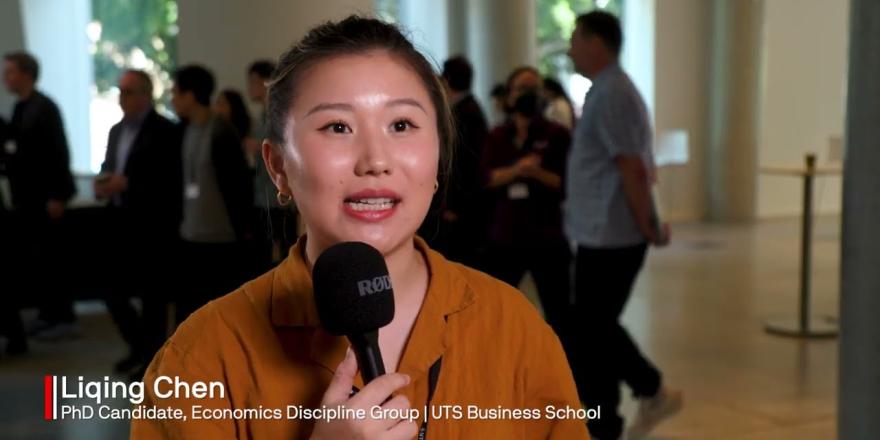
- Liqing Chen: “Instant deposit and delayed withdrawal: How does the design of online gambling platforms affect gambling decisions?”
- Dr Benjamin Young: “Gross return illusion and fee aversion in mutual fund choice”
- Professor Mikhail Anufriev: “Complexity aversion in choice”
- Aleksandra Erakhtina: “Decision making over time”
A TOOLKIT FOR UNDERSTANDING (AND REDUCING) CLIMATE CHANGE SCEPTICISM
- Professor Matthew Hornsey, The University of Queensland and Australian Research Council Laureate Fellow
BEHAVIOUR SMART: CONNECTING RESEARCH AND PRACTICE
- Dave Trudinger, Director, and Clare Power NSW Behavioural Insights Unit at NSW Department of Customer Service
HOW BEHAVIOURAL SCIENCE CAN HELP INCREASE SUSTAINABILITY BEHAVIOUR IN THE MOST UNLIKELY OF CONTEXTS: ON VACATION
- Professor Sara Dolnicar, The University of Queensland and Australian Research Council Laureate Fellow
Blitz presentations by UTS Marketing DISCIPLINE GROUP
- A/Professor Natalina Zlatevska: “Health & well-being, so-what and what next?”
- A/Professor Adrian Camilleri & Eunbin O: “Improving consumer’s financial sustainability behaviour”
- Dr TaeWoo Kim: “How AI changes ingroup versus outgroup categorisation”
- Dr Jake An: “The relationship between gambling and investing”
- Nathan Moore: “Promoting eco-friendly purchases through personalised nudges”
Conference closing
- Professor Mikhail Anufriev, Deputy Director (Acting), UTS Behavioural Lab
Contact
Dr Adrian Camilleri, Director, UTS Behavioural Lab
Adrian.Camilleri@uts.edu.au
Dr Mikhail Anufriev, Deputy Director (Acting)
Mikhail.Anufriev@uts.edu.au
General enquiries
BehaviouralLab@uts.edu.au