

• Posted on 6 Sep 2023
  • 15-minute read

Hear from Minister Katy Gallagher (keynote address – below), and Karen Wright, Terese Edwards, Dr Anne Summers AO, and the Hon. Prof. Verity Firth AM (panel discussion – main takeaway listed below) on how activists, policymakers, researchers, and the community sector can work together to advocate for – and achieve – change.

This event took place as part of the Australian Labor Party's National Conference.

Keynote address – Minister Katy Gallagher

In her keynote address, Minister Katy Gallagher reflected on:

  • the historic struggle of women in securing financial support for single mothers 
  • the inadequacy of early payments and the impact of naming them as "special benefits." 
  • the evolution of government policies and societal attitudes towards single parents, emphasising the role of advocates and reports in driving change
  • the controversial Parents Next program and its subsequent abolition, reflecting the need for compassionate and responsive policy-making. 
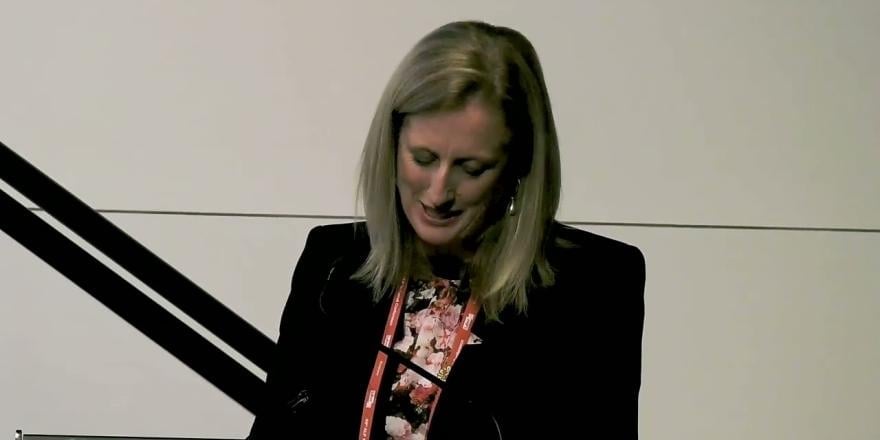
UOJwjiKP4fk

Descriptive transcript

We're ready to start now. Thank you very much for coming to our event today. I really hope you find it interesting. It was a very exciting piece of reform that the Labor government introduced at the last budget, and we're going to give you a little bit of a peek behind the scenes today, so I hope you find it interesting.

My name's Verity Firth. I'm the Pro-Vice-Chancellor of Social Justice and Inclusion at the University of Technology Sydney. We're gathered today on the Yagera and Turrbal country, and I want to pay respect to Elders past and present, and I also want to pay respect to the Gadigal of the Eora clan, whose land the university is built on, where we come from.

Today's discussion is a really exciting one about changing lives through challenging and ultimately reforming a law—a bad law. It gives us the opportunity to celebrate that victory, but also learn from some of the people who were at the heart of winning that victory and some of the lessons that we learnt. In the May budget, Treasurer Jim Chalmers announced an important change to the welfare payment for single parents. Recipients of the Parenting Payment Single will be able to continue to receive the payment until the youngest child turns 14, which is up from the previous cut-off age of eight. At the heart of this reform is the desire to prevent thousands of mostly single mothers and their children from falling further into poverty. The work done by advocates was tireless, and it was over many, many years, and we'll be talking about that today.

But before we take you across to the panel to hear from some of the activists involved, I'm really delighted today to welcome the Minister for Women, Minister for Finance, and Minister for Public Services, Senator Katy Gallagher, to the stage. She's going to give us an opening keynote to today's discussion. I know that she really needs no introduction in a room like this, but Minister Gallagher has dedicated her working life to improving the lives of Australians, whether it was advocating for people with disability as a community worker, standing up for the rights of public servants as a community and public sector union organiser, or delivering for citizens of Canberra as the Chief Minister of the ACT. Welcome, Minister.

Thank you.

Thanks so much, Verity, and thanks, everyone, for coming and giving me the opportunity to say a few words today about this. But obviously, all the expertise and knowledge sits on that panel. So, I've prepared some notes. I think probably in hindsight they're a bit long for the purposes of today, so I'll try and whip through it a bit, because I'm really trying to outline my thinking in relation to this important change and how that occurred across government.

But I would like to acknowledge the traditional owners on whose land we gather this afternoon, and I extend and pay my respects to Elders past, present and emerging. Thank you, Verity, for asking me to be here, and to the panellists who really are the heroes of this result when it comes to Parenting Payment Single: to Anne, Therese and Karen.

I think, where should I begin with this story? I think maybe I start—and I'm going to use a bit of the work that Therese did in the Women to Whitlam book, or your essay in that book—by talking about the history of payments to women, and single women with children in particular.

When we look back at the history of that payment—and I highly recommend that essay to you—I think the fact that there even is a payment was the result of a very hard-fought campaign, largely run by women, and successfully translated into a payment through decisions of a Labor government. Protecting the payment successfully has been the result of community campaigns, and changing the payment was the result of community campaigning.

One of the things that struck me when I was reading Therese's chapter—or essay, I think probably more appropriate—was the social stigma, the origins of how the social stigma really influenced decisions of government about how they respond to it in relation to the payment.

So, the fact that where it began, single women with kids had been largely ignored, or given some derisory kind of payment—what was it, 18 weeks, I think? Twelve weeks before you had the baby, and then six weeks afterwards, before you received no payment—really reflected community sentiment at that time, you know, in the 60s, around views about what an appropriate family was, and views of women who were unmarried with children.

It struck me about the naming of the payment too. When that sort of derisory payment came in, it was called a "special benefit". Now, I don't know about you, but there's nothing about a name like that to make you feel valued. You were kind of "special", and you were given this payment for a very short period of time.

I don't know about many of you, but six weeks postnatal, I was lucky to be out of my pyjamas, let alone receiving absolutely no income support. But I think this was a deliberate decision of government to not provide single mums with the support they needed to care for their children.

And we know that that harsh approach really reflected community attitudes at the time, which just didn't recognise the legitimacy of single parent families. We now, of course, have a much better understanding of the generational damage that that sort of moral attitude had, and what has been caused by those harsh, uncaring and demeaning attitudes, which were backed up and reinforced by government policies.

We've had official apologies essentially given to deal with some of the harm that has been caused by those policies. But importantly, I think for me, the policies could also work the other way around in turning attitudes and views around.

That's, I think, when we look back at the history of the work that Marie Coleman did in the lead up to Bill Hayden pursuing it in government, under the Whitlam government. When you've got a title of the payment like "supporting mother's benefit", again, it legitimised women in those positions and was an entirely different approach—supported those families financially.

We know, and the work that Marie did, and many of those women who sat on the various committees that led up to the commission that Marie led, and then flowed on through decisions that the Whitlam government took.

So I feel like on this payment, it's been a roller coaster ride in many ways, because of course, when Howard and unfortunately later the Gillard government made some changes to that payment, there were gains made and losses incurred. But running alongside some of those choices were often underlying and interrelated social and community attitudes to single parents and single mothers in particular—about their worth, about their value, about the value of their role as carers, and about their contribution to the economy.

Now, it was not long after I became Minister for Women that Anne Summers released both a shocking and groundbreaking report called "The Choice: Poverty or Violence". I know Anne will talk about that today. But it's incredibly compelling reading, using ABS data for the first time to show how those—well, I'll let you talk to your work, Anne—but just suffice to say that that report, the evidence and the arguments outlined in it, had a significant impact on the consideration of this issue by myself, by the Treasurer, by the ERC and by the Prime Minister.

And I think it's fair to say the case for change to the Parenting Payment Single was very compelling. From my point of view, change often requires a few elements coming together at the right time. I think Anne's work was the right report at the right time, but also the persistence and determination from advocates, particularly single mums, was ever present.

I would like to—and I know we're going to hear from Karen later—but I would also like to acknowledge the very considerable contribution that Therese Edwards has made. She is in everyone's door all the time, she is on the phone, she is backing up that lobbying with relationship building, but also her writing, which is very influential as well. So I do want to acknowledge that.

And Therese, this hasn't been a one or two or three or four-year commitment for you. You've been at the table for decades on this, arguing in support of recognition and the value of sole parent families.

I think what I'm trying to race through—because I've got a very long speech that I don't really think is going to interest everybody for the course of today—but I just, I think from the Prime Minister down, we wanted to do something about this payment. I think there was recognition that the decision that was taken in the Gillard government—and this is often really difficult when you're a member of a political party that's taken a particular view, and in the Prime Minister's case, when you were a member of the cabinet that took that decision—to say that that decision was wrong and to change it.

And I think for us, when we were looking forward—and there's no shortage of areas where we would want to make improvements to women's economic equality—the focus isn't always on these payments, because these payments can be demonised, so it's easier to fund other things. But it was clear when we triaged the list of things where you could, for a particular investment, deliver a particular outcome, this was very high on that list.

The numbers—the thousands of single parent families involved, the percentage of those single parent families that were headed by women—and the benefit you could provide by putting that investment in and acknowledging that up to the age of 14, and I know there's been discussion about that, but up to the age of 14, that you are financially supported and respected for that role as carers and mothers in this instance.

So, no doubt we had the PM on board. I have no doubt Therese and Anne were in his ear as well, and others. I hadn't really thought about it to this point, but I think Patricia Karvelas said to me on radio one morning, "How many finance ministers have there been who have lived on a single parent payment?" And I kind of was like, oh yeah, I guess so—probably none other than me. And for me, that payment was life changing.

So I think we do bring our own experience to the table. We had evidence, we had community campaigning, we had a decision to make, and then, you know, what value add do we bring as politicians? That is, we try and represent our communities, but we also bring our own life experience to the table. And I think, no doubt, that had a hand in helping with that decision as well.

Because I think it's very real—the idea of understanding how people make ends meet week by week when they're on the payment, and what a reversion to a lower payment would do in those instances, to those families, and the pressure that that would place those families under.

I think the other thing which we aligned with this program was—and again, Therese and Anne have been big campaigners on this—the ParentsNext program, which no doubt will come up as well. But also having the opportunity to abolish that program, and to again say—and this comes back to how we speak about the social welfare system, why we have it, what it's for—is the fact that we had, and it's linked to Parenting Payment Single, because a decision had been taken to put in place a very punitive program that targeted young and vulnerable parents of children.

On the other hand, we had taken a decision that mutual obligation shouldn't kick in until your child is six. On this hand, we took a particularly vulnerable group, many with higher needs than the general population, and applied that mutual obligation to those babies from, I think, six months old. It's nuts when you try and break it down like that.

And I have to say, after the budget, when we made the decision to abolish it, I think it was the one measure in the budget that I got most correspondence on, and most of the correspondence was from people on the program.

In fact, I had an email sent to me—I was driving home from a budget event, not driving and reading at the same time, but I got it when I got home—and it was from a woman who had heard it on the radio that that program was being abolished, had just been breached that day, had a six, four, and one-year-old, I think, and was homeless. And because she hadn't attended a particular appointment, had been told that she'd have her income suspended. And she said she nearly drove off the road—thankfully she didn't—but she was, you know... And it's things like this, and particularly when you're in the federal government and you're a little bit more removed from service delivery, it's feedback like that which, again, reinforces that good policy, good government, responding to issues where you can—not to everyone's entire satisfaction, but making progress that translates directly, almost immediately, into an improvement in a vulnerable family's life—is very reaffirming that the work we're doing, whilst unfinished, is important and makes a difference.

So I'll leave it there, Verity, but thank you for the opportunity, and again, it's these great women here, really, who should be getting any applause, because it's their work that has led to this change. Thank you.

Panel discussion – key takeaways

During their panel disucssion, Karen Wright, Terese Edwards, Dr Anne Summers AO, and the Hon. Prof. Verity Firth AM reflected on: 

  • the importance of incorporating the lived experiences of those affected by a policy, showcasing personal stories to humanise the issue. 
  • the pivotal role that media plays in raising awareness and garnering support for a campaign
  • the importance of creativity in campaign strategies
  • why having a clear and focused message is essential to the success of a campaign
  • why firmness, collaboration, and effective communication are essential when advocating for policy changes that impact vulnerable populations like single mothers.

I didn't stop campaigning, and we used every avenue that we could possibly think of. We've co-produced a documentary and wrote a complaint, the first complaint that the United Nations have negated … that thrills me to no end. – Terese Edwards

The fact that 60% of single mothers had experienced violence was a truly shocking finding. It's something that we still have to combat to have single mothers seen with respect ... and the payment they receive should reflect that. – Dr Anne Summers AO

I think when you're changing a policy or law, you need lived experience. You can't just go making decisions without actually connecting with the people who are going to live this every single day. – Karen Wright

Speakers

Minister Katy Gallagher has dedicated her working life to improving the lives of Australians, whether it was advocating for people with disabilities as a community worker, standing up for the rights of public servants as a Community and Public Sector Union Organiser, or delivering for citizens of Canberra as the Chief Minister of the ACT. As a Minister in the ACT Government and later as Chief Minister, Katy Gallagher led a progressive and future-focused government that legislated marriage equality, started Australia’s first public nurse-led walk-in medical centres, and committed the Government to a 100% renewable energy target by 2020.

As a senior Cabinet Minister holding the Federal Government’s finance and women’s portfolios, Katy Gallagher is passionate about making women’s equal opportunity an economic and social priority of government.

Karen Wright is a Councillor on Bega Valley Shire Council. She is a single mother to Wilbur and Elliot, who are 10 and 7 years old. She has been actively involved in several community organisations as a board member and volunteer and sat on the Lived Experience Advisory Group of the NSW Ministry of Health's Towards Zero Suicides Initiatives.

Karen is an advocate for single parents at local government level, factoring in how her decisions can have huge impacts on people with low incomes, noting the pensioner rebate has not changed since she was born in 1993.  
She is particularly passionate about suicide prevention, the arts, housing for all, and support for single parents. Karen was supported in her election campaign by Women for Election Australia, and is passionate about having more women from all backgrounds in all levels of government.

Terese Edwards is CEO of the National Council of Single Mothers and their Children. She focuses on changing the dialogue on single mothers, and making sure women's strengths, voices, and respect are central to policy decisions. She assists women in navigating complex systems to gain the information that best supports and protects their families.

Dr Anne Summers AO is a journalist, commentator, and best-selling author. Anne is currently Professor of Domestic and Family Violence at UTS Business School, where she conducts innovative data-based research into domestic violence in Australia. Her 2022 report, The Choice: Violence or Poverty, influenced the federal government to make changes to the payment system for single mothers. 

The Hon. Professor Verity Firth AM is Pro Vice-Chancellor (Social Justice and Inclusion) at UTS. She served as Minister for Education and Training in New South Wales (2008–2011) and NSW Minister for Women (2007–2009). After leaving office, Verity was the Chief Executive of the Public Education Foundation. 


Share