

- Posted on 15 Jun 2023
- 2-minute read
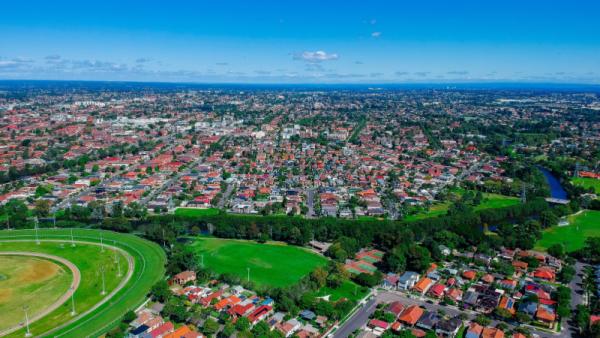
Elias Bitar / Shutterstock
Foreign capital and buyers are often blamed for pushing up housing prices and reducing the supply of affordable housing in Australia. We examine this issue by assessing the impact of Chinese macroprudential policies, such as the limitation on currency transactions (LCT), on Sydney housing prices. Using propensity score matching and difference-in-differences techniques, we find that the LCT policy issued by the People’s Bank of China in 2017 had a strongly negative impact (about −3%) on housing prices in suburbs with larger concentrations of Chinese residents, which are measured by multiple cutoff points—hereafter, Chinese suburbs—in Sydney, Australia. The results are consistent with home bias abroad, which implies that Chinese capital for residential real estate overseas most likely flows to predominately Chinese neighbourhoods in the destination city. We also find evidence that the relationship between this Chinese macroprudential policy and overseas housing prices is more direct to Chinese suburbs, with little impact on housing prices outside Chinese neighbourhoods within the studied period.
Read the article online here.
Note: This article was published in Housing Studies, DOI: 10.1080/02673037.2023.2222675
Related links
- Song Shi, How much did Chinese investors drive up Sydney home prices? It’s less than you might think, The Conversation, September 11 2023.
Authors
Song Shi, Associate Professor, School of Built Environment, UTS Faculty of Design, Architecture and Building.
Xunpeng Shi, Research Principal, Australia-China Relations Institute, University of Technology Sydney.