

- Posted on 22 Feb 2023
- 5-minute read
Vladyslav Horoshevych / Shutterstock

James Laurenceson, Director, Australia-China Relations Institute, University of Technology Sydney
This article appeared in East Asia Forum on February 22 2023.
The share of Australia’s total goods exports going to China fell to 27 percent in June 2022, a sharp decrease from 46 percent just a year earlier. While some commentary have heralded this as a success for Australian diversification away from China, it is more accurately described as a redirection of trade flows.
‘Australia’s trade diversification away from China picks up pace’ was the narrative that the Australian Strategic Policy Institute chose to spin. Pointing to the same data, other analysts trumpeted that ‘Australia found other markets’ after Beijing disrupted access for Australian barley, coal, wine and other goods in 2020.
Taken as further evidence of desirable ‘diversification’ is an increase in trade with regional partners considered more strategically aligned with Australia. During the same period, Japan’s share jumped to 17.8 percent — up from 11.6 percent — while India’s reached 6 percent (up from 3 percent).
Looking ahead, free trade agreements (FTAs) including the Australia-India Economic Cooperation and Trade Agreement and ‘friend-shoring’ initiatives like the Biden administration’s Inflation Reduction Act are viewed as cementing the shift. The latter allows US-based manufacturers to claim a tax credit if they source a specified proportion of critical minerals contained in batteries domestically or from a country where the United States has an existing FTA.
But such tales cannot explain recent changes in trade shares. Changes in China’s trade share can be explained by movements in the world price of iron ore. Iron ore consistently accounts for more than 60 percent of the value of Australia’s total goods exports to China. During 2020 and the first half of 2021, iron ore prices experienced an unprecedented run-up. Trade data indicates that this caused China’s trade share to be 12 percentage points higher. China’s trade share still rose by 6 percentage points even as Beijing was disrupting a range of Australian exports.
But iron ore prices began unwinding in July 2021. By December 2022, China’s trade share was in line with what would have been expected if iron ore prices had remained at their level in January 2020.
It is misleading to contend that trade share changes stem from Australian exporters ‘diversifying’ away from China and towards other markets. Diversification is a firm-level strategy that involves making costly investments in marketing and logistics to gradually cultivate new markets while generally striving to retain existing ones.
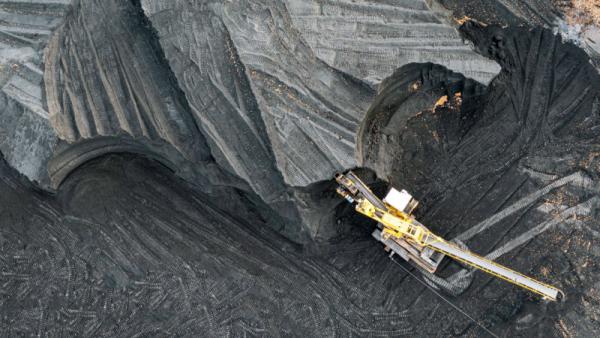
In contrast, the experience of many Australian exporters hit by Beijing’s trade disruption in 2020 was redirection of production at low cost to open and competitive global markets. The redirection of coal has been particularly significant as it accounted for 70 percent of the AU$20 billion (US$13.8 billion) in Australian exports hit with disruption.
But redirection is not diversification.
If Beijing removes the disruptive measures, global markets may well redirect Australian exports back to China. Indeed, this process appears to have already begun as coal trade between Australia and China resumed in January 2023. Another implication is that the geopolitical risk from exposure to the Chinese market has proved to be limited, making the business case for many firms to invest in diversification much weaker than is often suggested.
Some affected Australian exporters were not protected by open and competitive global markets, particularly those selling differentiated products like those in the wine industry. These firms have been forced to begin the gradual and costly diversification process. At the end of 2019, markets for Australian wine other than China were worth AU$1.7 billion (US$1.2 billion). By the end of 2022, this had grown to AU$1.9 billion (US$1.3 billion).
But this was against sales to China collapsing from AU$1.1 billion (US$760 million) to just AU$12 million (US$8.2 million) and wiping out many exporters in the process. Particularly hard hit were smaller-scale exporters with insufficient resources to entertain the possibility of selling into multiple markets. In 2019, there were 1457 wine exporters selling fewer than 50,000 cases to China. In 2023, this now stands at just 45.
As the global transition to net-zero carbon emissions unfolds, the impact of ‘friend-shoring’ initiatives like the Inflation Reduction Act on trade shares are likely to be swamped by economic reality.
Bloomberg estimates that last year China invested AU$784 billion (US$545 billion) in low-carbon energy technology. This investment encompassed endeavours like renewable energy generation, energy storage and electrified transport. The United States was a distant second at just AU$202 billion (US$140 billion). China has already spent the last decade investing heavily in renewables.
Australia’s critical minerals miners feed into these supply chains. Lithium exports have soared from AU$1 billion (US$691 million) in 2020 to AU$16 billion (US$11 billion) in 2023, with more than 90 percent going to China.
Between 2022 and 2027, US battery production capacity is expected to increase by 838 gigawatt hours. China is set for a 5304 gigawatt-hour jump.
Much less has changed for Australia’s export destination profile than meets the eye. There’s little on the horizon suggesting that China’s share will change any time soon.
Author
Professor James Laurenceson is Director of the Australia-China Relations Institute at the University of Technology Sydney.