

- Posted on 12 Jul 2022
- 5-minute read
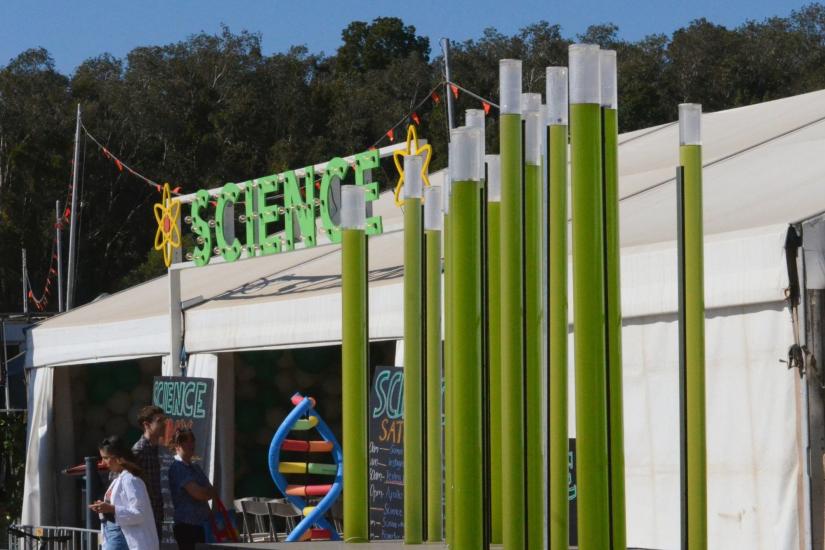
In 2019, patrons attending Australia’s premier outdoor music, arts and cultural event, Splendour in the Grass, encountered an unexpected act on the lineup. Glowing brilliant green and blooming under a bright blue sky was a living, breathing Algae Forest.
Fast forward to 2022, and festival goers, musicians and glowing green algae are once again flocking to North Byron Parklands, with the UTS Living Lights installation taking the main stage outside the Splendour Forum and Science Tent thanks to the UTS Deep Green Biotech Hub (DGBH).
Filled with photosynthetic algae, with their colours emphasised with LED lights for night viewing, the installation was conceived by scientists at the UTS Climate Change Cluster (C3), and was Vivid Sydney’s first living installation. The installation takes algae out of the lab and showcases exciting and innovative UTS research in the public domain in a fun, engaging way.
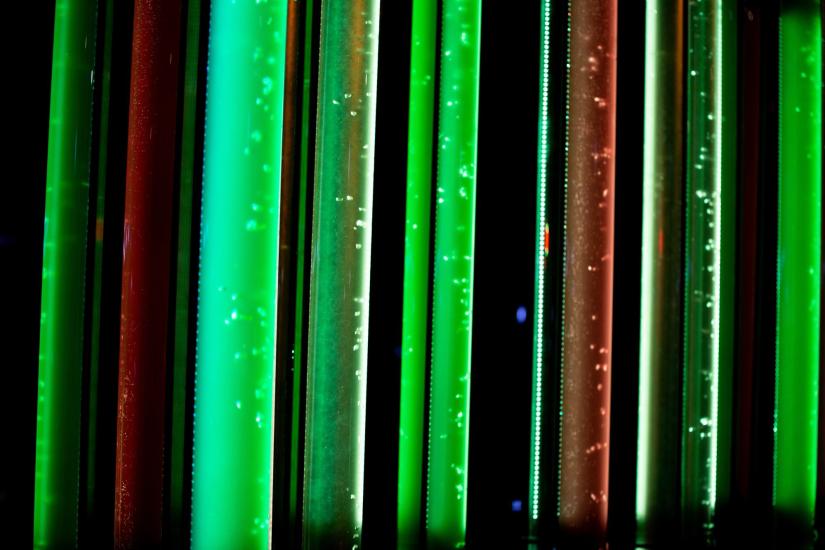
Over the 4 days of the Splendour in the Grass festival, the Living Lights installation filled with microscopic algae, will spark conversations about algae and biotechnology’s role in creating a greener future, all while producing more oxygen than a hectare of Australian bushland.
Living Lights Algae Fast Facts
Over the course of the Splendour in the Grass festival, the algae inside the Living Lights will be:
- Capturing carbon dioxide from the air, using sunlight and turning it into oxygen
- Producing as much oxygen as 1 hectare of Australian bush or a suburban park
- Returned to the earth and used as fertiliser to help regenerate the festival site.
Over the last three years, whilst the world and the music industry ground to a devastating halt, the need to rapidly transition to more sustainable, circular and climate-friendly ways of producing and consuming materials has grown ever more pressing.
At this year’s event, the ‘Algae Team’ - a group of students and researchers - are hoping to demonstrate to festival goers how science can cross into art, design and sustainable solutions for our planet. Aimed to spark conversations about sustainability, innovation, and climate solutions, Living Lights appearance at Splendour will shed light on the myriad applications of algae biotechnology including medicines, food products, animal feed, clothing, pigments and even bioplastics - all areas of innovation currently being investigated by UTS research institute, the Climate Change Cluster, in partnership with industry and businesses.
UTS Science Masters student and DGBH Engagement Ambassador, Rachael Scott, is thrilled to be returning to the festival to talk all things algae with festival goers, “The pandemic really sharpened everyone’s focus on building back better and greener” she said, “The algae industry, and people’s awareness of its huge potential, has really grown in the last three years, and Splendour is a wonderful opportunity to build visibility, enthusiasm and excitement for algae solutions in a large public arena.”
The algae industry, and people’s awareness of its huge potential, has really grown in the last three years, and this is a wonderful opportunity to build visibility, enthusiasm and excitement for algae solutions in a large public arena.
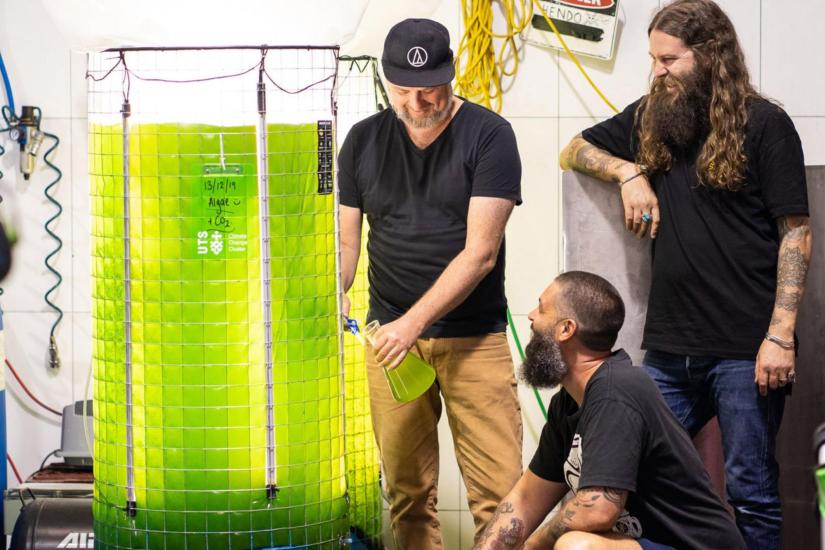
Also attending this year’s festival to speak about algae are the team from Newtown-brewery, Young Henrys who, in partnership with UTS C3 scientists, are pioneering more sustainable practices for both brewing and livestock industries alike.
“The Algae Project”, launched in 2019, aims to utilise algae to capture carbon in the beer brewing process and is exploring ways to combine the resulting algae biomass with spent grain to reduce methane emissions in cattle. Young Henrys' cofounder Richard Adamson and head brewer Jesse Searls will be presenting their Yeasts, Beasts and Magical Things talkin the Science tent.
UTS Science researcher Dr Morgan Alonzo, Masters student Rachael Scott and alumni Dr Bojana Manojlovic, and Dr Alexandra Thomson will also be featured in this year’s jam-packed Science tent program, exploring the science of drug detection, algorithms and new takes on making decisions about climate.
Science Tent Program
Date: Friday 22 July - Sunday 24 July 2022
Location: Splendour Forum Science Tent, Splendour in the Grass, North Byron Parklands.
Location: Deep Green Forest tent (coming soon)
| Date/Venue | Topics/Speakers |
|---|---|
| Sunday 24 July, 3pm Science Tent | Risky Business Speaker:Dr Bojana Manojlovic – Bachelor of Science (Mathematics), Mathematics and Statistics; PhD (Mathematics) alumni Dr Bojana Manojlovic is Head of Data Science at Annalect. She is a passionate algorithm builder, data detective and statistics lover. She comes with a PhD in mathematical modelling of marine ecosystems and more than 6 years of commercial machine learning and statistics experience. |
| Saturday 23 July, 10:15am Science Tent | What’s that drug? Speaker:Dr Morgan Alonzo – Scholarly Teaching Fellow, MAPS (Forensics); Alumni of Bachelor of Forensic Science in Applied Chemistry; PhD. |
| Sunday 24 July, 10:30am Science Tent | Climating Speaker:Rachael Scott – current MSc(Research) student in the C3 Future Reefs Lab, part of the industry-tourism partnership, The Coral Nurture Program. |
If you can't make it, follow the action on Twitter.
About the Deep Green Biotech Hub
The New South Wales Deep Green Biotech Hub (DGBH) dares to turn the state of NSW deep green through the application of algae biotechnologies and Australian innovation. Located at the University of Technology Sydney, the DGBH brings together researchers, SMEs (small to medium enterprises), industry, start-ups, students and other stakeholders to propel NSW to the forefront of algae-based biotechnology innovation in Australia.