

• Posted on 23 Jun 2021
  • 2-minute read

People who have arrived in Australia seeking safety or are from a refugee background offer richness and diversity to our community. Their inclusion is critical to a just and equitable society, and also fosters creativity, productivity and innovation.

But the experience for those who arrived in Australia seeking safety is incredibly challenging.

Hostile policies and systemic uncertainty put barriers at every turn. Basic rights – like to access education – are rendered out of reach.

What can we all do to bring about a stronger, safer, and more inclusive society?
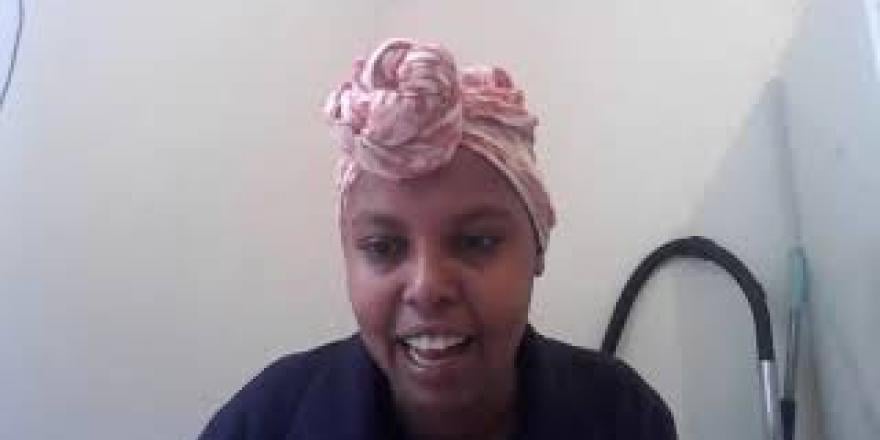
p5g6BUOF9Vc

Descriptive transcript

Thank you, everyone, for joining us for today's event.

Before we begin, I'd like to acknowledge that wherever we are in Australia, we're all on the lands of First Nations peoples, and this was land that was never ceded. Where I am, I'm at UTS, University of Technology Sydney, on the land of the Gadigal people of the Eora Nation. I want to pay respects to Elders past and present, and particularly acknowledge their role in custodianship of knowledge for the land on which this university is built. It's pretty special.

We're at the beginning of Refugee Week 2021. It's an opportunity to recognise and celebrate the richness and diversity that refugee communities offer us as a country. Diversity and excellence clearly go hand in hand. Diversity is not just critical to an equitable society, but it fosters creativity, productivity, innovation, and all of these things are good for every single one of us living in our community.

But what we like to do in Refugee Week, as well as celebrate the richness and diversity of refugee culture, is to use this as an opportunity to reflect on the experience and ongoing challenges for those who arrive in Australia seeking safety.

The theme of this year's Refugee Week is "Unity – the way forward." It comes off the back of the isolating and fragmenting experiences of 2020, in which communities from a refugee background were amongst the most impacted by COVID. Australia's migration and detention policies for people seeking asylum are in the national spotlight currently, with the ongoing plight of the Murugappan family – who you may have heard referred to as the Biloela family in the media, after the name of the town where they lived.

So how can we all collectively head towards a stronger, safer, and more inclusive society?

It's my pleasure now to properly welcome the panellists.

First, Hani Abdieli. Hani is a journalism student, writer, and poet. In 2014, Hani left her home country of Somalia to seek protection in Australia. She has received numerous awards for her community work and currently holds a five-year Safe Haven Enterprise Visa. She is an ambassador for Refugee Advice and Casework Service. Welcome, Hani.

Bakhit David is a volunteer interpreter at Mercy House of Welcome and was previously a volunteer at a youth organisation, Rotaract Australia. He is currently studying community services at TAFE. Bakhit arrived in Australia from Sudan when he was 17. Welcome, Bakhit.

Ahmad Sohan is a solicitor at RACS, which he joined in 2018. Ahmad is responsible for coordinating the RACS Data Breach Project, which has helped over 400 people lodge a complaint to the OAIC regarding the 2014 immigration data breach. He also works on RACS' stateless children program, represents clients held offshore on Nauru and Papua New Guinea in their applications for transfer under Medevac, and works closely with young people who were taken to Nauru as unaccompanied minors. Welcome, Ahmad.

And last but not least, Dorothy Hoddinott was Principal of Holroyd High from 1995 to 2018, where one in every three students had been in Australia less than three years, and about 60 students at that time were of refugee background. She has been a strong advocate for the human rights of children and young people, particularly refugee and asylum seekers. In 2002, she established the Refugee Scholarship Fund, Friends of Zainab, now part of the Public Education Foundation, which helps young refugees and asylum seekers around Australia complete high school and go to university. She was awarded the Australian Human Rights Medal in 2014 for her work with disadvantaged young people and her advocacy for the rights of refugee students. Welcome, Dorothy.

Now we'll open to the panel. As I said before, feel free to start typing questions if you have them.

I might begin with you, Hani. Hani, you are a published poet and have performed twice at the Sydney Opera House. You're currently a journalism student. What do you see as the power of the written word?

Hani: I think, Verity, I can say a lot about that because I would like to use, I think if I actually acknowledge one thing with the current situation that we have on a temporary basis, it's really hard to actually wish for the future. And words for me are powerful. That is my hope. And I would like to answer that with a quote that Nelson Mandela said: "Education is the most powerful weapon that can shape the world."

Sorry about that, Hani, I was taking a sip of water. We've seen the power of journalism, speaking of the power of words, we've seen the power of journalism this last week in the coverage of the Murugappan family and the swell of public support for them.

Do you think the Australian public has a clear understanding of our country's government's policies on migration and detention, and particularly for visas for people who arrive seeking asylum? It seems that when we see cases like the Murugappan family, everyone has a whole lot of generosity to give. Do they really understand what we're doing?

Ahmad: Yeah, thanks, Verity. Look, in short, I think probably not. I think the Australian government has been very good at using a lot of buzzwords, such as labelling people who arrived in Australia either as illegal arrivals or trying to defend their policies by saying they're trying to stay strong on borders, to influence public perception on the issue of refugees coming to Australia. What gets lost in this is the real people being affected by this perception and by this sort of description, where they have fled situations of incredible violence and persecution just to seek safety.

This is where the coverage of the Murugappan family and highlighting the Australian government's treatment of them has been an incredible journalistic effort, both to bring to light the horrible situation that this family in particular has found themselves in, but also the larger issue that people seeking asylum and refugees in Australia face consistently and, I would describe, relentlessly from the government. It reminds us again of how the process impacts real people and families.

It's brought to light again issues such as people spending years on end held in immigration detention, awaiting an outcome on their protection visa application, or the fact that even people who aren't being held in immigration detention but would have arrived in Australia back in 2013 and 2014 – we know now of people who are still waiting eight years or more for an outcome on that application, having developed strong ties to the communities they live in, only then potentially being asked to leave the country if they are unsuccessful with their application.

But even if they are successful – and I'm sure Hani and Bakhit can speak even more to this – you're then only afforded a temporary protection visa, meaning you have to go through this process all over again within three or five years, depending on what you're granted.

I think it's sad for us to witness the plight or the struggles of the Murugappan family. I'm sure they wouldn't have wanted to have such a bright light shone on their situation, but I think it is important that this story stays with everyone so that public discourse around this topic stays alive and continues on, and that as the public we can hold the government accountable to their actions and what I would describe as their general indifference towards people seeking asylum.

Yes, I think that in a way the Murugappan family shows the human face of the policies, doesn't it? Until you actually see how it impacts on a particular family, it can all seem a bit esoteric and far distanced from people.

Speaking about that, how you get people involved in the issue really is making people understand and feel empathy and put themselves in other people's shoes. So I might start with you, Bakhit, but it's actually a question for everyone on the panel. For those who are just beginning to learn more, including our audience today, many of whom are high school and university students, how would you recommend that they begin to engage with communities from a refugee background and get to understand the issues? What do you think, Bakhit?

Bakhit: Thank you, Verity. I think the only thing that I can ask others to do to get engaged with people who are seeking asylum or refugees is to sit with them and ask them what kind of experience they had and what kind of story they have, and listen to their story and acknowledge their story. That's a very good way to get engaged with them, to build that connection and to learn from people who are seeking asylum. I think the simple thing is just to listen to their story, and I know like Hani is writing, and that's a very powerful tool that can get others to engage, in particular the wider Australian community.

What do you think, Dorothy? How do you recommend people become engaged with both the communities and the issues faced by refugee communities?

Dorothy: Well, you know, I worked in a school for a long time, and I'll start by saying education is a fundamental human right – one that we take a bit for granted here in Australia, but refugees can't take anything for granted, particularly education. I've just been stunned this weekend by reading the latest figures for displaced persons from the UNHCR. It's 82.4 million people – that's one percent of the world's population is now displaced, and about 27 or 28 million of those people are refugees, that's displaced outside their country. It's not a situation that's going to go away. Australia doesn't take a very great number of people. The latest figures, of course, were a refugee intake of about 17,000 people in 2018–2019 before the program ground to a halt with the pandemic, and out of that there were 6,845 children, most of whom came into our schools.

So we had up to 60 percent of our students at Holroyd were of refugee background or refugee-like background. You ask what I might do as a principal or what I did as a principal to make that work for our students. Well, I involved not only the kids but their parents as well. We had a program of bringing particularly the mothers, but the fathers also, into the school once a week for English lessons. We provided child care. It was like a social grouping, and then we did excursions for parents because one of the things about refugees is that they don't go anywhere. They don't have holidays. They don't go away for the weekend. They can't go anywhere. The things that control their lives bind them to home, particularly the women.

So we ran a series of excursions for parents and kids – we took them to the zoo, we went to Canberra to see our seat of government, we went to Vaucluse House and things like that. We also were involved with the marvellous Rosemary Kariuki, who's our community person of the year in Australia, and we had mothers and daughters evenings where we were able to bring women who weren't in social situations into providing food and dancing – no men – and it was all terrific.

Things like those are fairly important, but in the school, to make the school welcoming and inclusive, that doesn't happen by itself. That's something that students and teachers need to understand. You actually have to work on making an inclusive environment. You have to consciously involve students from diverse backgrounds in the life of the school and include them, not exclude or marginalise them in any way.

You can do that without meaning to, because sometimes you assume that people who are new into the school or into a university or a TAFE college, Bakhit, are going to know what the ground rules are, but of course they don't. So you have to work to include people into the educational community and make sure they know they're being included as well, and that everyone's part of that. It's a cultural issue. The school has to change its school culture to being open and transparent and helpful.

If you don't help people when they're in a completely alien environment, then they tend to go and sit by themselves at lunchtime and so on, and everyone has to understand those rules – the ground rules, I mean. I don't mean the school rules, they're different. School rules are about don't bring your mobile phone to school and don't hit anybody and things like that. The ground rules are actually the rules of social interaction and they determine the way that we interact with each other.

One of the things I did, I decided I'd take away all the barriers that existed for all of my students to their learning, and one of the first things I did as a principal was to dismantle all the school rules and then negotiate with the community. Out of that we got the concept of respect, and then its twin, responsibility, came to govern everything that we did in the school.

I don't think you can have a welcoming environment without having respect for other people, and that was deeply embedded in the way we ran the school. I had no judgements about the students and their behaviour unless they kept doing the same thing over and over. But those core concepts of respect and responsibility became the way that we worked the school.

So it wasn't about tolerance. Tolerance is about making do. It was actually deeper than tolerance. It was a foundational thing. It was a respect for yourself. You couldn't respect yourself if you didn't respect others, and you had to respect the community and you also had responsibility for what you were doing. Responsibility is about ensuring our individual and collective part in a respectful community.

That was remarkably successful, I have to say.

Sorry. That's amazing. Wonderful to hear that. I especially like the idea of throwing out the rules and then renegotiating and that being about respect. It's a bit edgy – could have gone all sorts of ways.

Hani, throughout Dorothy talking about that, you were nodding away so I could see that that spoke to you. What would be your advice about engaging with communities from refugee backgrounds and getting that communication happening?

Hani: I think I would say listening, because listening is so powerful. We have to listen to people's stories deeply. Also, we need to be clear with a lot of things. There's a lot of blame in this system, and I think we should not blame the public. We should hold the government to account for putting people in prison and in limbo.

Because you can have a future, but a future with uncertainty doesn't work. It breaks people's hope. What I think is, all of us as a population, we have to hold our governments to account about how they treat human beings. Because we are not goats; you can't fence people. Enough is enough. It's been longer than eight years that people are on temporary visas and all that.

We have this idea – it's like the media versus the government, the government versus the public, and there's all this blame. We need to put those blame aside and actually hold to account a system that puts people in prison, a system that is designed to kill humanity cell by cell.

So my advice would be: listening, and as a collective, we should be able to hold our governments to account and say enough is enough. People shouldn't be on temporary visas. People shouldn't be in pending limbo. Humans are humans no matter where they are and who they are. We all have equal rights in the eyes of God, so why can't we just practise that? It's easy. Sorted.

Thank you for that, Hani. Bakhit, you're deeply involved in volunteering and giving back to the community, which I think is really admirable. You're also studying a community services diploma at TAFE, so you clearly find community really important. How has both your studies and your volunteering helped you, and why is community so important for you?

Bakhit: Actually, I found volunteering or engaging with the community through the school while I was studying at Seaview Downs Senior College in South Australia. Other schools had Rotary Club and Rotaract for people our age. Every Monday we held meetings, and I became a member of that Rotary Club. Through the meetings, I progressed to the next year, became a member of the executive team, and worked with the manager of the Rotary Club.

During that time, we did a lot of volunteering work for the community. That's where we see the real Australian spirit, because you get engaged with Australian people, you interact, and you share the same aim – everyone's coming there to volunteer. I found a lot of teachers sacrifice their time to come and volunteer, and it's very rare to find teachers volunteering their time. That really resonated with me.

Also, I have been in touch with my teacher who always said, "If I have a minute to watch TV and there's someone who needs help, I would rather go and help." This kind of link with teachers and getting actively engaged in the school environment links you to the community as a student, and helps you to see how Australia is. Part of our volunteering program, we had to cook barbecue sausages at Bunnings on Saturdays. You see every person coming out of Bunnings, they smile and say "Hi mate," and take a sausage. The money goes back to the community. It's small, but it means a lot to a person like me. I wanted to learn the language – someone says "Hi mate," someone else jokes, "Do you put onion first or sausage first?" You learn this, and it engages you in the community.

I really encourage all students to get engaged with the community as well as with teachers at school. That makes a good link to volunteering, and that was my way to get engaged. After that, I was lucky enough to study at TAFE, and I am currently working in community services as well.

That's fantastic – that's really good advice to other students out there, just getting involved in volunteering and getting involved in the community.

Ahmad, we've had a number of people talk about the big structural difficulties facing asylum seekers in Australia, and Hani really outlined that very strongly. What are some of the challenges you face in your daily work just helping people to navigate the Australian legal system?

Ahmad: Yeah, so I think it's important to obviously keep in mind all those larger issues because they're at the core of what can force change and make these processes easier. Day-to-day for us, as everyone is aware, the law in general and law in Australia can be incredibly complex, and this is especially the case for the laws surrounding the process of seeking asylum and migration laws. The people we assist at RACS largely either don't speak English or don't speak it as a first language, and so rely heavily on services like RACS to navigate the process. In turn, we rely heavily on translators and interpreters to make sure we're able to explain everything and the processes as best we can to our clients.

That can be tricky, because not only are you trying to make it plain English or bring it down to something everyone can understand, but also making sure that the language you're using is easily interpreted, and making sure everyone is informed and aware of their situation and what's happening.

Another part that is very day-to-day and something we struggle with a lot – and we've already touched on this a little bit – is just how slow the processes are by the government to resolve these applications and the situations of people seeking asylum here. I've heard it firsthand, and I'm sure Bakhit and Hani can speak a lot more to this, but just how draining and stressful that process can be, in terms of how long it lasts. With RACS, we often have to act as a conduit to that and try our best to manage expectations and make sure that RACS as a legal centre is there to support them as we're working through this process, and making sure we're all engaged in that together to eventually reach an outcome.

You must have victories some of the time? Ahmad: Yeah, you definitely do. I don't want to sound too pessimistic about everything – you do get victories. With temporary visas, sometimes the victories are a bit of a bittersweet moment because it provides a bit of a safety net, but ideally you'd hope for more permanent protection and a more permanent solution for people who've fled horrific situations. For me, at least on a personal note, I feel incredibly grateful to be able to do this work, and I hope that my work and everything I do on a day-to-day basis might end up helping someone out and really changing their outlook on life and hopefully giving them a second chance at building a life in the community and making sure they can make the most of it.

So, Hani and Bakhit, I might go to you first, Hani. Australia has pretty hostile processes and policies for people who come here seeking asylum and protection. So why do people try to come here?

Hani: People come here because – sometimes I don't like talking a lot, I like to answer things with one of my favourite poets, Warsan Shire, as she said: "No one leaves home unless home is the mouth of a shark." I would answer with that. We have this "why are people leaving, why is this happening?" No one actually wants to leave their loved ones behind. No one wants to walk on an unfamiliar street. No one wants to leave the smells they know. People leave because they are forced to leave. I always, whenever I see these policies and what we left behind, I call these policies like running from a cheetah but into a lion – Somalia was a cheetah and Australia is a lion; they're both cats, but with a different purpose. The main reason people leave is because we need safety, we need a place we can call home. Sometimes you can't call home here and you can't call home back, so we're living in this limbo. People leave because home turned into a mouth of a shark.

Oh, you can tell you're a poet, Hani – that's amazing, running from the cheetah into the lion. That was an amazing way of putting it. That is the Australian policy. It's really beautifully put – depressing, but beautifully put.

Bakhit, what about you? Same as what Hani said, or do you have anything to add? Bakhit: Yeah, I will say actually the same – safety is the biggest concern. It's not only here, it's international, it's a human thing everywhere. You see people migrating from Africa to Europe or from the Middle East to Europe – it's a safety issue. Also, in the Western world, it's known for advocating for human rights and taking a leadership position, so that's why when we move from our countries and sacrifice to come to Australia or other countries, we want to see someone who could advocate for us as well as someone who stands up for human rights and values. Because we are so vulnerable and need a lot of help, it's easier for us to see the person who could help, and if it's safer and encouraging, we would rather go there because we want that protection and help.

Also, media is attractive in terms of attracting us to come to the Western world, because media plays a critical role – they show what's happening in war zones and convey the message to the Western media, and it's also done through journalism. So that's also kind of attractive, because as a migrant or a person seeking asylum, you want that person to be there to advocate for you. That's another thing that could help you to come to Australia or any other country.

Dorothy, what can our schools do and what can our young people do to be more aware of the experience and challenges of refugees and people seeking asylum, but also to help seek change?

Dorothy: There are two issues there – one is the schools. As part of the duty of care that schools have to their students, they actually need to explore what the real needs of the students in their care are. If you're a high school and you've got a young asylum seeker come to you and that person is 17, which is now over the minimum age for leaving, I still think you should enrol that student into the school. Some schools don't, and we need to look at things like enrolment policy – where is a young person in that in-between age group? There were 22 percent of the refugees who came to Australia in 2018–19 aged between 17 and 29. Where's the best place for the younger group of those students to be enrolled? I think in a school, which is on a small scale and can individualise both the pastoral care for the student and the education, and it's a secure place.

We need to be more open-minded and less legalistic in schools about enrolling older students in high schools. We need to think about the real needs of children who come to us from refugee backgrounds – they've all been through trauma, they've all got interrupted education, they've all lost just about everything along the way, including family members. We need to set up support mechanisms in schools to help them adjust to the new life they're leading, and that might mean working with the parents, moving parents into support groups like STARTTS, which is a service for the treatment and rehabilitation of torture and trauma survivors, where people might gain from that sort of counselling.

We need to be able to refer people into further assistance beyond the scope of the school, and we should also not see the school as being, "well, it's three o'clock, we can't meet to discuss your issue." When you're dealing with refugee children, you've got a lot of things to think about. We had to think about basic health care, dental care, and supply that. Towards the end of my work there, we had an intake of Syrian children, and a lot of those children were quite deaf – their eardrums had suffered damage from the bombing they'd been subjected to. When you start to unpick things, you have to be sympathetic to those things.

As far as students go, as well as teachers and so on, I think we need to walk in the shoes of refugees much more than we do. We need that empathetic approach to dealing with people. People seeking asylum and refugees are an important part of our Australian story – since the 1930s, about a million refugees have come to Australia. A lot of the population is descended from people who were refugees, and we don't acknowledge that. It's not out there in the public discourse, it's not in the school curriculum. Children aren't taught about the migration story, which is one of the great success stories of Australia. It's almost as though we're a bit ashamed of it and put it aside.

We need to be doing that for young people. There are lots of places to inform yourself – I really don't think you should go into these debates without information. You can go onto the UNHCR website and find out what the rules are, you can read the Convention on the Rights of the Child, you can read the Refugee Convention – they're all downloadable from the net. You can join groups like Women for Refugees, UNICEF, Amnesty, and things like that. But you need to be informed. You need to approach this debate with your head and not just your heart – your heart is what you bring to the issue with the refugees themselves, but your head is what you argue with, and an often obdurate and cruel set of policies that the government puts up to exclude some asylum seekers from our community. So you've got to be informed, and it's easy to get that information, and there is a lot of information available in schools, which is probably gathering dust in the school library as I speak.

I think those are the things we need to be looking upwards. We need to maintain our human empathy, remember that we have more in common than we have which is different in our common humanity. Those are important things.

Wonderful. My next question – I'm actually going to now go to the audience. The audience have been asking questions and there's some lovely ones in there, so I'm going to start with the one that's got the most votes so far, from Alison Cork. I'll get you to lead this off, Dorothy, but I'll ask each of our panellists: Is there any chance we will see a royal commission into refugees, asylum seekers, and our treatment of them? What do you think, Dorothy?

Dorothy: No, I think it's extremely unlikely. I don't think the murkier ends of the treatment of asylum seekers are things that the government wants to be dragged into the light under the power of a royal commission, which is compelling people to speak the truth. The treatment of the Tamil family, the Murugappans, is a good example of that. What possible justification can you have for treating children in that fashion? It's a breach of the Convention on the Rights of the Child, to which Australia is a signatory, and a breach of what would be the law in every state jurisdiction. I was a mandatory reporter of child abuse, and the emotional abuse of those children alone would have made me have to make a report to the relevant child protection authorities about the incarceration of those children. There's a whole lot of stuff there which would be reportable in our community. I'm sure the government doesn't want all that starting to be unravelled in a public forum, so no, I don't think we're going to see a royal commission.

What do you think, Ahmad? Is it something we should be pushing for, or is it just unlikely to happen?

Ahmad: I think I'm in the same boat as Dorothy – I can't see how it would happen. I don't think the government would be willing to accept that or take it on. I agree wholeheartedly with everything Dorothy said. There's just too much there that the government would not want to be out there in public in the form of a royal commission. What we do have and what we can all refer to is reports by the Australian Human Rights Commission, ombudsman reports that have investigated this, even some international sources, but I think that's probably going to be the limit of that. I can't see a royal commission coming into it.

I'll ask you the next one, Ahmad, because it's got a legal focus. Rhonda Durham asks: With the newly passed Migration Amendment Bill, do you think we will be seeing an increase of refugees in detention now that they can't be deported? What can be done to rally for the law to be revoked?

Ahmad: That's a really good question – it's a very specific legal question. The way the amendment bill came to pass, or at least was displayed, was well hidden behind this facade of "we're just enshrining it in law that people who are found to be owed protection or found that if they were returned to their country of origin they would be harmed, we are now not going to deport them," although that has been practice this whole time. Now they've just codified it. The issue becomes that, yes, exactly what Rhonda mentions: because they can't be returned, and because they would have been detained for not holding a visa or whatever the situation was, they are now stuck in limbo, almost reinforcing this notion of indefinite detention until a viable solution is reached. I think it's a very sneaky way to introduce the idea of indefinite detention in a very real sense, which is incredibly disappointing from our government.

Is there anything we can do to rally for it to be removed? Again, the strongest thing is always public opinion and public discourse, making sure to stay educated and knowledgeable on these topics. When this passed, look into it and see what the experts in the field are saying, and then from that, remain engaged with your local MPs, remain engaged in communities to make sure your voice is heard. I think the only real way that a lot of this stuff can change, that we can hold the government accountable, is to have that public discourse and strong public opinion that can hopefully shift some of these government policies.

The next question is from Mary Jones, for Hani and Bakhit. I'll start with you, Bakhit. She's asking: What kind of an impact does a temporary protection visa have on your life?

Bakhit: Yeah, the temporary protection visa had a lot of impact. The first impact is that, because it's a short-term visa, it can limit and restrict people's rights – for example, accessing education. It's very hard because we're not considered to be Australian or permanent protection holders, so we cannot access education. That's the other thing, as well as it will limit our rights to access other services like applying for housing – you cannot apply for housing

This event was jointly presented by the Refugee Advice & Casework Service and UTS Centre for Social Justice & Inclusion.

Whenever I see these policies, it's like you're running from a cheetah but running into a lion. Somalia was the cheetah. Australia is the lion.

Hani Abdile

When we move from our countries, to sacrifice and to come to Australia or to other countries, we want to see someone who could advocate for us as well as someone who is standing up for human rights and human values.

Backhit David

I think we need to walk in the shoes of the refugees much more than we do. We need that empathetic approach to dealing with people. People seeking asylum and people who are refugees are an important part of our Australian story.

Dorothy Hoddinott AO

Speakers

Hani Abdile is a journalism student, writer and poet. In 2014, Hani left her home country of Somalia to seek protection in Australia. She has received numerous awards for her community work and is an Ambassador for Refugee Advice & Casework Service.

Backhit David is a volunteer interpreter at Mercy House of Welcome, and was previously a volunteer at youth organization, Rotaract Australia. He is currently studying Community Services at TAFE.

Ahmad Sawan is a Solicitor at RACS, which he joined in 2018. Ahmad is responsible for coordinating the RACS data breach project, and works on RACS Stateless Children program, representing clients held offshore on Nauru and Papua New Guinea.

Dorothy Hoddinott was principal of Holroyd High from 1995 to 2018, where one in every three students had been in Australia less than three years and about 60% of students were of refugee background. She established the refugee scholarship fund, Friends of Zainab, in 2002. She was awarded the Australian Human Rights Medal in 2014 for her work with disadvantaged young people and her advocacy for the rights of refugee students.

Share