

- Posted on 7 Dec 2020
- 4-minute read
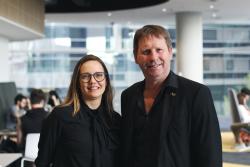
Imagine a world where chronic lung disease could be treated with something as simple as your diet. This could become a reality, thanks to new research between the University of Technology Sydney (UTS) and the Federal University of Minas Gerais (UFMG) in Brazil.
Professor Philip Hansbro, UTS Chair of Inflammation at the School of Life Sciences, and Professor Angelica Thomaz Vieira, Adjunct Professor in the UFMG Faculty of Biochemistry and Immunology, are exploring new therapies for chronic obstructive pulmonary diseases (COPD) like lung cancer and emphysema.
“We’re looking at how diet, especially a high-fibre diet, can impact gut microbiota,” says Professor Hansbro. “Then, how this can modulate our immune system and help treat several main diseases.”
The gut microbiome is the natural ‘ecosystem’ of bacteria in the human digestive system. The bacteria that populate it determine its influence on health. Bacteria release components that are absorbed into the bloodstream in a similar way to food nutrients; whether these are pro-inflammatory or anti-inflammatory will affect the rest of the body and immune system in different ways. New evidence has revealed the influence this has on pulmonary health in particular. This two-system ‘crosstalk’ is termed the ‘gut-lung axis’.
Professors Thomaz and Hasbro’s research comes at an important time as, worldwide, COPD rates rise – alongside the circumstances that can cause it. And it’s not just about smoking cigarettes.
“Emphysema has just gone up from the fourth to the third-most common cause of death worldwide,” says Professor Hansbro. “Plus, emphysema is a precursor to lung cancer, which is the commonest cause of cancer-related death, has the worst prognosis, and is the worst researched. When we think about emphysema, people say, ‘just stop smoking’. But now, air pollution is becoming a huge factor in lung disease [pathology].”
Air pollution offers a new avenue of research for the two. Bushfire smoke in particular – with fires in the Amazon Rainforest followed by the Australian mega-blazes of January 2020 – is of shared interest to their research collaboration.
“We’ve started concentrating on environmental exposures like bushfire smoke and air pollution,” says Professor Thomaz. “The idea came during my visit at UTS as part of the KTP Visiting Fellow program. It’s an issue in Australia, it’s an issue in the Amazon. Working together, we can compare and contrast the two. We can use each other’s expertise.”
Professor Hansbro adds, “I’ve been interested in air pollution for a while, but I was only thinking about it from an Australian perspective. Our work together really helps us to think about it internationally.”
For Professor Thomaz, the opportunity to work in Sydney offers unprecedented access to new research tools.
“Our collaborative research is hugely beneficial for UFMG,” Professor Thomaz says. “We don’t have much facility to expand our research methodology at home. But by being here, we can expand and explore. Additionally, we can heighten the impact of the papers we produce and give more visibility to our work. And our students can see how science operates in universities outside of Brazil. They’ll solve scientific questions with people who think differently, and gain exposure to better technology.”
Meanwhile, for Professor Hansbro, the chance to establish a collaborative network is a big drawcard for the KTP program.
“If we have more student exchanges, that means students from Brazil can help us with our research and vice-versa. It might enable us to expand our research from asthma and COPD to respiratory infections.”
Since embarking on their collaboration, Professors Thomaz and Hansbro’s research has grown in scope. Encompassing not just therapies to treat COPD but a greater understanding of its causes, their work marks an important turning point in pulmonary health.
“Thanks to the KTP program, we’re talking about things not previously talked about. So it’s massively important. It’s the driving force.”
To continue building on their collaboration, Professor Hansbro was one of three UTS researchers invited to travel to UFMG as Visiting International Professors (PVE); funded by the Brazilian government CAPES Print Program and UFMG. Unfortunately, these outbound academic visits were postponed to 2021 due to the pandemic.
In the meantime, Professors Thomaz and Hansbro have already produced a joint publication in the topic, Emerging therapeutic targets and preclinical models for severe asthma.
Byline: Annabel Jeffery