

- Posted on 24 Dec 2020
- 2-minute read
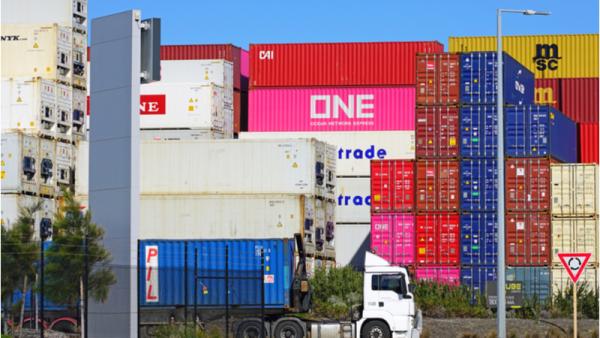
EQRoy / Shutterstock
This paper begins by critically reviewing the theoretical basis underpinning use of economic coercion to shift a target country’s political positions, drawing attention to the likelihood of success being context-dependent. Six case studies are then documented where a coercive frame is evident in reporting and commentary to interpret Chinese actions taken against Australian exports since 2017. These show that trade impacts of Chinese actions have generally been modest in scale, short-lived and/or significantly mitigated. Canberra’s political positions have also not become more aligned with Beijing’s. The discussion informs assessment of coercive risks consequent to Australia’s trade exposure to China.
Read the article online here.
Note: This article was published in Security Challenges, Volume 16, Number 4, December 2020.
Further reading
- James Laurenceson and Michael Zhou, 'COVID-19 and the Australia-China relationship’s zombie economic idea', Australia-China Relations Institute, University of Technology Sydney, May 7 2020.
- James Laurenceson, Michael Zhou and Tom Pantle, 'PRC economic coercion: the recent Australian experience', Australia-China Relations Institute, University of Technology Sydney, September 14 2020.
Authors
James Laurenceson, Director, Australia-China Relations Institute, University of Technology Sydney.
Michael Zhou, Project and Research Officer, Australia-China Relations Institute, University of Technology Sydney.
Thomas Pantle, Research Assistant, Australia-China Relations Institute, University of Technology Sydney.