

• Posted on 2 Oct 2020
  • 42-minute read

Is it true that anyone can be an entrepreneur?

Can you really finish a degree, have a family and have a life outside of a startup? 

Three startup founders at varying stages in their journey talk about how they see entrepreneurship as it relates to their career ambitions, work-life balance and sense of purpose.

Join us for an honest, no-BS discussion about whether entrepreneurship is worth it for you.
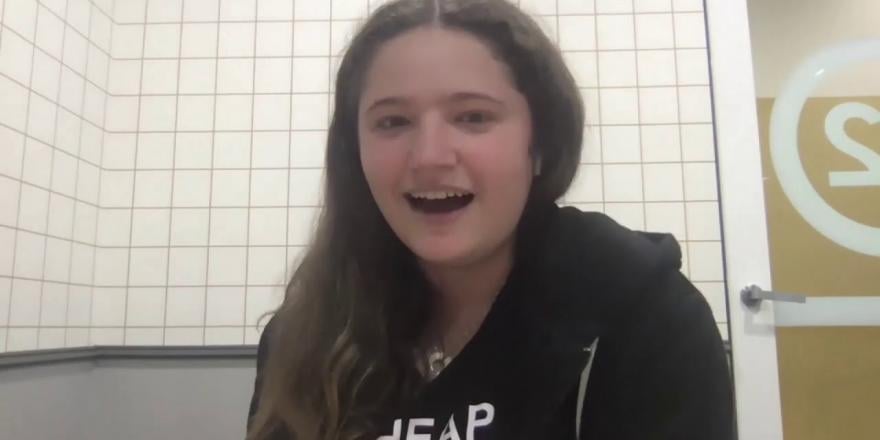
N2LOqtvYQIM

Descriptive transcript

So good to see all of you guys here. I've probably met you before, my name's Dave, if I haven't met you before. We are at UTS Startups, working to support absolutely every single UTS student who wants to have a go, have a good old crack at really interesting and awesome companies here at UTS. Others are just having a go with an idea that they've had and everyone else is kind of in the middle of that spectrum. We've just got incredible, incredible students. So today is about hearing from them, essentially, and hearing their stories, so we're about to do that. I would love it if you could share where you've been in terms of when you were studying at university, what you were doing, and then how you found your way to founding such an incredible startup. Joel, are you there with us?

Yo.

Can we switch over to you? Is that okay?

Yeah, sure.

Beautiful. All right. Take it away. Share from when you were studying at UTS and sort of what happened.

Yeah, absolutely. So originally I started doing a double degree in product design and BCII, which is a Bachelor of Creative Intelligence and Innovation, which sounds a bit lame, but it's basically where a lot of people from different degrees come together and work on single problems in industry. So I guess I was in my final year of product design, and we were doing a project where we were doing a radical design of an existing product, and I started developing smart jewellery. So we just got it to a very basic prototyping stage, and I guess after I completed that, I was just having so much fun with it, and I really wanted to see where it was going. I kind of deferred the next semester after that, messaged a couple of people from product design and the BCII degree, and then yeah, just kind of rolled with it from there. Entered into an accelerator program, met a lot of fantastic people with UTS Startups and tried to acquire some of the mentorship and talent to get it off the ground.

That is such an abridged version, which is incredible. But can you describe a little bit more, what is Melo Ring?

Yeah, of course. So Melo Ring is a physical piece of jewellery that controls all the music on your phone. So we're looking at control, discovering, and sharing music. You've got your basic functionality: pause, play, skip, and volume. We've also synced up with our favourite partners like Spotify and Apple Music, Shazam, and SoundCloud, to access some more relevant functionality, like adding songs to your playlist, throwing songs to other people with the Ring, adding things to your likes, messaging brand artists, and yeah, looking at how we can kind of facilitate the entire music experience from the tips of your fingers.

It's incredible. And I know that you've demoed this for people and they find it quite surprising. Where did you even feel that you wanted to work in this area? Was it something you found in product design that you liked to create?

Sorry, say that one again. I think you just cut out a bit.

Yeah, when you were studying product design, was it already a feeling that you had that you wanted to create something?

Yeah, I guess always I was kind of like, I love the tech space. I think, like Arthur C. Clarke said, any sufficiently advanced technology is indistinguishable from magic, and I kind of wanted to get into facilitating some of the magic again. So I guess going through the product design bachelor degree, I was very keen on getting into the product space. And I guess when I did make that decision to defer, one thing I try and tell people is not every startup has to be this huge multi-million dollar company, that's a lot of pressure, right? There's a lot of different ways of going about it. I purely got into this because I was having a lot of fun doing it, I wanted to see how far we could push it, and to be honest, at the end of the day, if one person buys this ring and says "that's cool as", that's enough for me. Everything else is extra. For me, that alleviated a lot of the pressure and stress and stuff. So if you are at university doing something you really enjoy, and you find yourself wanting to push it further than you feel like you can in the academic sphere, please leverage UTS Startups, leverage Dave, leverage Kat, Lourdes, all these amazing people, and see where you can take it in the real world. I think chances are, almost any idea, good or bad, you can find ten thousand users for. At least sell to those ten thousand users and maybe re-evaluate after that.

Really awesome. One thing that stuck out for me when you were speaking was the whole creating magic with technology that is indistinguishable from magic. Was there something that inspired you particularly?

"Ben 10" a lot when I was growing up. All the spy gadgets. I guess we see so much in pop culture and fiction, all these really cool people envisioning the way the world can look, and I think one way of looking at a startup is if you want to be an entrepreneur, you need to live in the future, and if you want to be a good entrepreneur or a wealthy entrepreneur, you need to predict the correct future. It's about predicting these futures and then every startup is essentially just a bridge between where people are today and where people are in that future. You're saying, what products, services, initiatives, platforms, and frameworks can I create through sheer alchemy and effort to help people walk across that bridge and enter into my future, or the future. If you're creating tech in particular, you've got a huge opportunity to facilitate these vast creative worlds that we previously didn't have access to. The barrier to entry now, even in hardware, is so low. You can create a website in seven minutes, you can create apps not knowing how to code, you can pick up an Arduino off the shelf and prototype an MVP in two days. The barrier to entry's never been so low. So if you find something you enjoy, just get out there and start building, start making stuff and putting it out there. Chances are, other people will be inspired by your story, other people will be inspired by you, and at the end of the day, you're going to start having a real impact on real people's lives.

Yeah. You probably don't know this Joel, but you have helped us significantly in the company that I'm working on at the moment, in that you suggested a particular software to us to use. We used Thunkable, wasn't that you?

I'll take credit! But essentially, what you're saying is true. There's never been a better time in terms of the tools at hand to create. You're talking about spy gadgets and things like that, and it's kind of funny that it really is like that in some ways. The thing that you're creating and working on is so inconceivable in some ways from a few years ago when we all just had Walkmans. So yeah, I think that comment is so articulate and so true. I want to come back to Joel in a sec to talk about a few more ideas. But I wonder, have we got Steph around?

Yes, I'm here.

Yeah, we can hear you. Hello.

We're still waiting for Sinay to come back, I think, or Lourdes will let me know. But Steph, I am so glad you're here, and we'd love to hear about your story. So, you started studying at UTS in FEIT?

Yes, I'm still studying.

Yes, that's true. So walk us through what happened.

Okay, I'll start from the very beginning. When I was in Year 9, UTS came to my school and they brought all the girls into this room and made us build boats. Whoever's boat could hold the most marbles won credit—they didn't win anything. I literally walked out of that room and thought, "Who on earth would ever want to be an engineer? That was so boring." Flash forward to finishing school, I had no idea what I wanted to do. But I found biomedical engineering at UTS and it was the only uni that offered it by itself at the time. I didn't go to any uni open days, I just went to that one. I went in the room, stayed for five minutes, went home, got into the degree. I always wanted to help people, but I really like maths and solving problems, so that seemed like the best thing to do. I finished my third year and was complaining to my friend after my internship, saying, "I'm literally not doing anything to do with engineering besides studying, I really want to do something." My friend said, "You should meet my other friend." I was like, "Yeah, whatever." Went to Europe like every other girl on their uni break, hung out there. When I got back, I thought, "I'm going to do something today." I reached out to this girl my friend introduced me to, who ended up becoming my co-founder. She really needed a tech person—more of a tech girl—for her startup, and I'm pretty techie, so I joined Arula, where we 3D print breast prostheses for women who've had mastectomies. Within a month of joining the team, we got offered a free trip to America, which was crazy, and ever since then my life's just been a massive crazy journey filled with no sleep.

I hope you get to have some downtime and some sleep, but it's also very exciting what you're doing. I feel like everyone loves to undersell what they do, but can you give us a little snapshot? What is Arula? You 3D print breast prostheses, but where is it at the moment?

So we 3D print breast prostheses. The crazy thing that blows everyone's mind—and it's probably the most awful stat in the world—is that one in nine women worldwide will develop breast cancer, and that stat's just getting higher. If a woman can't get a reconstruction, which surprisingly only about 40% do, they're left with a mastectomy and feel like they've lost something that's a part of them. That's where we come in. Breast prostheses are things that slot into your bra—the easiest way to explain them is like chicken fillets for girls, or the little things in push-up bras. We make full breasts that they can put into their bra, each one is customised, and we're trying to make them as light as possible.

That is so incredible. Steph, sorry to ask, how old are you?

I'm 22.

What do people say when you run and what you guys do? What are some of the reactions you get?

Probably the craziest story was Suri and I went to a pitching competition in Adelaide. We decided to go out to a bar, and there was a football team from Victoria there having their end-of-year party. One of the guys started chatting to me and asked, "What are you doing in Adelaide?" We told him we were from Sydney. I said, "We're pitching our business." He said, "There's no way you have a business." I literally handed him my business card and walked away. People find it kind of mind-blowing. I had a conversation yesterday with my friend who asked, "What do you say to people when they ask what you do?" I have no idea. To every single person I meet, I tell them something different. Some people I say I'm a student, some I say I'm a bartender. I barely ever say I'm a startup founder. It's kind of a little thing my close friends know, but I keep it pretty private.

So a closet startup founder. It's so cool. You're already so inspiring to all of us, as are our other speakers. I can't believe I get to work with all of you and hear what you're doing. We'll come back for more questions, but we've got Sinay back, which is really exciting! The Northern Beaches might have beautiful weather and sunshine, but they do not have stable Wi-Fi. Also, neither does UTS today, which is annoying. Anyway, Sinay, if you're here, can you give us a little glimpse into what you studied and how you became an entrepreneur?

Cool. Hi guys, sorry about that. I actually studied medical science at UTS. I really wanted to go into a place where I could combine science and working with people. I really enjoyed the system...

Oh no, we're still struggling. And also my internet connection is unstable. What a great day for Zoom.

Okay, what we might do is, I wonder if I can get Sinay to call in, maybe. Okay, that's what we'll do instead. I'll get onto that. At this point, I know we've had a few questions, and one of the questions we've had so far, which is awesome, is around co-founders and team members.

The startup world is rife with words that are lingo and not everyone is straight away on the same page. When we talk about co-founders and team members, in the early days of a startup, co-founders, like Steph was talking about before, refers to the people at the helm of that company, building it from the concept stage. Steph, if you're still around, are you there? Beautiful. So, elaborate for us a little bit, because Suri is—well, a lot of people know Suri and have seen her talk about Arula before—but what's the situation leading the company?

Right now, Suri actually had to step away from the business a few months ago due to personal reasons, so right now I'm a solo founder. It was quite a shock. Those who know Suri know she's the complete opposite to me. I'm super quiet, I like to just get on with my work and not talk much, while Suri is this amazing, out-of-this-world character who can just talk about anything and everyone will listen.

You essentially came on as a co-founder, though. What did that look like? It was pretty crazy. I remember the first time I met Suri, and she's such a positive person. I remember her looking at me dead in the eye being like, "If you join on, you have to be in it. You can't go for grad jobs, you can't do your second internship for uni, you're in it." At first I was like, "Oh, I really don't..." I'm such a floater, I like to do lots of different things. But then I thought about it, and business has never really been something I thought I'd get into. I did commerce at school but that was about it. I still don't really get business. But after hanging out with Suri a bit, I'd come in and do little things here and there, and we'd bounce ideas off each other for a few months. I worked out that actually, this kind of makes so much sense for me. I never saw myself working as an engineer on one little part of a medical device, sitting at a desk all day. I always saw myself doing everything. I like seeing everything, doing everything, so it just worked out in the end.

So for people out there who struggle with ideas, who don't necessarily have an idea but want to get involved somehow, what steps would you suggest? Is there anything they should start to read or think about?

I think the first thing you need to do is find a problem. It's super easy to come up with an idea that could be helpful, but if it's not solving a problem, it's going to be so much harder. I spoke with Suri about where she came up with the idea for Arula. She wasn't out looking for something to start doing; it was more a chain of events that led her to realising there is an actual problem. All the best startups solve a problem.

Yeah, fantastic. Joel, I was wondering if you could help us out with this. How do we go idea shopping? How do you evaluate or even find ideas? We're talking about Melo Ring, which is what you're working on, and there's definitely a market for wearables and technology, especially entertainment and the intersection of all those things.

Sorry, that last five seconds cut off for me, might be my Wi-Fi.

No, it's okay. The question is, how do we know if an idea is worth pursuing? How do we find that?

I guess there are so many metrics you could apply. You can look at things like Jobs To Be Done theory—is there a job that somebody's trying to do that they can't currently do, and does your idea solve that? Is there a problem? Is there a huge market? Maybe you whip up a small video or some renders, put them on the internet and see if there's high demand for it. But then there's also, is it something you want? Sometimes that's enough of a reason to make something. A lot of startup founders I've spoken to, particularly in the product space, will have 20 products around them that they've made. For example, ages ago I could never find a to-do list that I liked, so I made one for me that I guarantee nobody else would find beneficial—it was the worst app in the world, but it worked for me. If you get used to making things for yourself or others or family or friends or communities, you start to get into this building mentality. When you build something that people want, people will tell you that they want it, and that's the kind of validation you need to go forward. If you can hit any single one of those metrics on any of your ideas, that's enough of a reason to pursue it, and worst-case scenario, you learn heaps.

People are starting to churn through ideas and maybe they're starting to see a few opportunities or, as Steph mentioned, problems to solve. How do we get support? Were your family and friends supportive of you wanting to start working on a startup? Maybe from Joel—do you tell your parents, "Hey, I'm working on a startup," or are you a bit like Steph and don't want to tell anyone?

I guess I viewed it, and I still kind of do, as a project. It's just a side project we're working on. I was super happy—I wanted to get everyone's thoughts. The more group mentality you can have in innovation, the better. If you tell a million people, you'll have a much better grasp on the problem space and the product and ideas moving forward than if you tell one person. Don't go sharing PCB schematics with China, but anything short of that, everyone's going to help, everyone's got a cool idea, and if you don't agree with it, you're still one step closer.

That's a great point. For both of you, if you've got an idea or you're sitting on something you think has promise, do you tell people about it or keep it a secret? What's the best way to do that?

Steph: I'll say an idea I came up with one day at work—I know there's a startup working on this. I have a friend who's literally allergic to everything. We always talk about her allergies. I was like, "Why are EpiPens so big?" If you've ever seen an EpiPen, they're huge, and you can only use it once. Surely there's a way to make it smaller or reusable. I spoke to her and she said, "That's such a great idea! You should have seen the bag I had to take to Japan everywhere we went because you don't know what's in the food." Then I started talking to other people I knew who had allergies, and everyone said, "Yeah, that's such a great idea!" So you get talking to people who can give you a great opinion. It's always great to talk to your mum, but my mum would never say anything negative. If I came up with the worst idea ever, she'd say, "That's such a great idea, Steph! You're so sweet!"

So you've got maybe the opposite problem to some people, where their parents are like, "Okay, but get a job as an accountant first," or "Finish your engineering degree." Obviously, we are at UTS and we advocate for you to finish your degree, for sure. Or both, like Joel, you just mentioned it's a side project. Is it possible to build a company and study/work/have a normal life?

Joel: Yeah, definitely! It's like all things—it's a priority. The more time you invest in something, the more that can happen. If you invest 100 hours a week into your startup, more things can happen. But if you invest 20, 10, 5, or 1 hour a week, things can still happen, just statistically less likely. Long-term, most founders I've spoken to have wanted to work on their startup full-time, but circumstances like needing to eat, pay rent, and finish your degree can impede that. It's about allocating time where you can and setting yourself up for success—how can I schedule time, maximise my workload, outsource grunt work, maximise my hours to give myself the best possible chance of success?

Is it a requirement to be very disciplined? You've probably got so many rabbit holes you could be going down—how do you know how to take your company forward?

Joel: I guess it's like a bicycle—it's so much easier to turn if you're going faster, much easier to balance if you're going fast. If you're just standing still, you'll probably fall over. This really switched-on Spanish guy told me once, "Move to be lucky." It applies to everything—grades, relationships, networking, learning, education. The more you move, the luckier you'll be. Sometimes it's really confusing, there's always a lot of options and directions you could take, but the faster you're moving, the faster you'll find the right direction.

Awesome. There's so many nuggets in there from both of you. I'm excited to watch the recording. I can see that Sinay is on the phone—are you there?

Yes, lucky last.

Beginning where we left off. Tell us how you started up.

I'm not sure if you heard me before, but I started off studying medical science. I went in thinking I might go into medicine or find something where I could combine science and working with people. I really enjoy outlining a problem and then trying to problem-solve it in a very symmetrical way and get validation for it. After a very hard few years at UTS, I finished, and once I was done, I was trying to find a job where I could fill in all those things I really enjoy—working with people, working with science, and all that. I really struggled to find a place where I could constantly grow. While I was volunteering with adults on the spectrum, I saw there was a real lack of gamification resources. The more I dived into it, the more I saw it wasn't just the people I was volunteering with, but so much more to it. Step by step, we tried to figure out the best solution. It was really interesting to see how you can come up with something from nothing, or take a pre-existing idea and highlight it, transfer it into something more feasible and practical. So then I decided to reach out to UTS and see how I could bring that into UTS Startups.

We're so glad that you did. I think aXonPlay is such a fascinating startup and idea. Can you give us a sense of what you're doing?

Sinay: For sure. We're an early stage startup, started a few months ago. We've had to pivot quite a lot, but they were all good pivots. We're a platform creating resources in the form of gamification for adults on the autism spectrum, targeting social resiliency. Basically, any scenarios that could be simple to others but people on the spectrum find hard to understand and struggle with. We've all experienced lots of rejections, especially now where social resiliency and social interaction are so hard to manage. We try to teach and help people who really rely on routine and a base that at the moment is kind of non-existent. At the moment, we have a team of five—amazing artists, a game developer, and programmers—and together we tailor a video game that could be played anywhere. Those scenarios introduce rejection, leadership, and relationships—things that are really hard to teach if you just close your eyes and imagine yourself, but within a game you can really immerse yourself and practise those skills all the time.

Awesome. What a fantastic idea. Here's a question for you, Sinay, and also Joel: when you found the idea you wanted to run with, what was the next thing you did? You've thought a lot about this, talked to some people, decided "I'm going to build this"—what was the next thing you did?

Joel: So, first steps, right? My first thought was just start building. There are so many different opinions on how you can start a startup. One generic theme you'll see is "product-market fit"—you can have a product, but if there's no market, it doesn't matter; you can have a huge market, but if you don't have the right product, it doesn't matter. Success comes from product-market fit. I've always been about just start building. That's my background, so I probably have a bias, but I'm definitely an advocate of just start building and getting it out there, seeing what people want. People will always tell you what they want, if they want an iteration, if they don't like it. The internet will definitely tell you if they hate it! So build as fast as you can, start iterating, and let the market tell you what they want.

So you're suggesting you find the quickest and cheapest way to do it, build it, and get it in someone's hand?

Joel: Yeah.

There are ups and downs in that journey, but has anything surprising happened with you when you've done that? What have you found?

Joel: The funniest thing is, most concepts—everyone's pretty well educated, so when you explain a concept, it's rare that someone doesn't understand it. I've had a guy explain a quantum cybersecurity startup to me—I don't understand it, but it kind of makes sense. You can talk about all these products and concepts and people say, "Yeah, kind of." But the moment you show somebody and put it in their hand, the reaction can be completely different. You've got phase one: an idea—people say, "I like that" or "I don't like that." Phase two: a prototype—"Oh my god, that's crazy! I can't believe you've got something working!" Phase three: your final product—people might have a completely different reaction again, like, "Nah, I don't actually want to buy it." So you see this oscillation between like and dislike throughout the prototyping phase. Each touch point in that process is invaluable to the amount of data you'll collect.

Almost every reaction is information you can use and leverage.

Joel: Yeah, and just start questioning why. If you don't have any product to show, you don't have a lot of data, so you can't ask a lot of those really important inquisitive questions that are paramount to the success of your company. The more information you can collect, particularly by actually showing your product, the sooner you'll start to be able to ask those really important questions.

Sinay: I definitely agree with Joel. We try to do that as well, but because ours is quite a complex platform, we weren't able to generate the game as quickly as we wanted. I found that the more I talked to people, I realised everyone is very smart, they can understand a concept, but people are very visual. Unless they see something in front of them, it's very hard for them to imagine it. So I would go around and talk to people, show them pictures, show them everything I have already, and anything else that could resemble our product. That way you get extra validation and the data you need. You can also see how you can improve it. Especially when our product is for a specific target market, the more information and data we can collect, the more we can help people and tailor it specifically to them.

Fantastic. The chat is blowing up around the co-founder question, which I love. I should mention we've got a few opportunities for people to find co-founders. We've also got Subana, who's going to speak tomorrow about building a team from zero. When I first heard her talk about this, I thought, "Why didn't I hear this at the beginning of my journey? It would have saved me so much time." Please get amongst that. But just to satisfy that question a little bit now, Steph, can I throw to you really quick? Obviously Arula cannot happen with only you at the helm. How are you building it and what sort of things are you thinking about?

Steph: That's a hard question. After Suri left, I wrote down a list of things I believe two or three founders in a company need to have a successful company—anything from technical skills to legal skills. I wrote it down in an Excel spreadsheet. The next column was what I can do, and over time I realised I can do way more things than I thought I could at the beginning. Then I put down who I know who can do these things. For example, if I have a question I don't know, I can go to this person who isn't a lawyer but has a better understanding of legals than I do, or I have a mentor who's an accountant who helps me through accounting issues. That's what I'm doing for now. But as I said in the chat before, it really is like a marriage. Suri and I did a lot of things before I came on as a co-founder. We hung out for two or three months, which is still a short time compared to other startups. It's more about seeing how you work with them—like a marriage, you're not going to propose to someone on the first date. You work out what you're interested in, what annoys you, what you're good at, what you struggle with, ways you deal with stress, and so on. Once you feel comfortable and would put your life in that person's hands, then you have the right match.

That does sound like the perfect co-founder arrangement. I'm also worried about my own horrible alter ego screwing up future companies. Okay, no BS—pretend everyone's out of the Zoom and we're levelling here. I want to ask each of you a question. Starting with Sinay: is starting a startup worth it?

Sinay: Definitely. Even though this is something I'm asking myself every day, it's just the amount of stuff I've learned so far. Even if, God forbid, this doesn't work out, those values, those skills, my ability to reach out to so many different people, to manage a team, to really pitch my ideas, being able to even think of raising money—I'll forever have that in me and that ability to do it again. Yes, at times it's really challenging and you don't get much sleep, but at the same time you're so passionate about it that it doesn't feel like a chore, it doesn't feel like you're working for it, it feels like it's part of you. You want to do this and there's nowhere else you'd rather be but in front of your computer at 12am working on stuff. It's so rewarding to reflect back and see what you were able to achieve. Even if this doesn't work out, it's been amazing.

That is such an answer. Joel, you're an analytical guy, you're a clever guy, you make good decisions. No BS—can anyone be a startup founder?

Joel: Yeah, absolutely. The definition of a startup founder is so wide, no matter what your skill set is, I think you can add value to the world. No matter who you are, you're going to be the best at something or some very specific combination of things. If you want to leverage who you are and be authentic and build something that can add value to anybody, you are, under my definition, a startup founder. I recommend talking to people who have done it, people in your field, your space, people who are better, smarter, cleverer, and harder working than you are, and pull together a team and just make something of value. Once you start that journey, you'll find the passion and energy follows quite quickly afterwards.

Both of you need to write books, by the way! We didn't prepare these guys for these questions, so everyone knows—they do not have notes, they're not getting paid to say any of this stuff. That was incredible. I have a question for you, Steph. No BS—how do you feel? Have you ever wanted to give up, and if so, why have you not?

Steph: It's so funny, I literally cried for two hours yesterday being like, "Why is life so hard?" Which happens often. There definitely are times I've wanted to give up. I think there's a lot of people who think I have given up, which I haven't—we're stronger than ever. But I think you just need to have a thick skin. From experience and previous work, I've developed a really thick skin. I'm a big believer in: show them rather than tell them. If someone says, "You can't do it," do it and then show them. Some people disagree and say tell them, but I think that's the biggest thing. I literally just need to compose myself. I got really sad yesterday and then I went and spent $400 on clothes. It was great and I felt so good. My bank account doesn't feel too good right now, but I'm wearing new shoes and they're really comfy. The best thing about that was I just needed to go and clear my head, do something that doesn't involve thinking about all the problems, then come back and ask, "What is the easiest thing I can do that's going to push me that step forward?" As Joel was saying before, actually get your priorities in check, and at the end of the day, it's what the customer wants that's most important. Whenever I feel really deflated, I have a lady on speed dial who's one of my customers. I talk to her for like an hour, we talk about life and my product, and she always ends the conversation with, "I can't wait to see it! Let's organise to see it." So yeah, I definitely want to give up at least once a week, but I'm not going to do that.

Thank you for letting me

I think the first thing you need to do is find a problem. It's super easy to come up with an idea that could be helpful, but if it's not solving a problem it's going to be so much harder.

Our guests

Joel Meredith is a UTS product design student and founder of Melo Ring, a smart device which can be used to control and share music between users. Joel is passionate about designing for aesthetics, function and user-experience.

Steph Weiss is a UTS software engineering student who joined Arula as the Chief Technology Officer. Now CEO, Steph has lots to say about the why, how and what of being a startup founder and an undergraduate student.

Sinay Salamon is a UTS science alumna who founded aXonPlay when she saw people close to her struggling to communicate due to health issues which were commonly misunderstood. She's passionate about pursuing purpose, building team and building products that help people.

Part of the first ever UTS Startups Festival 2020

START YOUR JOURNEY
Join UTS Startups today


Share