

- Posted on 3 Mar 2020
- 5-minute read
Wojciech Wrzesien / Shutterstock

Xunpeng Shi, Principal Research Fellow, Australia-China Relations Institute, University of Technology Sydney
This article appeared in East Asia Forumon March 3 2020.
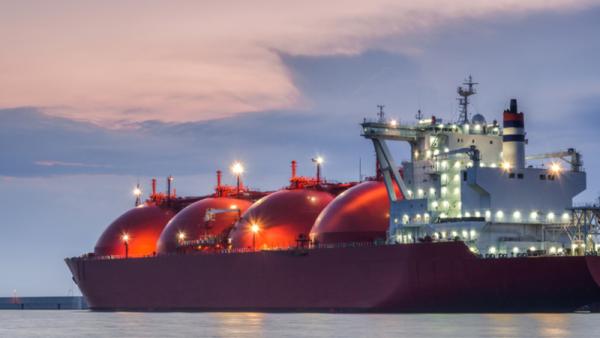
While the world watches developments in the novel coronavirus (COVID-19) outbreak, its impact on the energy sector has already emerged through weakening liquefied natural gas (LNG) exports. Bloomberg reported on February 7 that China’s largest LNG buyer, China National Offshore Oil Corporation (CNOOC), had informed some suppliers that it intended to reject the delivery of contracted cargoes in February and March this year. But two major LNG suppliers — Shell and Total — have rejected this force majeure claim.
CNOOC’s decision is a further blow to the historically weak LNG market. LNG prices plunged to a record low in Asian markets due to a warm winter and growing supply from the United States and Australia. The dramatically diminished gas demand from China due to the COVID-19 outbreak presents yet another challenge. Energy consultancy group Wood Mackenzie observed that China’s LNG demand has been ‘falling off a cliff’ since January 2020.
The weak demand and depressed spot prices could give LNG buyers more bargaining power, accelerating the transition of gas markets in East Asia — the destination of approximately 65 percent of globally traded LNG. Key indicators of market transition are changes in gas-pricing mechanisms and its associated gas market liberalisation reform. The prevailing pricing mechanism for gas trade in East Asia is oil indexation, where the gas price is indexed to crude oil prices. In 2018, 79 percent of Asia’s total gas import was priced on oil indexation and in long-term contracts.
The oil-indexed prices allow contracted natural gas prices to adjust to energy market developments without reopening contract negotiations. A shortcoming is that such oil-indexed prices cannot reflect supply and demand dynamics in natural gas and LNG markets. This was not very problematic since the East Asian gas markets — mainly China, Japan and South Korea — are regulated and gas importers can always pass their import costs on to their consumers.
But the situation changed in the 2010s when hub-based prices, generated by supply and demand in gas hubs, became perceived as a better alternative to the oil-indexed prices. In a hub pricing regime, natural gas prices will vary with the prevailing natural gas benchmark prices, not crude oil prices.
Historically there was a long-term equilibrium relationship between crude oil and natural gas prices. But hub prices have since decoupled from oil-indexed contract prices due to weak gas demand caused by the 2008 global financial crisis, the shale gas revolution in the United States and the Fukushima nuclear disaster in Japan.
It was reported that on February 3 that the main East Asian prices, the Japan Korea Marker (JKM), reached a record low level; and some oil-indexed contract prices were about three times that of the spot prices. Such an ‘Asian Premium’ in natural gas trade is one of the key motivations for East Asian LNG buyers to move away from oil indexation to hub-based pricing.
China, Japan and Singapore have started to create their own LNG hubs, a concept that is similar to gas hubs. But these hub prices need to be developed in a competitive gas market that must be liberalised, free from government interventions and have sufficient competitors.
Such gas liberalisation is progressing in Japan and China — the world’s top two LNG importers. Japan is the world’s largest importer of LNG, importing 25 percent of the globally traded LNG in 2018. It deregulated its gas market in April 2017 and is developing more competitors. China has separated its transportation from other gas businesses and market liberalisation is underway.
Recent experience from European gas markets demonstrate that this market transition may lead to replacement of long-term contracts with spot trading. This includes destination clauses that prohibit resale of LNG cargo, a phase out of take-or-pay provisions and a switch from oil indexation to hub-based pricing.
Studies have shown that such a market transition in East Asia will create significant changes to the global gas markets. An academic simulation demonstrates that change of the gas pricing benchmark and removal of the destination clause in East Asia can save significant procurement costs, but it will lead to a restructuring of trade flows and a decrease in gas prices by up to 10 percent.
Australia is the world’s biggest LNG exporter, with LNG being its third largest export commodity after iron ore and coal. Given that East Asia was the destination of 95 percent of Australian LNG exports in 2018, the market transition in East Asia will significantly affect the outlook for Australian LNG exports, the Australian gas sector and the Australian economy overall. An early study shows that a change in the pricing mechanism in China alone from 2020 will cause a loss in export revenue for the Australian gas sector of US$5.1 billion per year between 2025–2035.
With a weak LNG market, LNG buyers from East Asia will have more bargaining power, allowing the gas market transition in East Asia to further accelerate. Given the significance of such changes and the progress in China and Japan, governments of gas exporting and importing countries and the gas business sector need to prepare for the consequences of the gas market transition in East Asia.
Author
Xunpeng Shi is Principal Research Fellow at the Australia-China Relations Institute, University of Technology Sydney.