

- Posted on 15 Nov 2017
- 3-minute read
A decade of collaboration between UTS staff, students and the Parramatta Female Factory Precinct Association helped build the evidence base that contributed to the National Heritage listing of one of Australia's most significant historic sites.
In 2017, the Australian Government announced that the Parramatta Female Factory Precinct, where more than 30,000 women, children and Indigenous Australians were incarcerated or confined between 1818 and 2008, had been added to the National Heritage List.
Announcing the listing, then Environment Minister Josh Frydenberg said it would "allow the Australian community to stand witness to the lives and experiences of women and children who lived there".
The Parramatta Female Factory Precinct Association, a not-for-profit organisation established by former Parramatta Girls Home residents known as the Parragirls, has worked for many years to preserve and promote the precinct's history.
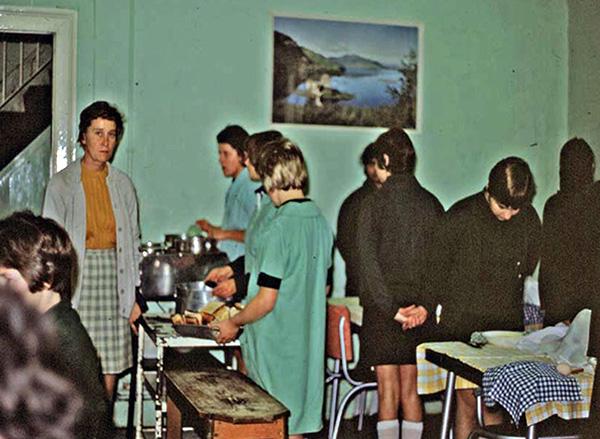
UTS became part of that effort in 2007 when Parragirls founder Bonney Djuric OAM approached the university's community-engaged learning program, Shopfront, seeking support to document the precinct's history.
Within months, UTS Communication and Law student Clare Butler began researching the Female Factory and preparing material against the criteria for state and national heritage listing. The first nomination for National Heritage listing was submitted by Bonney Djuric in November 2011.
Clare's contribution, alongside work by a team of Visual Communication students who photographed the site and mapped its changing uses over time, earned recognition through a 2008 UTS Alumni Award.
Over the following decade, UTS students and staff completed six additional Shopfront projects in support of the precinct's preservation. The university also helped convene an international symposium that led to the publication of Silent Systems: Forgotten Australians and Incarcerated Women and Children, edited by Paul Ashton and Jacqui Wilson.
The Female Factory, established in 1818, was the first destination for unassigned convict women transported to colonial Australia. The wider precinct also includes the former Roman Catholic Orphan School and Parramatta Girls Home, where around 30,000 orphans and state wards were confined between 1844 and 1983.
Many former residents later gave evidence to the Royal Commission into Institutional Responses to Child Sexual Abuse, detailing experiences of mental, physical and sexual abuse.
For Bonney Djuric, the heritage listing represents recognition of a place that tells a confronting but essential story about Australia's past.
"The Precinct bears witness to the evolution of a system of incarceration for women, children and the mentally ill from early colonial times to the present day, where the purpose and promise of care was far from the reality," she says.
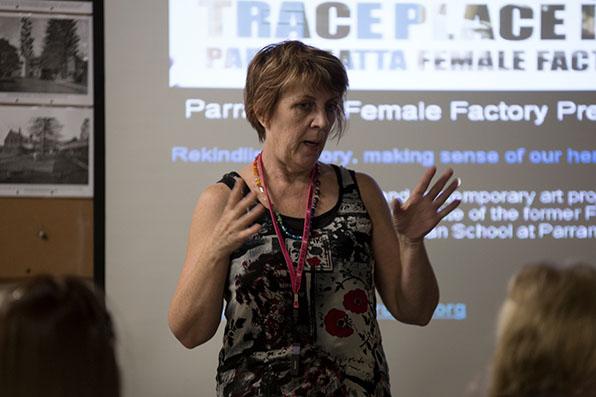
Bonney Djuric speaking at the launch of the Parramatta Female Factory Memory Project that has been leading the way in re-imaging this Precinct through creative projects and social history.
UTS Adjunct Professor Paul Ashton says the listing acknowledges both the site's national significance and the many years of community advocacy behind its recognition.
"The Parramatta Female Factory Precinct stands as a legacy of multiple and contested histories of Australian women and children, and the formalisation and emergence of Australian welfare and justice systems," he says.
"UTS has contributed much to build up the body of work that supports the heritage values and significance of the site. We were very happy to hear the news that the precinct had been named one of Australia's most important heritage sites."
The partnership has continued beyond the heritage listing.
UTS Law senior lecturer and Law|Health|Justice member Dr Linda Steele has undertaken research with the Parramatta Female Factory Precinct Memory Project, exploring the site's role as a Site of Conscience and its relevance to contemporary law and policy relating to the institutionalisation of women and children.
"We are interested in how the Site of Conscience can continue and build upon the work of the Royal Commission into Institutional Responses to Child Sexual Abuse," she says.
"Particularly on how the Site of Conscience can provide opportunities for redress and violence prevention on a systemic level and in a sustainable and ongoing way."
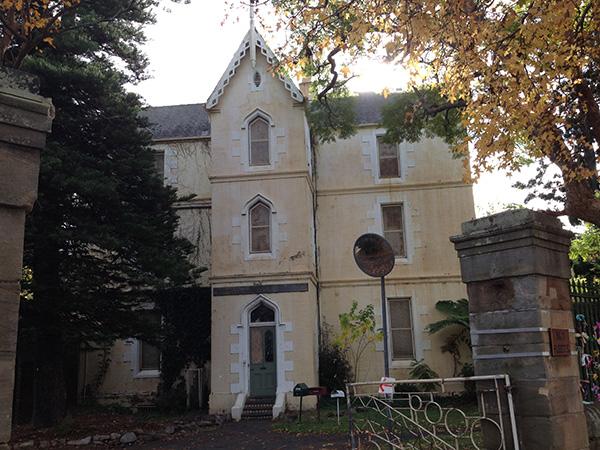
UTS Law senior lecturer and Law|Health|Justice member Doctor Linda Steele is also currently undertaking research with the Parramatta Female Factory Precinct Memory Project to explore the precinct as a Site of Conscience to contemporary law and policy making on children and women’s institutionalisation.
Linda Steele says, “We are interested in how the Site of Conscience can continue and to build upon the work of the Royal Commission into Institutional Responses to Child Sexual Abuse.”
“Particularly on how the Site of Conscience can provide opportunities for redress and violence prevention on a systemic level and in a sustainable and ongoing way.”
This article was first published in 2017 and has been lightly updated for archival purposes.