

- Posted on 30 Jan 2014
- 2-minute read
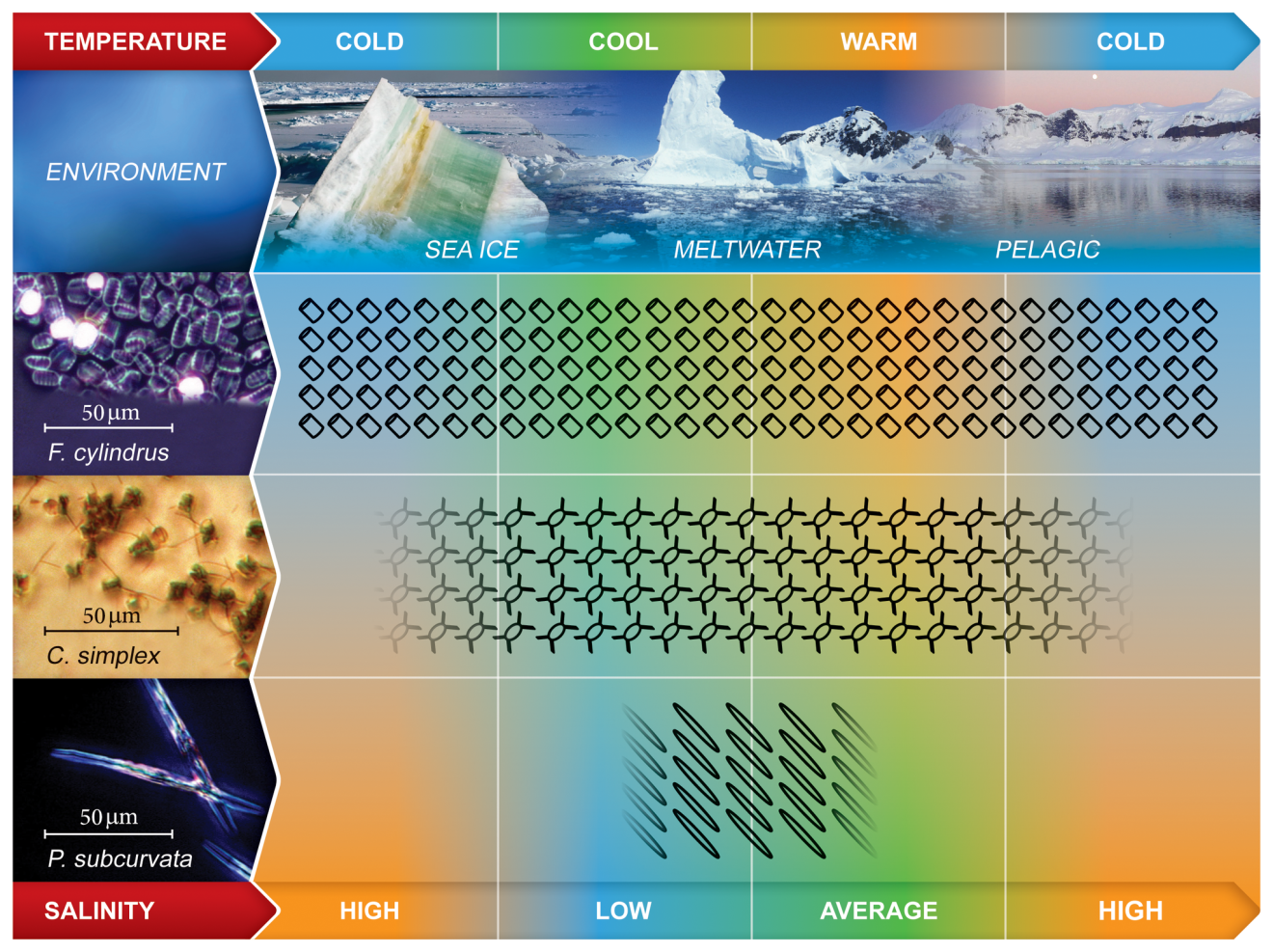
“Sea ice environments in the Arctic and some regions of the Southern Ocean are currently experiencing a rapid rate of change due to global warming. In response, some diatom species will thrive whereas others will not. This could potentially have a big impact on the nutrition (carbon, energy and nutrients) available to krill, whales, fish, penguins and seabirds,” Olivia says.
“Phenotypic plasticity can be advantageous during periods of environmental change, in comparison to less ‘plastic’ species. Currently, which species will thrive and which will decline is unclear, however it seems that some species are more nutritious than others under particular environmental conditions. The likelihood and potential consequences of changes in the nutritional value of diatoms on the Southern Ocean ecosystem remain unknown.”
Synchrotron FTIR microspectroscopy allowed the team from UTS and Monash University to measure the lipid, protein and carbohydrate composition of individual Antarctic diatom cells.
“We found that the species most abundant in extremely variable conditions were able to change their phenotypes to a greater extent than species which preferred more stable conditions,” Olivia says.
“The species with highly variable, or 'plastic', phenotypes were the ones which are found in highest abundance in the Southern Ocean sea ice environment. However when these species responded to extreme conditions there was an effect on their nutritional value.”
The species-specific data - and associated effects on the nutritional value of natural microalgae populations from the Southern Ocean - generated by this research is rare and is in great demand for plankton modelling used to predict the responses of microalgal communities to climate change.
“The incorporation of the synchrotron FTIR approach gives us an efficient, high- throughput and highly sensitive method for measuring the nutritional value of individual diatom cells in mixed natural populations. I think this method will really facilitate progress in this field.” Olivia says.
The research has been published in PLOS ONE.
Publication details:
Phenotypic plasticity of Southern Ocean diatoms: key to success in the sea ice habitat?
Olivia Sackett, Dr Katherina Petrou, Dr Brian Reedy, Adrian De Grazia, Dr Ross Hill,Dr Martina Doblin, Professor John Beardall, Professor Peter Ralph, Dr Philip Heraud
PLOS ONE DOI: 10.1371/journal.pone.0081185