


At UTS, international travel is transforming the nursing student experience.
Laura Veasey had always wanted to take her nursing degree overseas. A tailored global study tour became her ticket to the world.
When third-year UTS Nursing student Laura Veasey was offered a place on a global study tour to Thailand, it was a moment she’d been waiting for since the start of her degree.
In her first year, she’d watched enviously as a group of senior students head off on a two-week trip to Malaysia.
“I saw all the pictures of the trip and all the skills they were able to practise over there, and it was obvious there was a whole way of nursing I hadn't seen yet,” she says.
“When the Thailand tour came up, I was like, ‘This is my shot.’”
International study tours for nursing students
Nursing is a global profession, and at UTS, it’s a global degree. The University boasts partnerships with more than 400 institutions across the globe, with international experiences seen as an important part of learning.
Nursing’s rigorous accreditation requirements mean that students generally can’t participate in traditional overseas experiences like exchange or study abroad. The global study tours, which run during semester break, provide a tailored opportunity for international travel without impacting course progression.
But the tours are far from just a chance to see the world. For nurses in particular, cross-cultural adventures are an important part of building the cultural empathy and clinical skills to care for a diversity of patients.
“Students gain an understanding of a different health service, a different culture and community and different health care needs,” says the School of Nursing and Midwifery’s Associate Professor Natalie Cutler, who was instrumental in establishing the global study tours for nursing students and has led many of the tours to date.
“They also see firsthand how those things translate into the way that care is delivered.”
A cultural experience that builds clinical nursing skills
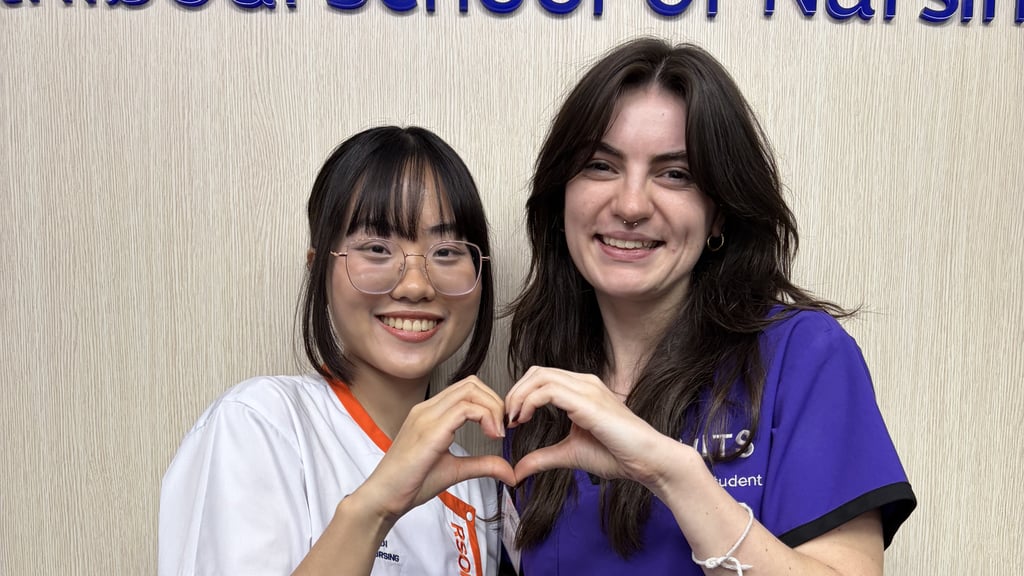
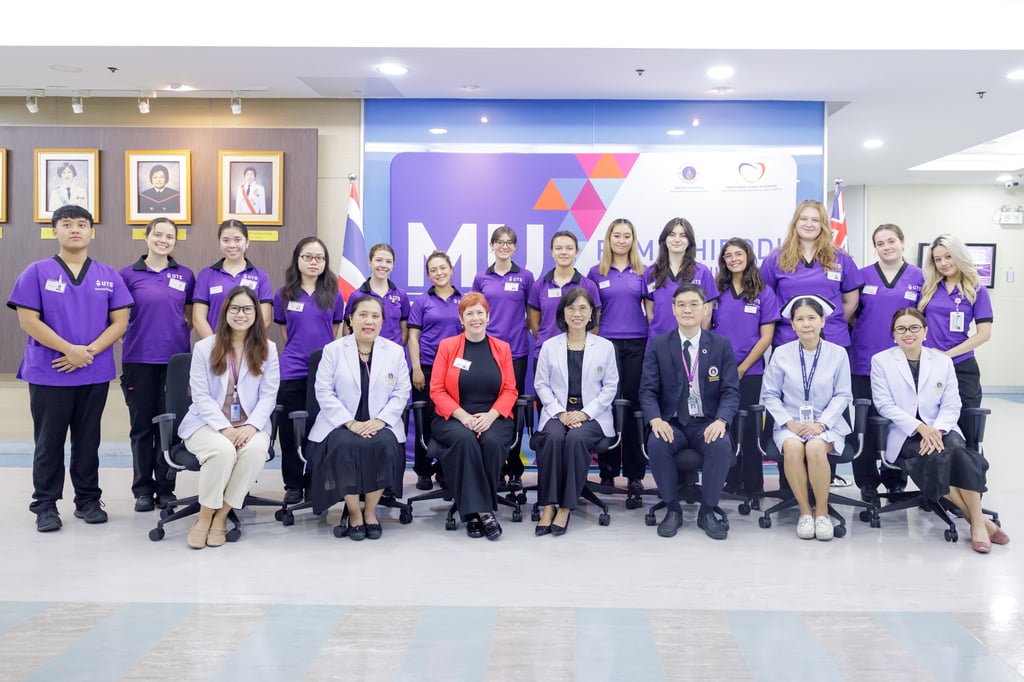
Through a competitive application process, Laura and 13 of her peers were selected for the Thailand experience, which followed previous study tours in Indonesia and Malaysia. The students spent two weeks at Ramathibodi School of Nursing at Mahidol University in Bangkok, the #1 ranked university in Thailand and #78 in the world for nursing subjects.
Mahidol University is home to Ramathibodi Hospital, an on-campus teaching hospital. This co-location connected the UTS students to both clinical learning and research opportunities.
“We did a mixture of in-hospital tours and activities, some lectures and talks, and we went and saw the nursing facilities at multiple campuses,” says Laura.
“We were in the hospital, in the labs and in their classrooms, so we saw how they treat patients and how they train the people who'll be treating them.”
Clinical activities included observing a diabetes management clinic; visiting the emergency department; viewing the anatomy lab, complete with plastinated organs and human cadavers used for clinical lessons; and touring the palliative care, neonatal intensive care and cardiothoracic intensive care units. In every department, hospital and University staff generously shared their knowledge with the UTS group.
“I met a cardiothoracic surgeon who is pretty much the Victor Chang of their transplant program. We had wandered onto his ward by chance, and instead of pointing us somewhere else, he put his afternoon aside for us,” Laura says.
“He walked us through how they built the program and what the nursing team does to keep it running, and he asked us as many questions about Australian practice as we asked him about theirs.”
Global health knowledge gained through nursing education
The classroom learning was equally inspiring. In the first week, the UTS students sat in on a game-based learning activity, watching their Thai peers work in quiz-show-style teams to answer clinical questions.
“I found that to be really engaging. It’s easy to miss the opportunity consolidate your learning by working with other students. This game-based experience motivated and encouraged everyone to learn with their peers and make each other better,” Laura says.
On another occasion, they joined a first-year nursing class that used virtual reality (VR) headsets to teach human anatomy and patient care. Students could examine both the layers of the body and its component parts.
“They also had a VR patient simulator, so you’d put your goggles on and they had a patient there on a bed,” Laura says.
“The simulator’s tutorial mode taught you how do to a patient assessment and other practical tasks that you might not immediately pick up out of a textbook.”
Cultural empathy as the key to nursing care
These experiences pushed Laura to rethink her assumptions about health care in developing nations. She’d arrived in Thailand expecting to see the limitations of the country’s economy; instead, she was surprised to see that Ramathibodi and Mahidol’s teaching technologies were often ahead of what she’d experienced at home.
Equally intriguing was that many of the systemic challenges facing Thailand’s health system, such as limited resources, staff shortages and a growing burden of chronic disease, were the same as those in Australia.
The solutions, however, were not: Thai clinicians operated within the unique strengths and limitations of their health system, delivering care that reflected local cultural values where the majority of the population is Buddhist.
“For example, their organ donation pathways work differently to ours because donation sits inside a religious and cultural context we don't have here. It changes how those conversations with patients and families happen.,” Laura says.
“Realising the way you’re taught is not the only way to do something was really eye opening. There are multiple safe ways to achieve good patient outcomes that are outside of what you’re taught at university.”
Professional nursing connections that span the globe
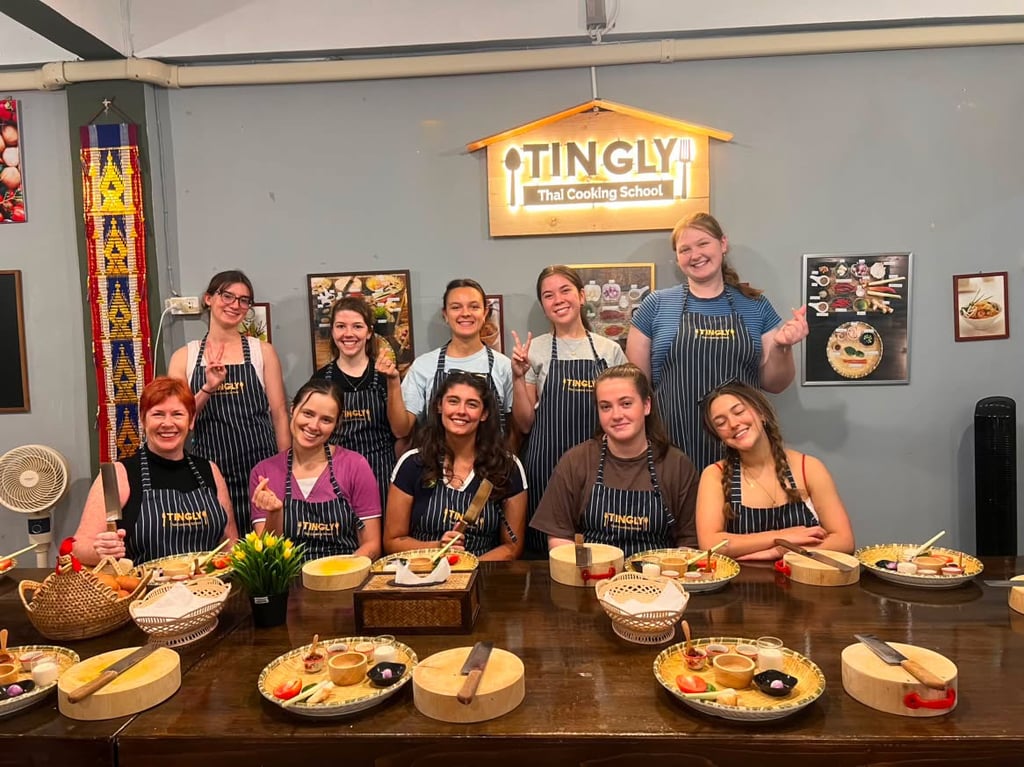
When they weren’t at the hospital or the university, the UTS students threw themselves into all the cultural experiences Bangkok had to offer. Their Mahidol University peers were on hand to show them around, taking them to everything from karaoke and cooking classes to an elephant sanctuary and a Muay Thai match.
The study tour might have only lasted two brief weeks, but the Australian and Thai students built personal and professional connections to last a lifetime. According to Laura, those same connections were replicated within the UTS group.
“It is so intensely bonding. I found that to make that connection, not just to other cultures but to people who will presumably become your colleagues, was really transformative ” she says.
Back at UTS, Laura is turning her attention to her future nursing career. Her plan is to go into emergency nursing, but first she’ll explore a range of clinical specialties during her new graduate program.
Whatever she chooses, she’ll be armed with a world-class nursing education, cultural literacy, an international network of connections and a global perspective that will enhance her employability.
“My goal was to broaden my horizons, broaden my experiences, and then take that back to improve what I’m doing now and what I’ll do in the future,” she says.
To make that connection, not just to other cultures but to people who will presumably become your colleagues, was really valuable.