


International study experiences aren’t just a nice-to-have. In the UTS Faculty of Design and Society, they’re an integral part of the learning experience.
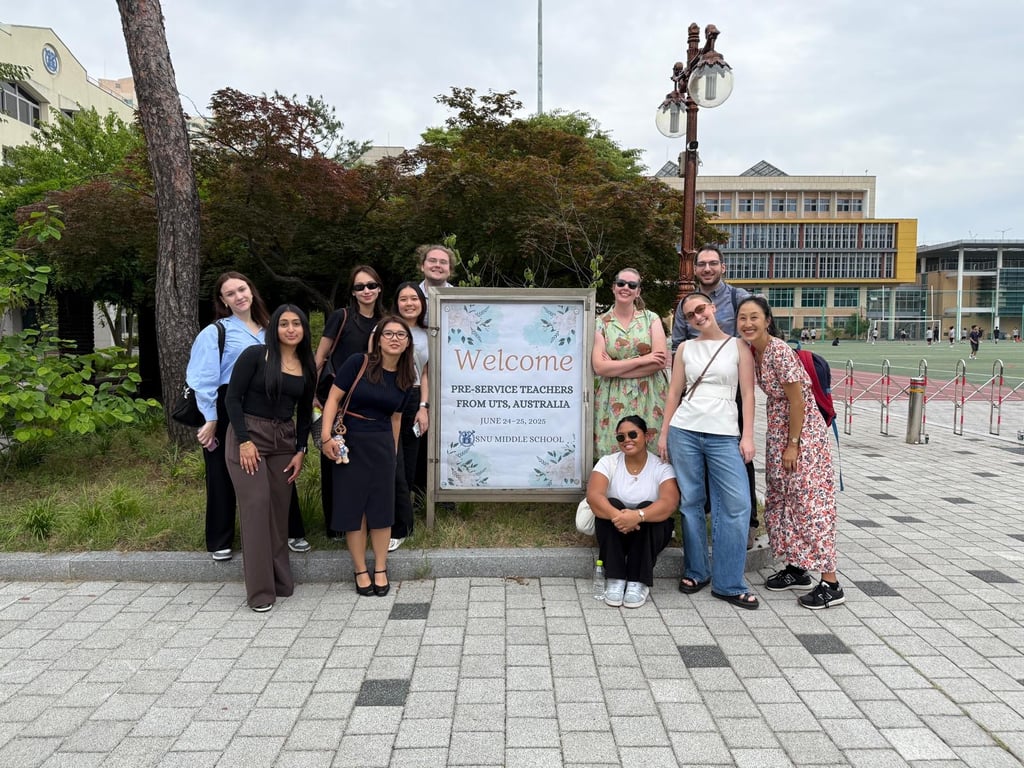
When Isabella Mantakul first received the email inviting her to apply for a two-week UTS global study tour, she baulked. The tour, designed specifically for Master of Teaching in Secondary Education students, was headed to Korea.
Bella had never travelled alone before, and the thought of trying to navigate flights and hotel transfers in an unfamiliar country felt overwhelming.
Luckily, her parents weren’t about to let her miss out.
“They were like, ‘You’re going to regret it if you don’t go!’” Bella says.
“So I applied. I didn’t have high expectations because I was thinking hundreds of people were going to apply and only 10 students would be selected. A week later I got it, and I was just so happy because I realised it was a once-in-a-lifetime experience.”
Teaching that transcends borders
In Korea, Bella was gratified to find that she’d been worrying over nothing. The travel was straightforward, and the study tour format meant she was in the constant company of the other students.
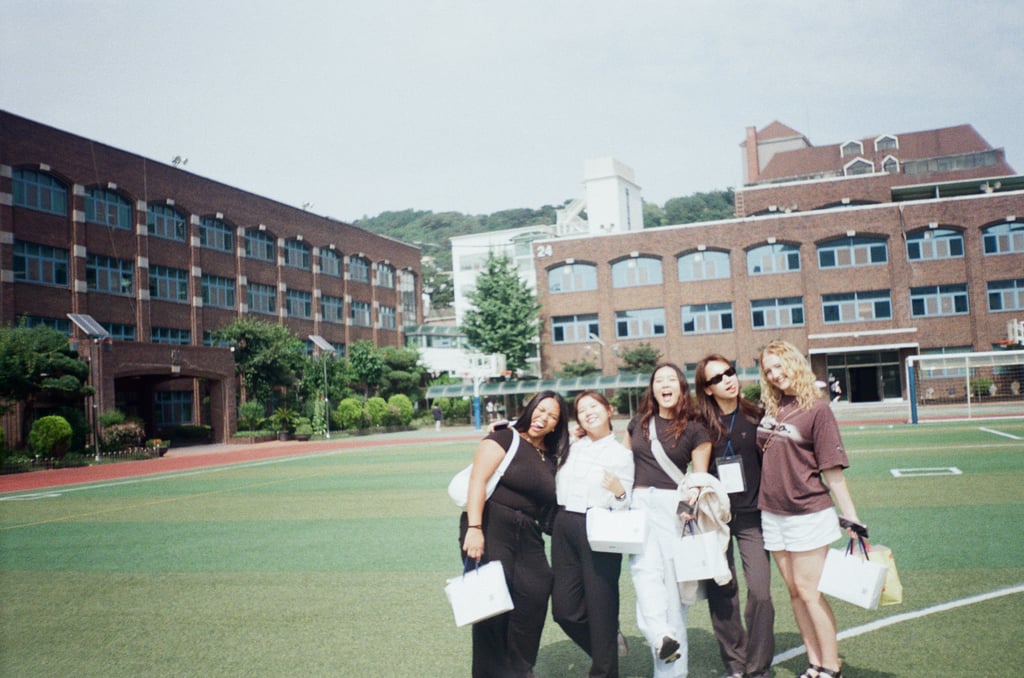
Two UTS tutors led the group through a whirlwind two weeks that pushed her to develop her teaching competencies. Most rewarding, Bella says, were visits to three middle schools in Seoul where the students observed the Korean education system in action.
The differences between Australia and Korea were striking. The Korean classrooms were highly disciplined, and technology, a timeworn battleground in Australia, was a frequent feature of the learning experience.
“The teachers would use their iPads to project lessons onto the screen and then illustrate the content to help students with their learning,” Bella says.
“They also used a lot of games to motivate the students. In one class, students had to answer quiz questions and compete to be on top of a leaderboard."
“It was really valuable to see the routines and the strategies they used to keep the kids in order so that they could learn while also having fun.”
Building lifelong friendships through global travel
In their spare time, the students explored Korea’s culture and history together through visits to cultural sites and shared nightly meals, building bonds that still endure today.
“We all got to know each other really well. Even after the trip, we stayed in contact and made sure we were in the same classes,” says Bella.
“We still see each other all the time.”
Now back at UTS, the study tour continues to shape Bella’s teaching practice. She’s been experimenting with game-based learning during her final professional placement, and she’s also been thinking about how to apply her learnings from Korea in a future classroom of her own.
“I want my students to respect me the way Korean kids respect their teachers. Those teachers must have instilled a lot of routines and expectations from early on, so that’s what I want to do too,” she says.
From international education to immersive learning
Short-term study tours are just one of many international study experiences available to UTS Design and Society students, from student exchange and study abroad through to global short programs and the New Colombo Plan scholarship scheme.
Whether you study communication or design, sustainability or architecture, criminology or construction, overseas study can prepare you to learn the cultural, personal and professional lessons that only come with exploring the wider world.
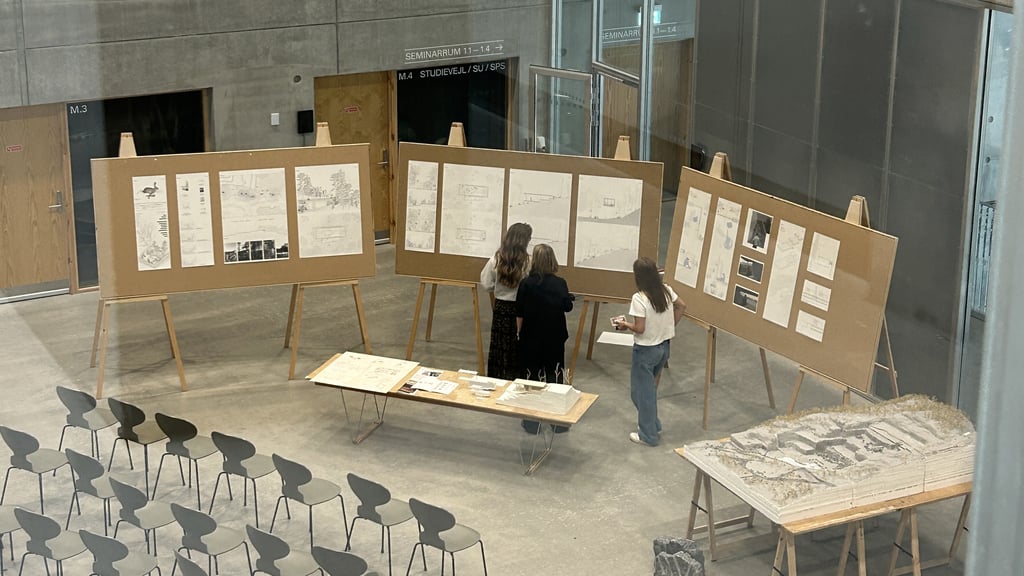
Master of Architecture student Alexandra Reed, who spent a semester at Aarhus School of Architecture (Arkitektskolen Aarhus) in Denmark as part of the UTS Global Exchange program, experienced this learning firsthand.
“Studying architecture, I’m obviously very interested in design, sustainability and the built environment, and Denmark is very progressive in all those areas,” Alexandra says.
“The Aarhus School of Architecture is purely an architecture school, rather than being combined with other design disciplines, so I really liked the idea of completely immersing myself in that environment.”
Global skills for a local career
As Alexandra discovered, there were both key similarities and major differences between the UTS and Aarhus learning approaches.
As at UTS, Aarhus students attend lectures and studios, and they also study architectural history, theory and technique. Professional architects deliver regular guest lectures that connect students’ learning to the real-world profession.
Unlike at UTS, students are expected to be on the Aarhus campus for the duration of a working day, using the time between formal classes to research, ideate and develop their projects. It’s an immersive learning format that straddles the line between university learning and professional architectural practice.
“Because you were given so much time to develop your ideas, your project was really rich by the end of semester,” says Alexandra, who also completed a two-day field trip in Larvik, Norway, as part of the research process for her major project.
The result was a project that Alexandra says is the most refined and successful she’s produced during her degree. That work became a key selling point at subsequent job interviews, helping her to land her first professional role at a boutique architecture firm on Sydney’s lower North Shore.
Where culture and creativity meet
As with all student exchange and global mobility programs, study is just one part of the travel experience. Outside of scheduled class hours, Alexandra made the most of Aarhus’s proximity to the rest of Europe.
Weekend trips to Norway, Germany, Sweden, the UK, Belgium and the Netherlands exposed her to some of the architectural traditions she’d previously learnt about at UTS, which helped her hone her own creative practice.
“Seeing what other countries are doing differently and how they prioritise the built environment, I now take their methodologies into my studies and my professional career,” she says.
“I think being able to grow my autonomy and develop my own position as a designer was the biggest thing. That really helped me understand what I was passionate about.”
There’s a global experience for every type of student in the UTS Faculty of Design and Society. From two weeks to two semesters, craft an international adventure that will transform not just your learning but your personal and professional growth.