


Choosing where to study Engineering or Information Technology is an important decision. While university rankings can be a useful place to start your research, they only tell part of the story.
The best Engineering and IT degrees combine academic excellence with practical learning, industry connections and strong graduate outcomes. That's why it's important to look beyond rankings and understand what your experience as a student will actually be like.
When do rankings matter?
A big-picture overview
University rankings provide an independent measure of a university's overall performance across areas such as teaching, research, employability, industry collaboration and international outlook. They can help you compare universities at a high level and identify institutions with strong academic reputations. Examples include Times Higher Education World University Rankings and the QS World University Rankings.
In addition, there are rankings with more specific methodologies, which can provide a clearer picture than overall university rankings, and align to what is most important for you as a student. For example:
- Looking at subject rankings pinpoint which universities excel in the specific field you want to study.
- Sustainability rankings evaluate the social and environmental impact of universities.
- Graduate employability rankings assess how universities prepare graduates for full-time employment with the development of professional skills and connections.
Curious about UTS rankings and ratings? Here are some of our recent achievements.
Choosing the right course for you
While a university’s overall ranking is useful, it doesn’t tell you much about your specific program. That’s why it’s also important to seek out the specific subject rankings for the course you’re interested in.
For example, the QS World University Rankings by Subject 2026 placed the University of Technology Sydney (UTS) at #77 in the world for Engineering and Technology. And, that’s not all! The Shanghai Ranking’s 2025 Global Ranking of Academic Subjects placed UTS within the top 10 universities worldwide for artificial intelligence, and in the top 75 for a number of other subjects, including:
- Telecommunication engineering
- Electrical and electronic engineering
- Chemical engineering
- Civil engineering
- Environmental science and engineering
- Robotic science and engineering
Looking at the specific ranking for the faculty you’re interested in can help give you a sense of the quality of the education you’ll receive.
When don't rankings matter?
Your student experience
While rankings are useful, they don't capture many of the factors that shape your day-to-day university experience as an Engineering or Information Technology student.
They won't tell you what it's like to learn in modern teaching laboratories and collaborative learning spaces, work alongside industry partners on real projects, or receive guidance from experienced academics. They also can't show you the student community you'll become part of, the support available throughout your degree, or the opportunities to build practical skills outside the classroom.
These are often the experiences that have the biggest impact on your confidence, employability and career success.
Employability
University rankings can tell you about an institution's reputation, but they won't show you how well it prepares students for their future careers.
Today’s employers are looking for graduates who have the right blend of qualifications, practical experience and job-ready skills. That’s why UTS offers opportunities such as the Industry Degree Academy (IDeA Cadetship), which enables you to gain paid industry experience while you study. Alongside industry projects, networking opportunities and other real-world experiences, these programs help you build your professional skills, grow your network and fast-track your career.
Opportunities to grow
It’s also important to look at the kinds of extracurricular activities and support your university offers.
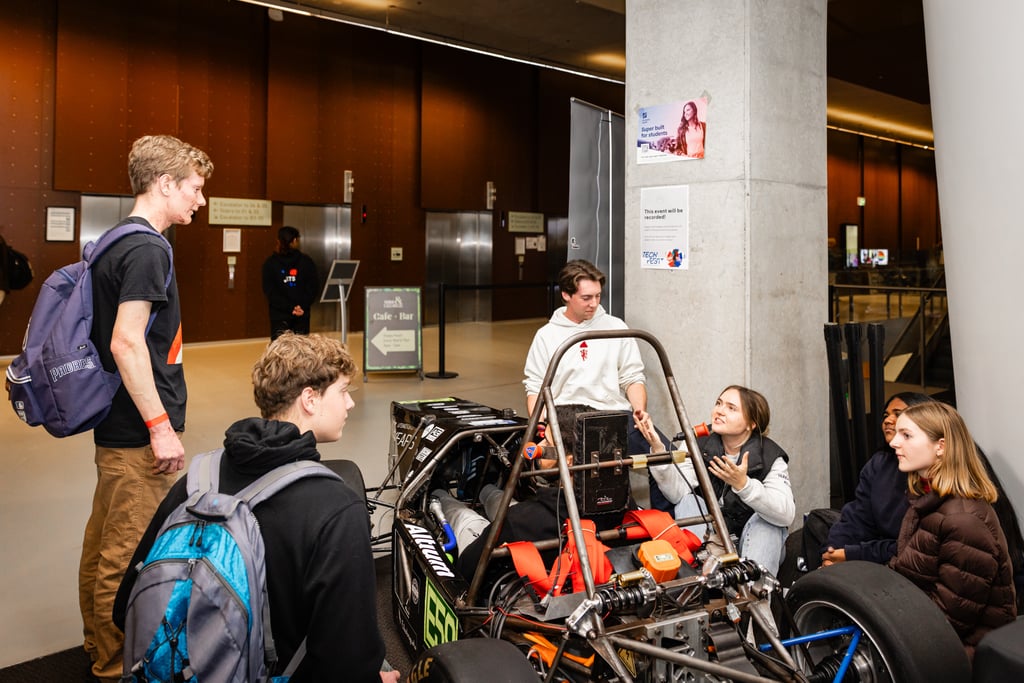
For example, UTS is home to over 180 clubs and societies, many of which are for students who share a passion for engineering, IT or related fields.
For example, you could join:
- Engineers Without Borders
- Programmers’ Society
- The Aerospace Society
- Artificial Intelligence Society
- WXSTEM, for women and non-binary people in STEMM
- Motorsports Society
UTS also offer the UTS Women in Engineering and IT Scholarships, which aim to encourage and support female students commencing studies in the Faculty of Engineering and IT at UTS.
Looking beyond rankings
Rankings are a valuable starting point, but they shouldn't be the only factor when choosing where to study.
Take the time to explore the learning experience, industry opportunities, facilities, student support and career outcomes offered by each university. Together, these factors provide a much clearer picture of what your future could look like.

Thinking about Civil Engineering?
Thinking about studying Civil Engineering in Australia? Discover what Civil Engineers do, the career opportunities available and how studying Civil Engineering...

Day in the life of an Electrical Engineering student at UTS
Considering studying Electrical Engineering at UTS? Get a glimpse into a typical day, from hands-on laboratory classes and engineering projects to study...

From Country to Cosmos
Where a passion for engineering began long before starting university.

5 Tips for your scholarship application
Make your scholarship application stand out and get noticed.
Thinking about Civil Engineering?
Thinking about studying Civil Engineering in Australia? Discover what Civil Engineers do, the career opportunities available and how studying Civil Engineering...
Day in the life of an Electrical Engineering student at UTS
Considering studying Electrical Engineering at UTS? Get a glimpse into a typical day, from hands-on laboratory classes and engineering projects to study...
From Country to Cosmos
Where a passion for engineering began long before starting university.
5 Tips for your scholarship application
Make your scholarship application stand out and get noticed.