


When people think about a Primary Education degree, they often picture one career path: becoming a classroom teacher.
For many graduates, that’s exactly where they begin. Teaching primary school students can be creative, rewarding, challenging, and different every day.
But it’s not the only direction a teaching degree can take you.
A Primary Education degree builds skills in communication, leadership, collaboration, problem-solving, and child development. Those skills can open doors across schools, community organisations, learning design, wellbeing, and education-focused industries.
Here are six career paths you can explore with a Primary Education degree from University of Technology Sydney (UTS).
1. Primary school teacher
For many students, this is the goal from day one.
Primary school teachers help children build foundational skills in literacy, numeracy, science, creative arts, and more. Just as importantly, they help students build confidence, curiosity, and social skills during some of the most important years of development.
No two days look exactly the same. One lesson might involve storytelling and group discussion, while the next could include hands-on experiments, creative projects, or outdoor learning.
Primary teachers can work across public, private, and independent schools, with opportunities to specialise as their careers grow.
At UTS, students complete professional experience placements in real school environments, giving them practical classroom experience throughout their degree.
2. Learning support or inclusive education specialist
Some graduates discover they are especially passionate about supporting students with diverse learning needs.
Learning support and inclusive education roles focus on helping students access learning in ways that work best for them. This can involve adapting classroom activities, working closely with families, supporting students one-on-one, or collaborating with teachers and wellbeing staff.
As schools continue to prioritise inclusive learning environments, there is growing demand for educators who understand how to support a wide range of learners.
For students interested in advocacy, accessibility, and personalised learning, this pathway can be especially meaningful.
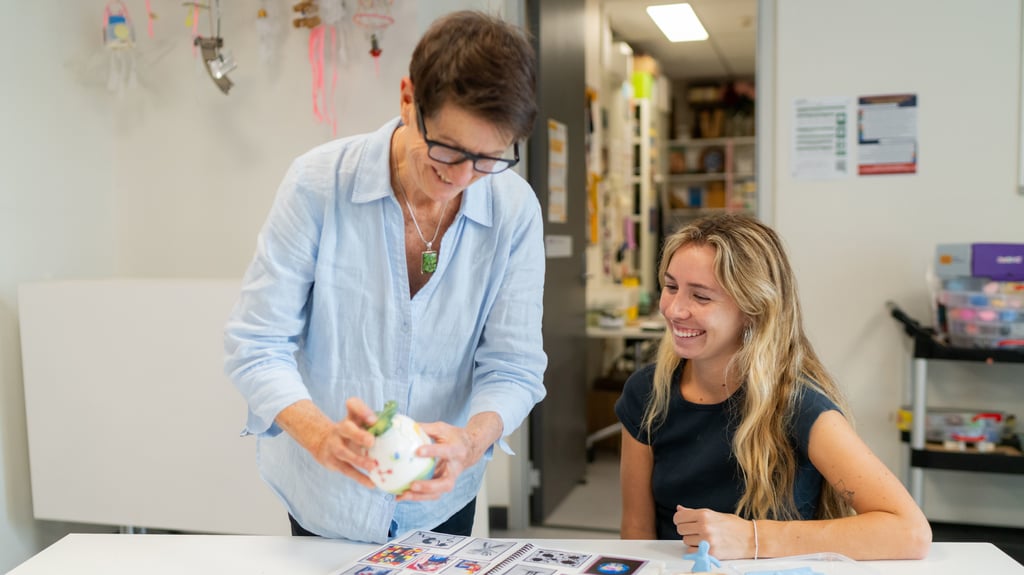
3. Education and wellbeing roles
A teaching degree can also lead to people-focused roles beyond the traditional classroom setting.
Many organisations work with children and young people through mentoring programs, after-school initiatives, community outreach, wellbeing services, and educational support programs. Graduates with teaching experience often bring strong communication and relationship-building skills to these spaces.
These roles may involve:
- coordinating youth programs
- supporting student engagement initiatives
- working in community education settings
- helping young people build confidence and connection
For students who enjoy working directly with people but want flexibility in the environments they work in, this can be an appealing option.
4. Curriculum and learning design
Not every education career happens face-to-face in a classroom.
Curriculum and learning design roles focus on creating educational resources, lesson materials, and digital learning experiences for schools, organisations, and online platforms.
This could include:
- developing classroom resources
- writing educational content
- creating interactive learning activities
- contributing to educational publishing
- working on digital learning platforms
As technology continues to shape the way students learn, there is growing demand for people who can combine educational knowledge with creativity and communication skills.
This pathway can suit students who enjoy both education and content creation.
Teaching primary school students is not the only direction a teaching degree can take you.
5. Educational leadership
Teaching can also grow into leadership over time.
Experienced educators may move into positions such as stage coordinator, assistant principal, instructional leader, or principal. These roles often involve mentoring staff, supporting school strategy, shaping curriculum direction, and helping create positive learning environments for students and teachers alike.
Leadership in education is about more than administration. It’s about helping schools adapt, improve, and support their communities.
For students interested in teamwork, decision-making, and long-term career progression, educational leadership can become a natural next step.
6. Education policy and community engagement
Some graduates choose to work at a broader systems level, helping shape how education is delivered and supported across communities.
Education-focused roles exist within government departments, not-for-profits, advocacy organisations, councils, and community programs. These careers may involve policy development, program coordination, educational outreach, or community engagement initiatives.
A teaching background offers valuable firsthand insight into how children learn, how schools operate, and what families and communities need from education systems.
For students interested in creating impact beyond a single classroom, this pathway can offer a wider lens on education.
A degree with more than one direction
A Primary Education degree is about more than learning how to teach a class. It’s a degree built around communication, creativity, leadership, and human connection.
For some graduates, that leads to a classroom. For others, it leads to curriculum design, community programs, wellbeing initiatives, or leadership roles within education.
What connects all of these pathways is the opportunity to support learning and make a difference in people’s lives.
What subjects can you teach? 7 specialisations in Secondary Education
Explore seven Secondary Education specialisations at UTS, from English and Mathematics to Science and Business Studies, and discover where a teaching career...

Kieng Do finds purpose through Primary Education at UTS
Discover how Kieng Do made the move from pharmacy to primary education at UTS, gaining practical classroom experience, supportive connections, and the...

Must-see Education sessions at UTS Open Day
Discover the must-see Education sessions at UTS Open Day. Explore teaching degrees, meet academics, experience student showcases and learn how to become a...

Future Teachers Club to the classroom: Aaron's teaching journey at UTS
After discovering his passion for teaching in high school, Aaron chose the Bachelor of Science Master of Teaching in Secondary Education at UTS. Through...
What subjects can you teach? 7 specialisations in Secondary Education
Explore seven Secondary Education specialisations at UTS, from English and Mathematics to Science and Business Studies, and discover where a teaching career...
Kieng Do finds purpose through Primary Education at UTS
Discover how Kieng Do made the move from pharmacy to primary education at UTS, gaining practical classroom experience, supportive connections, and the...
Must-see Education sessions at UTS Open Day
Discover the must-see Education sessions at UTS Open Day. Explore teaching degrees, meet academics, experience student showcases and learn how to become a...
Future Teachers Club to the classroom: Aaron's teaching journey at UTS
After discovering his passion for teaching in high school, Aaron chose the Bachelor of Science Master of Teaching in Secondary Education at UTS. Through...