


If a career in design sounds appealing but there is more than one area of creative practice that interests you, Visual Communication is worth exploring.
At the University of Technology Sydney (UTS), the Bachelor of Visual Communication introduces students to different ways of communicating ideas visually, from user experience (UX) to branding and typography, motion, illustration, and photography.
For Jannah Abdellatif, who completed her Bachelor of Visual Communication in 2024 before going on to complete a Bachelor of Design (Honours), the breadth of the course was one of the things that changed her understanding of the discipline.
“Before starting, I expected the degree to be mostly focused on branding and publications,” she says. “That understanding has definitely changed, as we ended up exploring photography, videography, motion and UX/UI design too.”
So, what is it actually like to study Visual Communication (or Viscom) at UTS, and what could the degree offer someone looking to develop their own design practice?
Explore different areas of visual communication
Visual Communication is about more than creating logos or layouts. At UTS, students learn to shape how people engage with information, ideas, and experiences through visual media. Students graduate with skills to apply design as both a communication practice and a way of thinking, helping to make sense of complex issues and create meaningful change in the world.
For Jannah, that meant discovering areas of design she had not initially expected to explore. She now specialises in illustration, branding and publication design, with her practice shaped by her experiences between Sydney and Abu Dhabi and her interest in Arabic typography, cultural identity, memory, and visual storytelling.
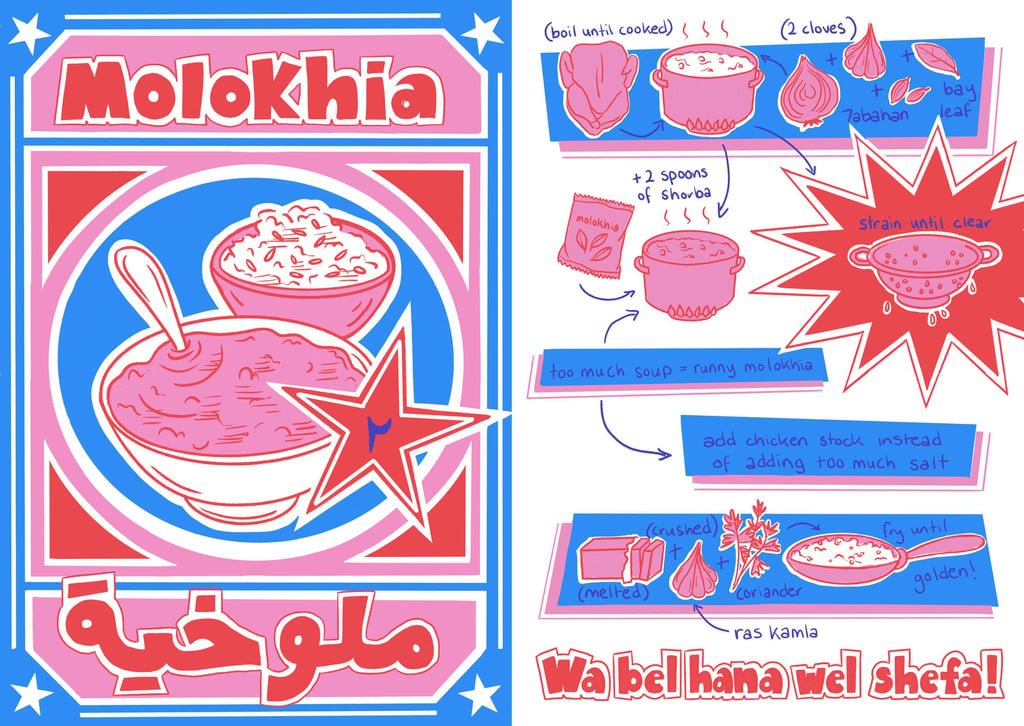
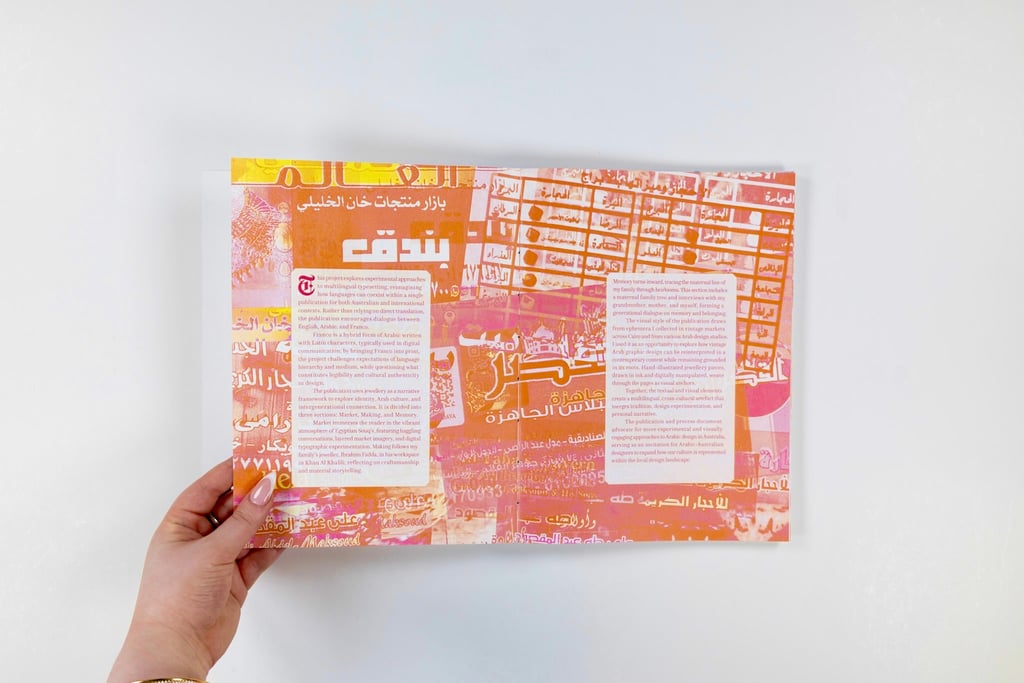
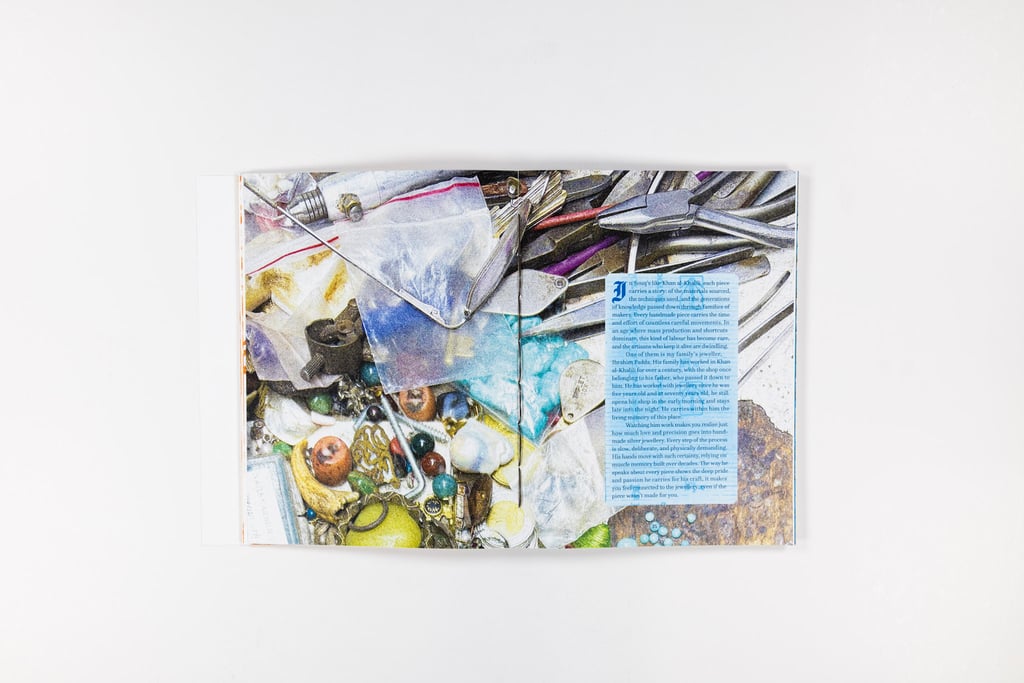
Her work demonstrates how varied a Visual Communication practice can become. For the Graduate of the Year awards, Jannah submitted three projects that ranged from place branding and bilingual zine design to experimental multilingual typography.
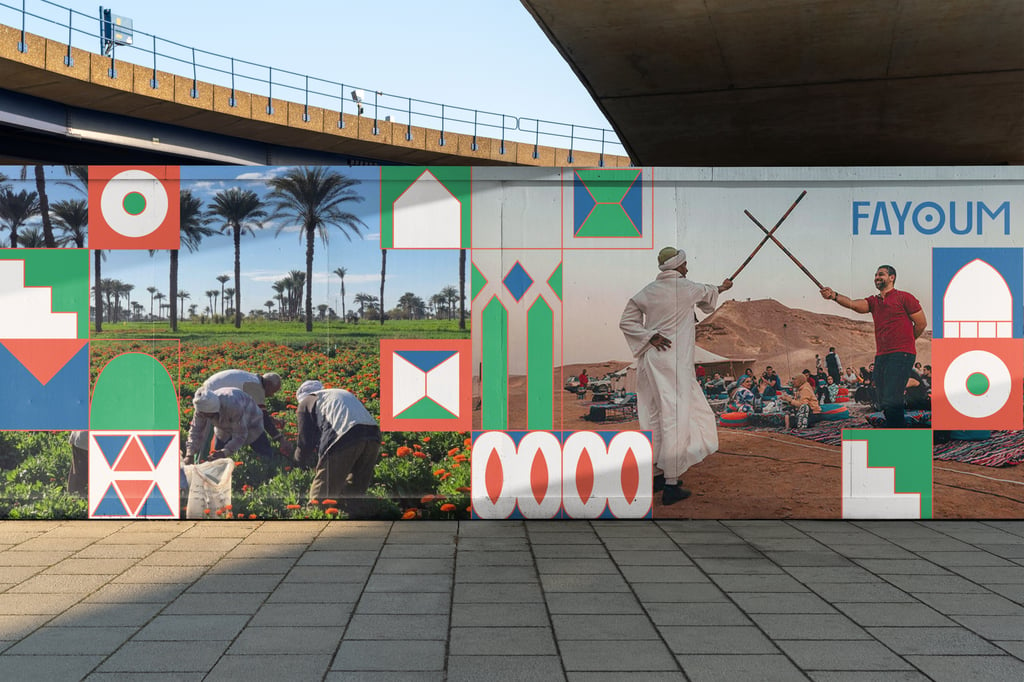
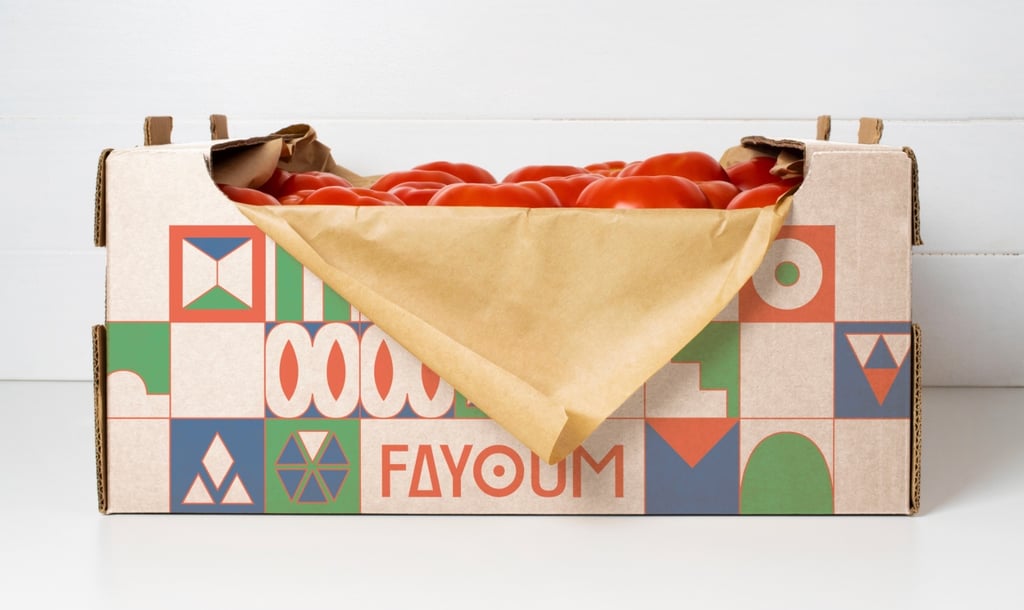
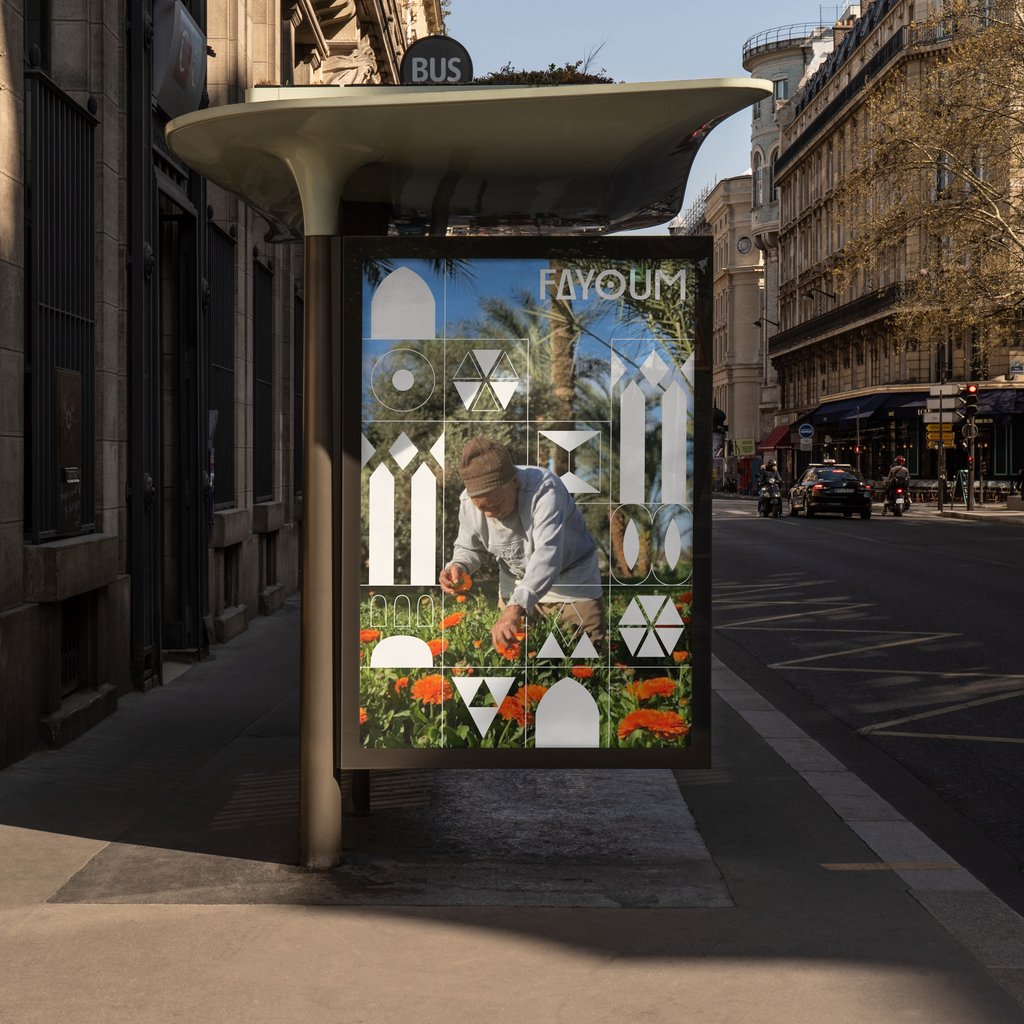
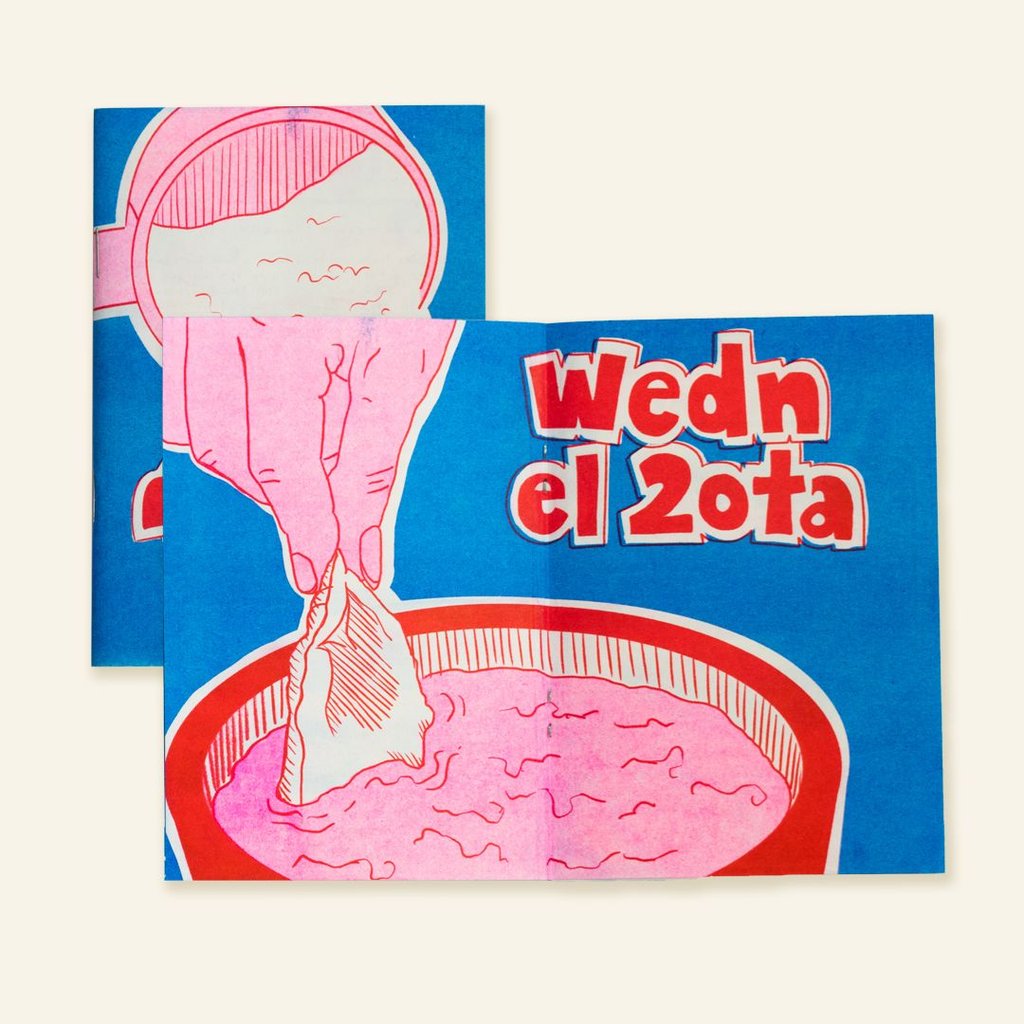
Her Fayoum, Egypt concept place branding project used traditional architecture, pottery and textiles as the basis for a modular visual system. Belwayem is a playful riso-printed zine featuring her grandmother's traditional recipes in Arabic, English and Franco-Arabic. Her Honours project, My Mother's Line, is a 120-page publication exploring how English, Arabic and Franco-Arabic can coexist through experimental multilingual typesetting.
“The community I built with my uni friends has been the biggest highlight. Everyone's interests and creative voices are so different.”

Develop your own creative practice
One of the benefits of studying a broad design discipline is the opportunity to work out where your interests lie.
Jannah says the UTS course gave her the “foundation and space” to develop her own practice, while exposing her to different areas of visual communication that she may not have explored otherwise.
There is also a strong emphasis on tangible and experimental media. Students work with approaches including collage, experimental type and mark-making, publication design, alongside digital and technical skills.
For Jannah, experimentation became an important part of developing her creative voice. Her practice now sits at the intersection of graphic design, typography and illustration, with Arab culture as a consistent thread.
She currently runs a freelance practice focused on bilingual projects and continues to research through collecting ephemera, engaging with designers across Arab and Western contexts, and learning traditional Arabic calligraphy.
Learn with other designers
Design is not always a solitary practice. At UTS, students learn alongside peers with different interests, ideas and approaches to creative work.
Jannah describes creating a “community of practice” through the people she met in classes and studio-based group feedback throughout her degree. Her peers were interested in different areas, from typography and photography to motion and zine making, and being exposed to that range encouraged her to think more broadly about her own work.
Feedback was also an important part of the experience.
“We supported each other throughout our degree by giving honest, constructive feedback rather than just surface-level praise,” she says.
That support continued into her Honours project, with Jannah crediting her tutor, Zoë Sadokierski, as well as her peers, for the feedback that helped her develop her work.
Connect design study with industry
Visual Communication at UTS also provides opportunities to understand how design operates beyond the classroom, with opportunities for students to participate in industry-led projects and internships.
For Jannah, this connection between study and practice has continued beyond graduation. Her work has been recognised through the Madeline Lester Australian Graduate of the Year Award, which she says she was “incredibly honoured and grateful” to receive.
The projects she submitted reflect the range of interests she developed through her studies, while also showing how personal experiences and cultural identity can become part of a design practice.
Her future plans build on that direction. She wants to become an advocate for Arabic graphic design, challenging narrow ideas of what it can look like and expanding its visual language across Australia and the Middle East.
“Viscom at UTS gave me the foundation and space to develop my own practice, while being guided by teachers who brought their own creative practices and industry experience into the course.”
Where could Visual Communication take you?
There is no single path through Visual Communication. Depending on interests and experience, graduates can develop careers across areas such as user experience (UX), branding and identity, publication design, illustration, digital product design, wayfinding, motion, and social and service design.
For Jannah, studying Visual Communication provided the opportunity to explore these different areas before developing a practice of her own.
“I was also able to build a strong community of fellow designers and, through the course, was exposed to many different areas of graphic design that I may not have explored otherwise,” she says.
It is this combination of exploration and direction that can make Visual Communication a useful starting point for a career in design. Students can experiment with different forms, learn from other designers and gradually identify the areas of practice they want to pursue.
For Jannah, that has led to a practice centred on illustration, branding, publication design and Arabic typography. For another designer, the direction may be different.
That is part of what studying Visual Communication at UTS can offer: the space to explore design broadly while developing the skills, interests and creative voice to shape a practice of your own.
Must-See Sessions to Add to Your Open Day Design Agenda
Dream of creating scroll-stopping visuals or starting a brand? Explore 5 must-see sessions, demos & hubs on your UTS Design Open Day schedule!

Six careers in fashion business you should consider
If you’ve always dreamt of a career in fashion, here’s some good news: the global fashion sector employs more than 400 million people, which means there are...
Visual communication careers: here’s what you need to know
Storytelling – about brands, data, people, experiences, opportunities – is important to every industry and field of knowledge. Visual communication is a key to...

Luisa Skyring: designing for inclusion
The product design graduate is advocating for First Nations inclusion through design.
Must-See Sessions to Add to Your Open Day Design Agenda
Dream of creating scroll-stopping visuals or starting a brand? Explore 5 must-see sessions, demos & hubs on your UTS Design Open Day schedule!
Six careers in fashion business you should consider
If you’ve always dreamt of a career in fashion, here’s some good news: the global fashion sector employs more than 400 million people, which means there are...
Visual communication careers: here’s what you need to know
Storytelling – about brands, data, people, experiences, opportunities – is important to every industry and field of knowledge. Visual communication is a key to...
Luisa Skyring: designing for inclusion
The product design graduate is advocating for First Nations inclusion through design.