


- Posted on 16 Nov 2026
What AI in not-for-profit management means for the next generation of sector leaders
Yes, but only if people stay in charge of it. AI in not-for-profit management can free up time from administration, reporting and grant writing, and extend how services reach people. It cannot replace trust, empathy or judgement. As AI tools become common, the scarce skill is not using them. It is knowing when, how and whether to rely on what they produce.
Key takeaways
- AI can give not-for-profits more capacity without necessarily larger teams, especially smaller organisations where one person covers many functions.
- Many people already use AI individually, but organisational training, governance and strategy often lag behind. That gap is where future leaders can add value.
- AI can support service delivery, but complex cases still need human expertise and relationships.
- Graduates who combine AI capability, critical thinking and a deep understanding of mission will be best placed to lead.
How is AI used in not-for-profits?
AI is used in not-for-profits to reduce time spent on repetitive tasks such as administration, data entry, research, grant applications and impact reporting. It is also beginning to support service delivery, including chat-based information and triage.
Not-for-profit teams face constant pressure to deliver more with limited time and money. A small organisation or social enterprise might have one person handling fundraising, administration, service delivery and reporting. Accessible AI tools can help with research, writing, design and reporting, giving that person capacity that would otherwise need extra staff.
The scale of the capacity challenge shows in the data. The Australian Charities and Not-for-profits Commission's 2026 Australian Charities report found that "more than half of all charities, 53%, operated with no paid staff, relying entirely on the dedication of their volunteers." 2026 ACNC report
But adoption is uneven. AI use may be widespread among individuals while organisational capability, training and governance are less developed. That creates demand for people who can do more than operate AI tools: people who can think critically about how AI should be built into the way an organisation works.
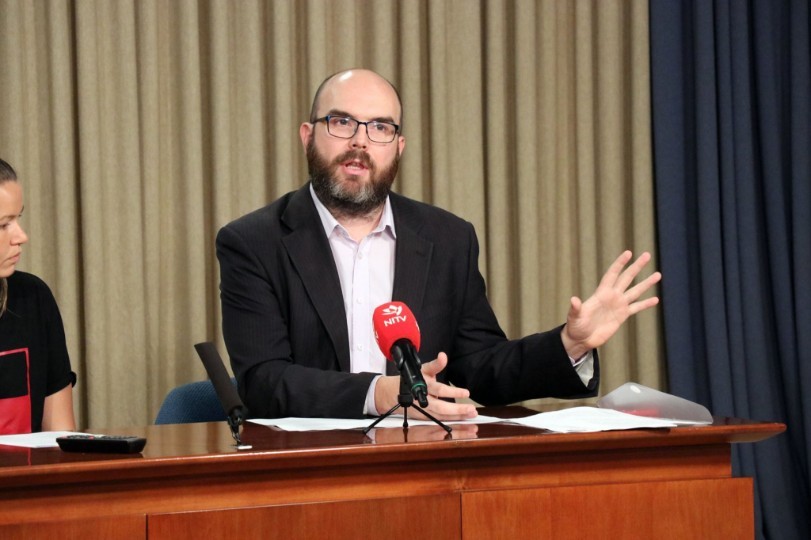
As Dr Mark Riboldi, Lecturer at UTS Business School, puts it:
“It’s not a shortcut, but it can really be such a great tool and advantage for businesses.”
Watch The Big Picture: How AI is reshaping Not-for-Profit Management to see how AI is changing organisational capacity, service delivery and the ability to focus on mission.
Will AI give not-for-profit workers more time for the mission?
It can. AI can take on documentation, data entry, parts of data analysis, case management and triage, so frontline workers can spend more time on complex cases that depend on relationships and critical thinking.
AI-supported systems can also help identify patterns, such as high-risk clients, periods of increased demand, or where people may be disengaging from a programme. Fundraising offers one measurable example. UNICEF Australia used a predictive AI tool from Dataro to target its direct mail, and Dataro reports it lifted revenue by 26% while cutting mailouts by 15,000.
Not-for-profit professionals work closely with the people their organisations support, as well as donors, funders, philanthropists, governments and other decision-makers.
As Dr Riboldi explains:
“AI can't replace the trust, the empathy, those kind of interpersonal connections, those shared values.”
See what this looks like day to day in How AI is changing Not-for-Profit Management day-to-day
Can AI improve how not-for-profit services are delivered?
In some cases, yes. AI-powered chat tools can help people access information and a first level of support, but complex cases still need people with deeper expertise.
AI is not only an internal efficiency tool. Applications are emerging in health services, tutoring and helping people navigate service systems. For people from different language backgrounds, chat-based tools may offer another way to find information and services. One Australian example is the Alcohol and Drug Foundation's information bot, Dib. It answers questions by searching the foundation's own website for official policies and updates, then relaying what it finds in simple language, so its responses rest on trusted material rather than invented answers.
The limits matter. Where deeper expertise and human support are needed, AI should supplement the people behind a service, not replace them.
What are the risks of AI in not-for-profits?
The main risks are data privacy, bias affecting vulnerable clients, inaccurate or outdated outputs, and a lack of clear governance over how AI is used.
Not-for-profits often hold sensitive information about people, so the stakes of getting AI wrong are high. Questions leaders need to ask include:
- Where does client and donor data go when it is entered into an AI tool?
- Could an AI-supported process disadvantage particular groups?
- Who is accountable for decisions informed by AI?
- What policies, training and oversight does the organisation have in place?
The Institute of Community Directors Australia advises boards to set clear guidelines for AI use, including human oversight, fact-checking and protections against sensitive data being entered into insecure tools. It also stresses that AI should aid decisions, with humans keeping final responsibility.
These are management questions, not just technical ones, and they are where graduates with governance and strategic skills can make a difference.
What skills do not-for-profit graduates need in the AI era?
Graduates need AI literacy, but the stronger advantage is critical thinking: the ability to judge whether AI outputs are accurate, current, trustworthy and appropriate for the audience.
Knowing how to use AI will be useful. Knowing how to use it well may matter more. An AI tool can quickly generate writing, reports or calendars, but that does not mean the result is suitable. Graduates need to ask: Is the information accurate? Is it current? Can the source be trusted? Is the tone right for this audience?
As Dr Riboldi notes:
“Not everyone's going to be able to use it well.”
As AI skills become more common, those who can evaluate outputs, rather than just generate them, can also shape organisational practice around AI and data governance, standards and team workflows. AI skill is becoming common, while judgement, governance and mission literacy are scarce.
Explore why this matters in Your unfair advantage in Not-for-Profit Management.
Will AI replace not-for-profit jobs?
Evidence so far points to AI changing roles rather than removing the need for people, and it may broaden what individuals can do.
Not-for-profit professionals already work across functions, particularly in small organisations. AI has the potential to broaden these roles further. Someone in administration might also contribute to communications, while people in policy or analytical roles may gain capacity to work in other areas.
Graduates do not need to be deeply technical. They benefit from combining AI capability with an understanding of the organisation and its purpose.
Building your advantage in not-for-profit management
For future graduates, AI could mean less time on administration and more time on the work that draws many people to the sector in the first place. But technology alone is not the advantage. The advantage is using AI critically, understanding its outputs, and combining that with judgement, relationships and a strong grasp of the mission.
As AI skills become common, judgement, governance and mission literacy will set graduates apart. The leaders who know when to trust AI, when to question it and how to govern it will help organisations do more with less without losing sight of why they exist.
Contributors
Lecturer, Business School