


- Posted on 1 Mar 2023
- Updated on 1 Mar 2023
- 5-minute read
UTS recognises that as public purpose institutions, universities have a responsibility to positively contribute to communities beyond our campus.
Although research has shown that many people want to volunteer, very few of us actually do. This is often due to lack of time, but also rigid ideas on what volunteering can and should look like.
UTS recognises that as public purpose institutions, universities have a responsibility to positively contribute to communities beyond our campus.
To ensure staff are able to dedicate time to volunteering UTS gives them access to social justice leave – up to five paid days leave for UTS staff to volunteer their time, skills and expertise to the community. Importantly, staff are encouraged to design their own volunteering experiences to fit around their work.
“I think when it comes to volunteering, people have this assumption about what it is, but it can be so many different things,” says Alex Connor, Program Lead of the UTS SOUL Award, a social justice leadership and volunteering program at UTS.
You can do it as part of your role at UTS, like working on a joint project with a community partner, or you can involve community as part of your research and teaching, or you can take a few hours off to go out into an organisation to meet people. You can fit it into your life in a way that makes sense to you, she explains.
"From the community perspective, volunteering is vital. The COVID-19 pandemic was a really clear example of how important this often-unseen work really is. Much of the work that is done to ensure we have a vibrant and healthy society is done by volunteers, they’re all around you."
Among the obvious social benefits, research by the Harvard Medical School found that there are also numerous health-related benefits, such as improved mental health, better sleep and a reduction in anxiety. Further, volunteering offers opportunities to try out new skills in a supported environment
“You could volunteer to do something that uses skills you already have, but you can also volunteer on something that’s completely new and different. You can expand beyond your own little bubble and learn things about different people, different situations, different organisations that you might not have known before,” says Connor.
One member of staff who has taken up the opportunity to work with community as part of her teaching practice is Senior Lecturer in the UTS School of Design, Nicola Hardcastle. For over a decade, Hardcastle has taken on community projects as part of her Socially Responsive Design subject through UTS Shopfront.
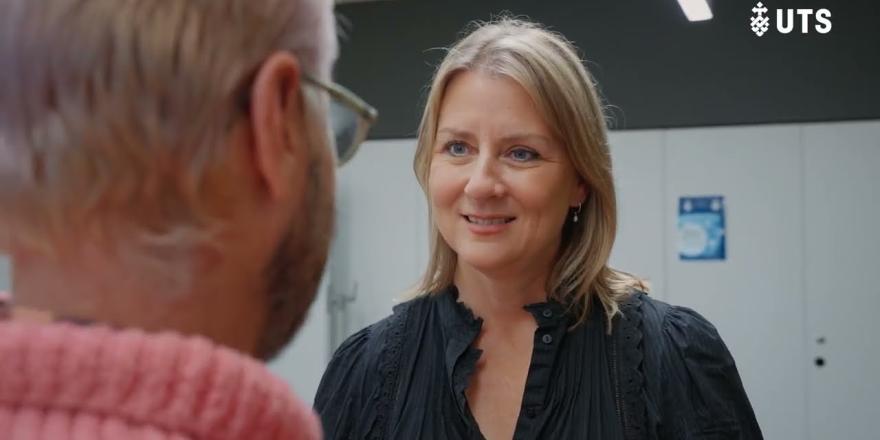
“The Shopfront program connects community organisations with academics so that we can offer students a work-integrated learning experience. It enables me to support community in my design studio by guiding my students through a real-life design brief, situated in a real-life community setting,” Hardcastle explains.
“Socially Responsive Design is just a small part of the whole university and the social impact we have, and I do know that other colleagues are doing great work in their own way. Given the scale of UTS, it is important that we are all encouraged to participate and work in an area of social justice”,” she concludes.
| Social Impact Framework |