

• Posted on 24 May 2023
  • Updated on 24 May 2023
  • 4-minute read

If you've ever wondered how the big studios like Disney, Pixar and Animal Logic go about creating high-end 3D animated feature films like ‘Happy Feet’, ‘The Lego Movies’, ‘Super Pets’ and more, enjoy this crash-course from the Leads at the UTS Animal Logic Academy as they step you through the various roles it takes to make a studio-quality 3D animated film.

Here at the Academy we take the strongest skill our students have and raise that to industry level.
PXgXuKT-XFs

Transcript

The UTS Animal Logic Academy is a collaboration between the University of Technology Sydney and the award-winning animation studio Animal Logic. It's the only course in Australia where students can experience what it's actually like to work in the animation industry.

We offer a one-year accelerated master's degree in animation and visualisation that builds on the skills students have developed during their undergraduate degrees. By specialising in a specific part of the pipeline, our students hit the ground running when they enter the visual effects and animation industry.

Every year, as part of their studies, our students work together to produce a 3D animated short film entirely from scratch. In this video, we're going to show you exactly how we made last year's short film, "Apart".

So let's start at the beginning. When students come into the master's course, or the MAV as we like to call it, they enter into their chosen department. These teams then work together to create the short film over the course of the year.

Step one is to develop the story. We put the students into small groups to develop a range of ideas. The groups change again and again, ideas and story elements evolve, until we have a finalised script.

The story and art team then turn the idea into storyboards, as well as developing the design of the characters. After the characters, props and environments have been designed, our team of modellers get to work building the assets, taking the two-dimensional artwork and turning that into a three-dimensional model.

They then go to the rigging department, where a digital skeleton is created for the model, and interactive controls are added so that the animators can set these assets into motion.

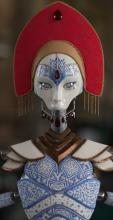
The models are then taken into surfacing, where artists create the textures that are mapped onto the 3D models. In a 3D project like "Apart", these can include complex textures like hair, skin and fabrics.

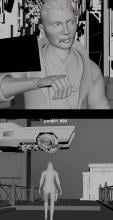
Parallel to the surfacing team, the previs team turns the 2D storyboards into a 3D animatic, creating the camera movement for each shot of the film.

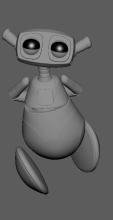
While the animation team starts to develop the look and feel of how our characters move and behave, to help define the performances.

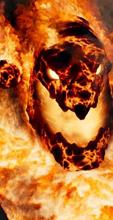
There are often a range of effect simulations that need to be added. For these, we use specialised software called Houdini.

Lighting is where we get to see all of the elements from each department come together for the first time. Lighting artists set the tone for each shot by using light and shadow to heighten the audience's emotional response to the film.

And then there's compositing, which goes hand in hand with lighting. Compositing artists use Nuke, which allows them to layer all the elements of the shot together so that each element can be given its final polish.

In addition to the incredibly talented students we have in both creative and technical roles, we also need a good production team to keep the project on track. Good production coordinators are always in high demand in industry, and hopefully we'll have a couple on our team next year.

First and foremost, technical directors are problem solvers, and they keep all of the technical aspects of the pipeline running smoothly. They develop tools and improve processes so that artists are free to create.

So we hope that gives you a brief overview of the production process that our Master of Animation and Visualisation students follow to produce a studio-quality 3D animated short film.

So if you would like to get experience working on a professional-level short film that uses the same production processes that the big studios do, we would love to have you join next year's group of students. But be sure to think about what department you'd like to specialise in, so we can help train you towards that role in industry.

Follow our socials to find out where you can see the full version of the short film "Apart". We hope to see you next year.

From student to specialist

It’s essential at undergraduate level that students develop broad knowledge and skill, but how do you translate these skills to a professional working environment? Here at the Academy we teach students at a postgraduate level so that they can further develop specialised skills in order to contribute at a high level to complex projects, and also to accelerate their entry and progression in industry.

Here are some of the key areas students can choose to specialise in as part of the production process when undertaking the Master of Animation and Visualisation.

  • Explore our specialisations

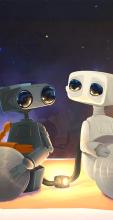
  • Art department

    The Art department starts with the original story idea then creates the visual look of the project.
Art Department

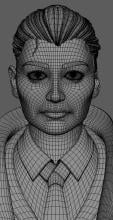
  • Modelling

    The Modelling team takes designs and creates the characters, creatures, objects and assets as 3-dimensional computer models. 
Modelling Department

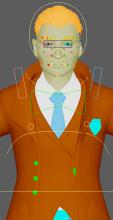
  • Rigging

    Riggers create an interactive skeleton with integrated controls for models that enables them to be animated. 
Rigging Department

  • Previz and layout

    Previz/Layout artists take the first raw elements from art department and animation, and create basic moving shots, including decisions about framing, lensing and camera movement.
Previs Department

  • Animation

    Animation is the creation of performance from rigged models. Great animators typically have a strong understanding of gesturing, theatrics and performance.
Animation Department

  • Surfacing and texturing

    Detailed texture and pattern artworks are produced to warp perfectly around 3D models to create the right photo-realistic or stylised look for each asset.
Surfacing Department

  • Effects (FX)

    FX simulations are special effects that enhance shots and scenes, such as fire, explosions, dust, steam, sparks, or even fur or cloth simulations, crowds or cities. 
ALA Effects Department

  • Lighting

    Lighting artists set detailed light sources to each shot to highlight the action, characters and emotion through the use of highlights and shadows.
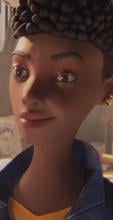
Lighting Department

  • Compositing

    Compositing is the process of combining all the various elements of the production into one final composited scene.
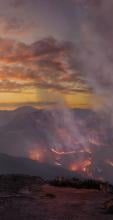
Compositing Department

  • Production coordination

    Production Coordinators ensure the project runs to schedule. It’s a great role for those who envision themselves in a project management or producer role.
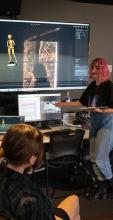
ALA Production Department

  • Technical direction

    Technical Directors are responsible for creating tools and maintaining the software and pipeline for the production of the animation and/or visual effects projects. 
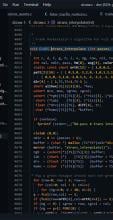
ALA Technical Direction Department

Quick links

|About Animal Logic Academy|How to apply|Graduate successes|Student projects

Get an Info Pack


Share