


- Posted on 23 Jul 2026
- 6 min read
A community-led project is helping migrant and refugee communities use AI with confidence.
In South West Sydney, a quiet divide is growing. It is not just about access to technology. It is about who understands it and who gets left behind.
Artificial intelligence (AI) is rapidly shaping how people access information, including health advice. But for many migrant and refugee communities, especially those who speak languages other than English, these tools can feel out of reach. Or worse, unsafe to use.
A new research project at the University of Technology Sydney (UTS) set out to change that.
Supported by a UTS Social Impact Grant, Bridging the AI divide: Empowering migrant and refugee communities in South West Sydney through AI brought together researchers, health partners and community leaders to explore a simple but powerful idea: what if communities could shape AI, rather than just use it without knowledge?
From digital exclusion to digital agency
The project was led by Associate Professor Jianlong Zhou and Dr Michael Camit, in partnership with South Western Sydney Local Health District and local community organisations.
Their focus was clear. Many culturally and linguistically diverse communities face a growing ‘AI divide’, where new technologies are developed without their input, and without regard for language or cultural context. “AI is not just a technical tool,” says Associate Professor Zhou. “It shapes how people understand health, make decisions and participate in society. If communities are excluded, the gap widens.”
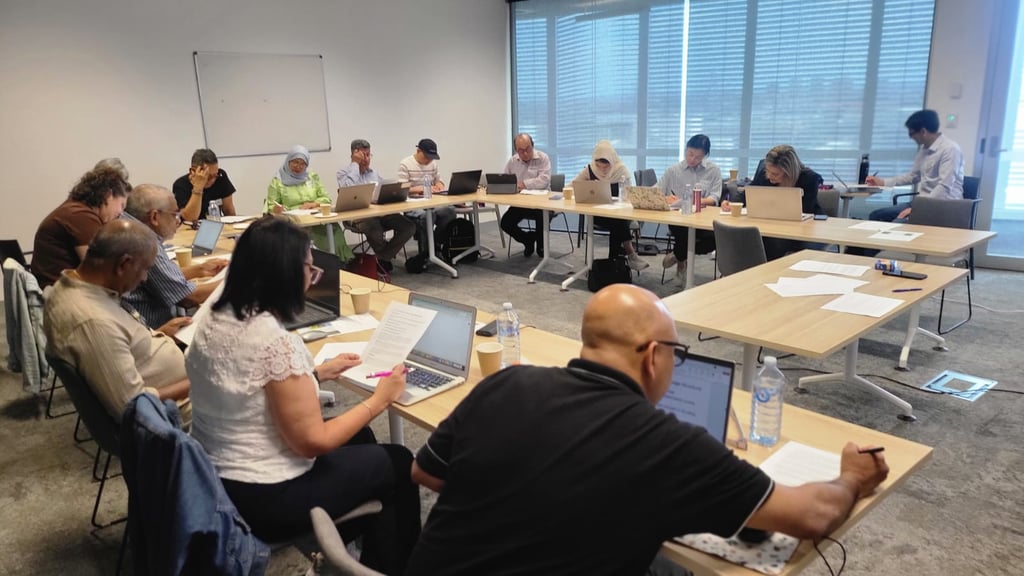
To address this, the team worked with 20 community leaders from across South West Sydney. Participants spoke more than a dozen languages, including Arabic, Vietnamese, Khmer, Lao and Dari.
Over 10 weeks, they took part in workshops that taught them how to use AI and how to question, challenge and adapt it.
Creating ‘Citizen Adaptors’
At the heart of the project was a new concept: ‘Citizen Adaptors’.
“These are everyday people who use AI alongside their cultural knowledge to make information meaningful and safe for their communities,” explains Dr Camit.
Instead of relying on direct translation, participants learned to reshape health information, so it made sense in their own cultural context. This included simplifying complex medical language, checking for accuracy and making sure messages were respectful and clear.
Participants didn’t just accept what AI produced. They learned to ‘argue’ with it.
“We trained people to move from passive use to active collaboration,” says Dr Camit. “They became gatekeepers of meaning, not just users of technology.”
Real-world impact
The results were immediate and measurable.
Participants reported a sharp rise in confidence using AI, jumping from very low levels to significantly higher scores after the program. Many also developed practical skills, such as simplifying hospital letters, preparing for medical appointments and translating complex health advice into plain English.
For some, the experience was life-changing.
One participant used the tools to better understand her own health challenges. By structuring her thoughts and questions, she felt more prepared when speaking with her doctor.
“I felt less scared,” she shared during the program. “I knew what questions to ask.”
Others began producing multilingual health resources for conditions like Parkinson’s, stroke and aphasia, working with health professionals to ensure accuracy and cultural safety.
In one case, a participant reduced the time it took to understand a complex hospital document from one hour to just two minutes.
A new way of working
The project also reshaped how researchers and communities work together.
Rather than designing solutions in isolation, the team used a participatory approach. Community members helped shape the workshops, test tools and validate outputs.
This created a shared learning environment.
“There was real exchange,” says Associate Professor Zhou. “We learned from participants just as much as they learned from us.”
The project also strengthened partnerships across health services, community organisations and the university, laying out the groundwork for future collaboration.
Challenges and lessons
Like any pilot, the project faced challenges.
Ensuring the accuracy of health information across multiple languages requires time, expertise and careful checking. Funding limits also meant not all resources could be fully validated for clinical use.
There were practical barriers too. Some participants travelled long distances to attend workshops. Others lacked access to the software needed to fully engage.
These challenges highlighted a broader issue: the digital divide is not just about skills. It is also about access to tools, infrastructure and support.
What comes next
Despite these challenges, the impact is clear.
The project has already created a growing community of practice, with participants continuing to share knowledge and support one another beyond the workshops.
It has also provided a roadmap for future initiatives. This includes scaling training programs, developing local AI health hubs, and integrating community-led approaches into health services.
Most importantly, it has shown what is possible when communities are placed at the centre of innovation.
“This is about more than technology,” says Dr Camit. “It’s about dignity, voice and access. When people can shape the tools they use, they are no longer left behind.”
The bigger picture
As AI continues to transform society, the question is not whether people will use it. It is who gets to shape it and whose voices are heard.
This project offers one answer.
By empowering migrant and refugee communities to become active participants in the AI landscape, UTS is helping to build a future that is more inclusive, more equitable, and more human.
With thanks to:
UTS project contributors and partners
Prof. Sally Inglis, Prof. Daniel Catchpoole, Prof. Angela Dawson, Dr. Emma Power, Dr. Jane Hutchens, Dr. Mikaela Tracy, Dr. Gnana Bharathy. Ms. Paiynthalir Samyappan Nallamuthu, Ms Jaithoon Venkteshwar
Other project contributors or partners
Health Literacy Unit, Multicultural Services, South Western Sydney Local Health District (SWSLHD), Vietnamese Stroke Watch, South West Digital Health Literacy and Refugee Project.

The grant application
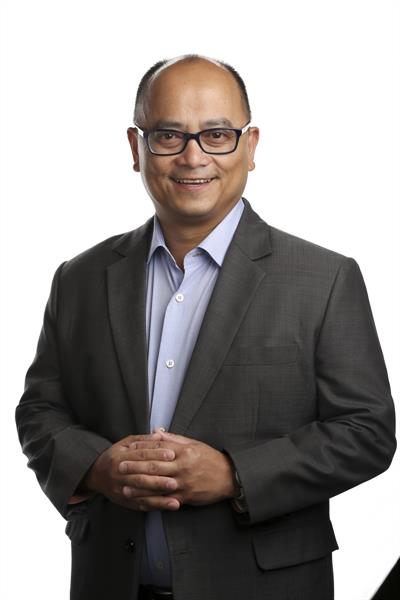
Adjunct Fellow, Faculty of Health
Associate Professor, Faculty of Engineering & Information Technology
This project was supported by a 2025 UTS Social Impact Grant.