

- Posted on 11 May 2019
- 5-minute read
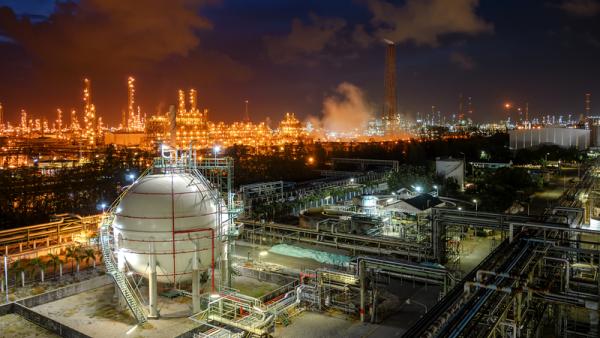
manine99 / Shutterstock

Xunpeng Shi, Principal Research Fellow, Australia-China Relations Institute, University of Technology Sydney
This article appeared in East Asia Forum on May 11 2019.
In 2011, the International Energy Agency (IEA) predicted a ‘golden age’ of gas, where natural gas would be a ‘bridge fuel’ between coal and renewable energy over the next two decades. But weak demand for natural gas in Asia in 2013–15 forced the IEA to step back in June 2015 from its previously optimistic projection, concluding: ‘In a world of very cheap coal and falling costs for renewables, it was difficult for gas to compete’. Even so, the demand for natural gas in East Asia has still significantly increased after 2015, especially in South Korea and China.
In South Korea, President Moon Jae-in promised to replace coal and nuclear power generation with gas and renewable power during his 2017 election campaign. In China, the current leadership installed in 2013 highly values ecological and environmental protection, as promoted by President Xi Jinping’s slogan that ‘lucid waters and lush mountains are invaluable assets’. The change in ecological values is compounded by rising concerns about pollution among the growing middle class.
China in particular is on the path to being the world’s largest liquefied natural gas (LNG) importer. Despite challenges, China expanded its coal-to-gas and coal-to-electricity projects to 35 cities in 2018 (from 12 cities the previous year) in order to improve air quality. These projects sustain high growth in natural gas demand. China’s gas consumption has recorded double-digit growth yearly since 2000, except in 2013 to 2015. Surging demand pushed China to overtake South Korea as the world’s second-biggest LNG importer in 2017 and Japan as the largest gas importer in 2018.
As reported by the International Gas Union (IGU), Asia Pacific markets were the destination for almost 70 per cent of global LNG trade in 2018. China and South Korea accounted for nearly 80 per cent of the increase in net global LNG trade in 2018. In January 2019, China announced plans to increase its LNG intake capacity four-fold over the next two decades, with ambitions to have 34 coastal terminals with a combined annual import capacity of 247 million tonnes by 2035. As a reference, total global LNG trade in 2017 was only 289 million tonnes.
The Asia Pacific also hosts some of the world’s leading LNG exporters: Australia, Malaysia, the United States and Indonesia (the world second, third, fourth and seventh largest exporters in 2018, respectively). In 2018, Australia accounted for 22 per cent of global LNG supply (68.6 million tonnes), slightly after Qatar’s 25 per cent (78.7 million tonnes). The IGU correctly speculated that Australia would take the top position by mid-2019, when two liquefaction projects are expected to reach full commercial operations.
But it is generally agreed that Australia will only keep the crown for a few years before Qatar retakes it. In the longer term, either the United States or Qatar will assume the position of lead exporter while Australia will be in third place.
The United States’ potential to be the world’s largest LNG exporter suggests that China will eventually purchase US LNG if the two countries can reach a deal to conclude the trade war — the only uncertainties are how much and when. China may eventually buy US LNG at the expense of imports from Australia and Qatar.
While the majority of existing Australian LNG exports (82 per cent in 2017) are likely to be protected by long-term contracts in the next decade, the country’s exports on the spot market are vulnerable due to their lack of cost competitiveness. Increasing US–China LNG trade will also diminish Australia’s prospects of gaining a share in China’s growing gas imports. US LNG, valued through an alternative pricing mechanism, may also facilitate a change in broader LNG pricing mechanisms that could lead to a premature ending of Australia’s long-term contracts.
The Asia Pacific will undoubtedly be the centre of gravity in future gas and LNG markets. While Asia Pacific countries are the major players, the entrance of the world’s largest gas exporter — Russia — into the East China gas market (initially through LNG and later pipeline gas) adds further competition. The ‘Power of Siberia’ pipeline that will pump 380 billion cubic metres of natural gas (equivalent to 28 million tonnes of LNG) into the region could start operations from September 2019. Some consider this pipeline deal as poised to change energy geopolitics, which is not good news for other LNG exporters.
Natural gas markets are changing in response to new opportunities in the Asia Pacific and globally. Still, in the long run, natural gas, together with other fossil fuels, will complete their historical roles as energy fuels when renewable energy take the energy supply throne.
Author
Xunpeng Shi is Principal Research Fellow at the Australia-China Relations Institute, University of Technology Sydney.