- Posted on 28 Nov 2019
- 5-minute read
Shuang Li / Shutterstock

James Laurenceson, Acting Director, Australia-China Relations Institute, University of Technology Sydney

Elena Collinson, Senior Project and Research Officer, Australia-China Relations Institute, University of Technology Sydney
This article appeared in Network 10’s 10 daily on November 28 2019.
China’s buying the farm again.
Or so some headlines and talk-back radio hosts reckon.
The latest Chinese buyer is called Mengniu, a dairy company headquartered in Inner Mongolia. It has offered $600 million for Lion Dairy and Drinks, the second largest milk processor in Australia.
And it’s causing more worries than just a loss of Australian ownership.
Independent Senator Jacqui Lambie fears that Australia’s food security might be threatened, presumably because Lion’s output could be locked up and shipped off to China.
Labor Senator Kim Carr has called for scrutiny over the potential impact on the 2,300 jobs in Australia that Lion currently provides.
Tasmanian Independent MP Andrew Wilkie described it as part of a ‘fire sale of Australian and Australian-based companies to the Chinese’, adding that ‘all [Chinese] business enterprises have obligations to the central government’.
Nationals MP Barnaby Joyce warned it was one of the ‘creeping acquisitions’ which ‘are a worry because you’re getting a strategic hold in a substantial section of the dairy market’.
Yet somewhat ironically, it’s Australian dairy farmers that have most welcomed the deal.
Colin Thompson, a farmer and chair of the NSW Farmers Dairy Committee, said Mengniu’s interest could improve the prices they get for what they produce. Brian Tessman, the Queensland Dairyfarmers president, looks forward to more investment.
But do we need to be worried?
The first point to be clear on is that no farms are being sold. Lion is a processor and marketer. It buys from dairy farms; it doesn’t own them. And by the way, the Australian Bureau of Statistics says that 98.4 percent of dairy cattle businesses in Australia are fully Australian-owned.
Next, there’s no fall in Australian ownership of the dairy processing sector because Lion is currently owned by the Japanese company Kirin and has been since 2009.
And it doesn’t seem to be a situation in which a Chinese firm swooped on Lion’s dairy portfolio, beating out a local buyer. Kirin had been trying to sell Lion since October 2018 but ‘offers did not meet expectations’, so they made the approach to Mengniu this year after reducing the price.
Now to the bigger picture.
Australian consumers won’t be left short.
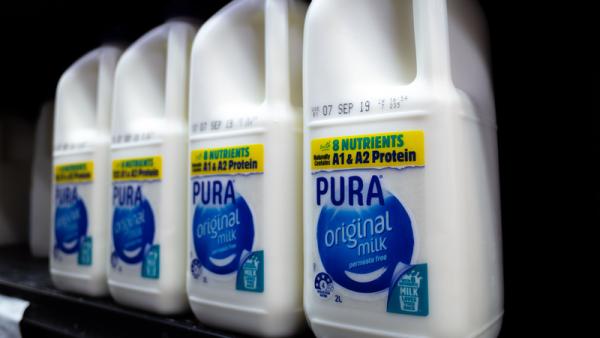
Fresh milk mostly isn’t sold overseas because it costs too much to put it on a refrigerated plane or ship. And Dairy Australia, the peak local industry body, says that currently half of the locally-manufactured product is exported, meaning that Australia produces more than enough to meet domestic needs.
It’s true that if Chinese consumers want to pay more for Lion’s output than others in Australia, England or anywhere else, then more will end up in China. But that has everything to do with profits. If Lion were Australian-owned, or American or French, the same thing would happen.
It’s also true that China has a poor record of food safety, including for dairy products. In 2008 Mengniu was part of a melamine milk contamination scandal that hospitalised 54,000 Chinese children. This might mean it would have ample reason to let Australian managers continue to run the show at Lion. After all, if Lion were to be hit by a similar scandal in the future, it would be Mengniu’s money that goes down the drain.
Mengniu is 20 percent owned by Chinese state interests. Commercial entities in China ultimately operate at the discretion of the Chinese Communist Party. The Party has shown itself to be willing to pull economic strings to punish those it thinks are acting contrary to it.
But this could be mitigated by the fact that Lion is located in Australia. Hence, Australian labour, competition, tax and hygiene laws apply. And if things got wildly out of control and Australia’s security was threatened by what was happening at Lion, then Australian law allows Canberra to nationalise the company.
Now looking at the upside that Australian dairy farmers have their eye on: China is the world’s biggest dairy importer and Australia’s dairy exports to China have nearly doubled over the past five years.
There are few more exciting prospects to dairy farmers in Gippsland and the Murray region than having a Chinese-owned processor and marketer with an incentive to get their products flying off supermarket shelves in Shanghai, Chengdu and Guangzhou.
Added to this is that the China-Australia Free Trade Agreement signed in 2015 means that many Australian dairy products like baby formula enter China tariff-free. Pity the competition like American dairy farmers that get taxed at 15 percent.
As one Australian dairy representative put it, ‘In a perfect world, Australian business would understand the value of dairy’. But in the real world, Lion having a Chinese owner may not be too bad an alternative provided the sale stands up to necessary scrutiny and benefits the greater majority of Australians.
Authors
Professor James Laurenceson is Acting Director of the Australia-China Relations Institute at the University of Technology Sydney.
Elena Collinson is a senior researcher at the Australia-China Relations Institute, University of Technology Sydney.