

- Posted on 7 Mar 2016
- 5-minute read
Hannah Bretherton, Research Assistant, Australia-China Relations Institute, University of Technology Sydney
This article originally appeared in The Diplomat, March 6 2016.
Last month the editor in chief of Vogue China got me thinking. I had never before put “fashion” and “China” in the same column. When I talk with friends about shopping destinations in Asia the list will run from Hong Kong to Singapore to Tokyo or Kuala Lumpur before anyone even contemplates Shanghai.
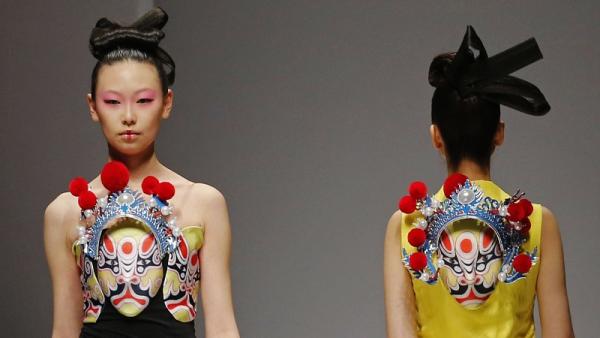
Angelica Cheung admits China was late to the party – the Chinese subsidiary of the world’s most iconic fashion magazine was only established in 2005. As it turns out being strategically, if not fashionably, late meant Cheung and her team made it just in time to join the back of the catwalk. China’s fashion market has tripled since Vogue China’s inception. At that time there were no Chinese supermodels. Currently valued at $85 billion it’s only now that the Chinese fashion industry can take center stage.
When asked about the Australian fashion industry Cheung said it wasn’t really on the collective radar of her readers. But she was quick to point out how impressed she was during her visit by Australia’s dining scene. Observing a knowledgeable yet laid-back feel in hospitality service, as well as the finest, unrecognizable ingredients in fusion cuisine, Cheung admired what she thought of as a unique and quintessentially “Aussie” offering. It seems that 76 percent of the one million Chinese visitors to Australia agree with her, associating Australia with “good food, wine, local cuisine and produce” according to survey data by Tourism Australia. With Chinese tourists ranking these commodities as the second most important factor when choosing any holiday destination, it dawned on me that Cheung’s comments weren’t necessarily that off-topic. When thinking about the huge market potential in China, Australian businesses need to go back to basics and highlight a uniquely Aussie competitive advantage that speaks to Chinese consumers.
The latest figures on the Chinese middle class make Australian opportunities in China more conspicuous than a fake Louis Vuitton bag. China’s middle class now outnumbers the U.S. equivalent by roughly 17 million. In 2015, Chinese tourists in Australia spent $7.7 billion, up from $3.3 billion five years earlier. Currently only six percent of the Chinese population holds a passport. It’s not difficult to see the scope for growth.
Back to the F word. The typical Chinese fashion consumer is depicted as buying high-end, heavily branded luxury apparel. But Cheung underlined the growing sophistication in the Chinese market; the Chinese fashion consumer is increasingly willing to take risks. Why does that matter for Australia? It makes room for high-quality Australian designers who may not have the same name value as the perennial Italian or French labels. These designers appeal to the consumer who sees an “Australian made” label they know they can trust. Alice McCall for example became the first Australian designer to open a stand-alone boutique in China last year, a move that could pave the way for others.
The doom and gloom about China’s slower growth coupled with Australia’s post-mining boom anxiety disorder has led many Australians to prematurely don black mourning suits. But if they swap their synthetics for more natural fibers they might find there are many industries in Australia just starting to find some momentum. China buys 80 percent of Australian wool exports. Although much of this is in raw exports, the Australian wool industry is looking at ways to innovate and adapt to a market that is moving from manufacturing towards consumption.
Clothing expenditure in China is projected to grow by 11 percent annually over the next five years, more than two and a half times that of the U.S. Australian Wool Innovation is developing highly advanced technologies in wool processing enabling lightweight, waterproof outdoor wear as well as breathable sportswear to be made from 100 percent wool. This appeals to the Chinese market on two levels – one is the huge growth in the sportswear market and the other is the demand for environmentally sustainable products. Eighty percent of Chinese consumers think of wool as a sustainably produced commodity and Australian wool is seen as the best in the world. This is not to simplify the complex challenges facing the wool sector, but to highlight the simple lesson at the heart of this story.
Rather than be depressed about China’s move from manufacturing to consumption, Australian industries should see this massive market as its biggest economic opportunity yet. It can move from exporting raw resources to producing innovative high-quality, distinctively Australian products and services – whether they may be in the form of fashion, food or anything else that might be financially lucrative.
Yves Saint Laurent once said that “fashion fades but style is eternal.” Australian producers and service providers will always have their competitors but no other country can replicate the genuinely Australian brand. The lesson from Vogue China was that demand for any industry can wax and wane but true Aussie style will never fade.
Author
Hannah Bretherton is a Research Assistant at the Australia-China Relations Institute, University of Technology Sydney.