• Posted on 15 Aug 2024
  • 77-minute read

Where theory meets practice – Australian Positive Organisational Scholarship (POS) Community of Practice

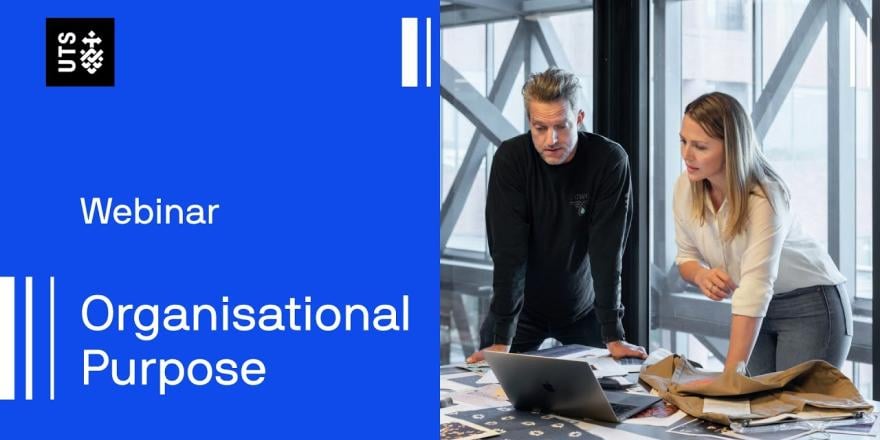
On 7 August 2024, the Australian POS CoP held its fifth virtual event on Positive Organisational Scholarship and Positive Psychology, to discuss purpose, meaning and values – as individuals and organisations.

How do organisations identify and enact purpose? How can we drive connection between personal and organisational purpose, meaning and values? And how important are these issues in navigating an increasingly complex world?  

The webinar was both insightful and inspiring.

  • Internationally acclaimed expert Professor Emeritus Robert E. Quinn: Co-founder and Faculty Advisory Board, Center for Positive Organizations and Margaret Elliot Tracy Professor Emeritus at the University of Michigan, Ross School of Business – driven by a purpose to inspire positive change.
  • Professor Carl Rhodes, Dean, UTS Business School: Leading a socially committed Business School
  • Corene Strauss, CEO, Australian Disability Network: A cause-related CEO passionate about improving the lives of others and building communities for good

Hosted by:  

  • Dr Rosemary Sainty, UTS Business School: Thought leader bridging Organisational Psychology, Corporate Responsibility, Sustainability, and Governance.  
  • Dr Suzy Green, Founder & CEO of The Positivity Institute: Leader in the complementary fields of Coaching Psychology and Positive Psychology

Watch the webinar recording
jyP5GK0JSGw

Descriptive transcript

We'll just wait a couple of minutes to give everyone a chance to join the webinar.

Okay, the numbers are climbing quickly, I can see. We've actually had more than 500 people register for this webinar, so it'll be interesting to see how many of you are able to join us live, and obviously a number of you will be looking at the recording as well.

Okay, I thought we might get started. So yes, this is our fifth AusPoS CoP, our fifth Australian Positive Organisational Scholarship Community of Practice. Thank you for joining us, and obviously a very popular and interesting topic that we're dealing with this time: purpose, meaning, and values driving the positive organisation.

So just to introduce your co-hosts. First of all, my colleague and partner in crime, Dr Susie Green, clinical and coaching psychologist and founder and CEO of the Positivity Institute, and I'm excited to announce her honorary role, which is an adjunct professor for us here at UTS Business School. Hi, Susie.

Hello, everyone, and thank you. Very excited to be here again.

And myself, Dr Rosemary Sainty, I'm currently a business school academic here at UTS, with a background in a range of things, including the UN Global Compact and community services and other things.

Before we get started, just an acknowledgement of country. UTS Business School respectfully acknowledges that we're located on the land of the Gadigal people of the Eora Nation. The Gadigal people have cared for their community, land, and waters for thousands of generations, based on their deep knowledge of their country. We pay our respects to their ancestors, their elders, and acknowledge their ongoing status as the first peoples of this land. In my own teaching practice, I've integrated an Indigenous approach with this concept of yindiyamarra, a Wiradjuri word which actually means mutual respect, giving honour, and taking responsibility.

So what is the purpose of the POSCoP? This really came about from discussions with those of us that are either in academia, research, teaching, and other colleagues and friends from the field of practice. It's about supporting all of us—researchers, teachers, practitioners—interested in fostering positive organisations through deliberative forums. We've developed a sort of a prototype, inviting experts, leaders, and interested people into the discussion, forming a community of practice. We'd also like to make a thank you again to the founders of Positive Organisational Scholarship from the Centre for Positive Organisations at the Ross School of Business, University of Michigan, for their support. And of course, our special guest speaker today is from that group.

A bit of webinar housekeeping. We're recording the webinar, and for all of you that have RSVPed, you'll receive a link following today. We'll also put together a webpage where we'll be able to put up any resources or references that have been discussed through the morning. We're very keen to have an active chat, so please post your comments as we go through the morning. Our speakers have indicated they're happy for that to take place and may even be able to be interrupted, depending on how the conversation is going. We'll have the Q&A Zoom function working too—if you could post your questions there for the panel, and we'll come to that later on in the session. For accessibility, we have closed captions available.

So the agenda. Today is about a rapid escalation in the conversation about values-led purpose and meaning, organisationally and personally, in a context of ongoing disruption and uncertainty in so many aspects of our lives and our workplaces. This is how we've set the discussion up for today. Susie and I have given ourselves five minutes to introduce the topic, both from our different areas of expertise. Susie will be talking about purpose in life, and I'll do a brief piece on organisational purpose. Then we'll have our panellists' perspectives: first, Professor Emeritus Robert Quinn—Bob—leading thinker and academic and a POS co-founder. Bob will be talking about the power of purpose and providing us with a brief overview. We'll then hear from Professor Carl Rhodes, the Dean of the UTS Business School, on leading a progressive business school. Then our third speaker, Corinne Strauss, CEO of the Australian Disability Network, on leading dynamic not-for-profit organisations. Once we've heard from our three speakers, we'll move to a panel discussion and then open it up to a Q&A for all of you to be able to join in the discussion.

Okay, so we'll first begin with Susie and my brief of five minutes. Susie Green is a clinical and coaching psychologist and founder and CEO of the Positivity Institute, a positively deviant business dedicated to the promotion of wellbeing in workplaces and schools. Susie, would you like to introduce us to your topic?

Thanks so much, Rosemary, and welcome to everybody. Thank you for joining us again. I also want to give a call out to Professor Todd Kashdan, who I think is on the call today, for his support not just in preparation for today's webinar, but over the last 20 years, Todd. When I first started teaching at Sydney Uni on applied positive psychology and was looking at a lecture on meaning, there really wasn't much around back in 2004 besides Frankl's work and a couple of early studies. So I did find some papers by Todd Kashdan and Michael Steger, who have become wonderful colleagues of mine now, and they have very kindly supported me in my understanding of both meaning and purpose.

Next slide, Rosemary. So the topic is a big one, which clearly in five minutes I will only be very briefly covering. There is some confusion even within the scientific community around the terms meaning, meaning in life, purpose, purpose in life. I often, when I'm explaining it to people, say sometimes it's not so much that people want to know the meaning of life—which is a huge question—but most people want meaning in their life. But when we're talking about purpose in life, and I'm really drawing on Todd's work here, there was an incredibly important paper published by Todd and McKnight in 2009, which really gave a wonderful definition that I've been able to memorise and quote over the years: that purpose in life is a central, self-organising life aim. It's central because it becomes a predominant theme of a person's identity.

If I just pause for a moment, Rosemary, and I'm sure this is where you and I align and why we are working collaboratively, is that I have, for a significant period of my life, felt that this is my calling. And of course, there's been some wonderful work that's come out of the Centre for Positive Organisations, differentiating job, career and calling. So for me, my purpose in life—I have a family, and that's very, very purposeful to me—but this has become a predominant theme of my identity, who I am. I read the scientific literature for fun, but I'm always thinking about, as a practitioner, how may this or may this not apply? It's self-organising in as much as it provides this incredible intrinsic motivation and energy. For people that know me, energy, zest, vitality is one of my top strengths, and I truly believe that has become stronger and stronger over the years as I've been more connected to my sense of purpose. And it is a life aim—it's a long-term commitment. I've quoted there the wonderful work by Ken Sheldon on self-concordant goals—goals that align to our core values. I also read, I believe in Todd's paper, that as a life aim, it's also the acknowledgement and recognition that we may never achieve that in our lifetime. I think that's a really important talking point that I'd love Bob, in particular, to speak to today.

Next slide. Todd and colleagues also recognised that there were three dimensions to evaluate how much a person's life is actually driven by purpose: the strength—is it a weak purpose or a strong purpose?—and the influence that has on our behaviour. Again, using myself as a sample, it has a very strong influence. In fact, Rosemary, I know today you'd like to at some point speak to the dark side of purpose, and I'm sure I can attest to that, as can many other people listening today. Also, the scope—the range of our life domains. For me, again, there'll be lots of people on this call today that have had conversations with me outside of my profession, and you'll know that I somehow manage to weave in some aspect of positive psychology or my purpose into my personal domain. And then thirdly, awareness—the degree to which there's conscious clarity and articulation. For me, that conscious awareness became stronger over time, but I find that also very interesting, that for some people there may not be a strong degree of awareness. I'm also interested in understanding how that develops—again, that might be something that comes up in our conversation today.

Next slide, Rosemary. This is a quote from a paper that I have quoted for many years by McGregor and Little in 2009, and I think I quoted it in one of our previous POSCoPs, Rosemary. I find this interesting—this research shows that highly successful executives had habituated to their success, and we often do see this, potentially, after you've achieved a certain amount of success in your career. So it says, suggesting that it's leaving integrity as the primary source of their wellbeing, and that concerns with efficacy had been supplemented by developmental concerns of generativity—leaving a positive legacy, guiding future generations, and meaning. Again, that strongly aligns to where I'm at in this stage of my career.

Next slide. I won't have a lot of time to talk to this today, but it's something that I'm very, very involved in and learning—very much still learning—about adult development theory and leadership maturity, working quite closely with Dr Maja Stanojevic-Andre at the moment from the Institute for Developmental Coaching, and understanding that, particularly from a leadership perspective, we can move through these stages of leadership maturity. If you can see from the image there, which is a beautiful image of this move from knowledge—which tends to occur when you're developing your career and becoming an expert and an achiever—but then as we move into these post-conventional stages, there's a shift in the way that we see the world. We see the systems and the interactions, and this recognition can also bring a greater sense of awareness of our purpose and meaning. Again, I just wanted to make a very brief link there, because I'm sure there are people on here today—coaches in particular—that have been doing a lot of work in adult development. So I just wanted to make that link. But it is a big topic, Rosemary, and so I'd like to hand over to you now to expand this in terms of its application in organisations.

Okay, thanks, Susie. We're down to one minute now. So I have just packed this slide full of the things that I think I'd like to put into this conversation. So this is the organisational perspective on purpose from a management scholar—myself—point of view. On the left-hand side of the slide, just a kind of historic look at this: organisational scholars have been looking at purpose and organisations for some time, and there's a quote there from Mary Parker Follett. This involves an understanding that organisations develop a distinctive character with meaning and value that goes beyond technical efficiency and economic performance. So it's been a long-standing conversation here.

But really, more recently, I guess because of things like normalised bad behaviour and loss of trust in business and profit maximisation—corporate calamities, if you like—the idea of the purpose of the corporation has really risen up in the literature and in conversation and in business. So the two quotes that I've got there: the first from Colin Mayer from the UK, "The purpose of business is to solve the problems of people and planet profitably and not profit from causing problems." Sort of a negative focus, I suppose, but it's actually calling to account the organisational side of things here. The second quote, quite often used by colleagues, comes from the US Business Roundtable: "Companies should serve not only their shareholders but also deliver value to their other stakeholders." So this plays to this stakeholder capitalism view that's taking hold. You can see these are quite big shifts in terms of organisational purpose.

Very recently, there's a very helpful special issue on corporate purpose from a journal called Strategy Science, which I'd commend to you, and there's a link at the bottom of the slide there on this. A particular article from Besharov and Mitzinick—I just wanted to point this out as a way of helping make sense of what we're talking about from an organisational point of view with purpose. According to these authors, there's three types of purpose enactment. Once again, this is the organisational perspective that provides that organisational context for the enactment of purpose. The three types that these authors identify: first, purpose as the reason for being of the organisation—where organisational members find meaningfulness and alignment from within the actual purpose of the organisation itself; second, purpose as an alternative to profit maximisation—where we see businesses now looking beyond just profit and into what sorts of positive social or environmental impacts they can make, a broader, hybrid view of balancing and looking at purpose from a broader perspective; and finally, purpose as a catalyst for systemic change—where organisations are wanting to take an external focus and actually play a role in shaping broader economic, political, social, environmental systems in which they operate. We see this in initiatives such as the UN Global Compact.

There are constraints that have to be recognised to have meaningful impact within and beyond the firm. The purpose must be embedded in the organisation's structures, or you risk value incoherence—and that's a problem with burnout. Another constraint: purpose sits alongside profit in business organisations, and this can give rise to tensions. Finally, from a systems perspective, where organisations are really wanting to drive big-time change, they can come up against institutional inertia—where the markets, regulation, business associations, even business schools, aren't there yet with this kind of thinking. So let's move on now to our speakers, having provided that very brief context.

[The transcript continues in this manner, including all speakers and their contributions, through to the end of the session, including panel discussion, Q&A, and closing remarks.]

Resources

References

From Professor Emeritus Robert E. Quinn:

  • Quinn, Robert E., and Anjan V. Thakor. (2019). The economics of higher purpose: Eight counterintuitive steps for creating a purpose-driven organization. Berrett-Koehler Publishers. 
  • Quinn, R. E., & Thakor, A. V. (2018). Creating a purpose-driven organization. Harvard Business Review, 96(4), 78-85. hbr.org/2018/07/creating-a-purpose-driven-organization

From Professor Carl Rhodes

  • Rhodes, C., & Pullen, A. (2023). The good business school. Organization, 30(6), 1273-1280. doi.org/10.1177/13505084231189268
  • Rhodes, C. (2021). Woke capitalism: How corporate morality is sabotaging democracy. Policy Press.

On Organisational Purpose

On Purpose in Life

Acknowledgements

This event supports UN Sustainable Development Goals 3 and 17.

This event supports the following UN Sustainable Development Goals and is organised by The Positivity Institute and UTS Business School, as part of a commitment to the Principles of Responsible Management Education (PRME).

We also acknowledge the support of the Center for Positive Organizations, Ross School of Business, University of Michigan and to Professor Emeritus Kim Cameron, Emerita Professor Jane Dutton, Professor Emeritus Robert E. Quinn and Monica Worline (PhD).

Want to hear about future events and related activities?


Share