

Overview
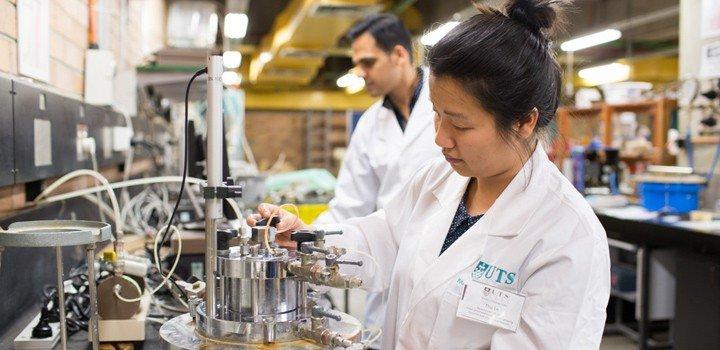
Laboratories, workshops and plant rooms are considered 'hazardous facilities'. Managers of these spaces must ensure that risks to health and safety are adequately managed.
NOTE: Children are not permitted to enter hazardous facilities.
- Cited in Staff and Students with Carers' Responsibilities Vice-Chancellor's Directive, clause 5.3 Provisions for children on campus.
Responsibilities
All staff and students are required to report hazards, accidents and incidents and take remedial action as soon as is practical.
Managers and supervisors of laboratories, workshops and plant rooms have the responsibility to manage health and safety hazards associated with the use of these facilities. A risk management approach as listed below is recommended.
Risk management
Step 1: Identify hazards
Inspections
The Laboratory and Workshop Safety Inspection Checklist (PDF, 221 Kb) should be used to conduct six monthly inspections. This is more frequent than for offices and general work areas due to greater risk.
Refer to the Specific/High Risk Hazard Programs - High Risk Facilities and Work Areas section of the Health and Safety Plan for your faculty or unit for the title of the person or work group with responsibility for these inspections, and the timeframe in which to perform the inspection.
Hazard Information Posters
Hazardous facilities (laboratories and workshops) should display the Hazard Information Poster at facility entrance. This informs persons entering of hazards present and the safety precautions required. Create a poster using:
Hazard Information Poster Generator
Step 2: Assess risk
A health and safety risk assessment must be conducted on all hazardous activities within hazardous areas. This can be accomplished using the:
Hard copies of risk assessments produced by either method must be kept easily accessible in the laboratory or workshop.
Use Online Chemical Inventory Database to assist assessing the risks of hazardous chemical use. Risk assessments recorded online.
Step 3: Controlling the risk
Risk control strategies will be in addition to those implemented directly in to manage teaching and research risks, which will have been identified separately.
Risk control strategies that are common in laboratories and workshops:
Persons working in high-risk facilities should be accredited. This means they are provided with the necessary information, supervision and training to conduct work safely and that a record of this is kept.
Information on dangerous goods classes from Australian Dangerous Goods Code.
Personal protective equipment (PPE)
PPE is used to control exposure to various hazards. Includes gloves, lab coat, respirator, face shield and hearing protection.
Hazardous waste disposal procedure
If your laboratory or workshop produces hazardous waste then you should be familiar with the UTS hazardous waste disposal procedure.
Related hazards and activities
Safety & Wellbeing provides details of practical application of health and safety risk management for some specific hazards and activities in laboratories and or workshops:
Resources
Internal
Australian Standards
- AS 1940 The storage and handling of flammable and combustible liquids
- AS 2161 series of Australian Standards - Occupational protective gloves
- AS 2243 series of Australian Standards - Safety in laboratories
- AS 2252 series of Australian Standards - Biological safety cabinets
- AS 2567 Laminar flow cytotoxic drug safety cabinets
- AS 2982:2010 - Laboratory design and construction
- AS 3780:2008 - The storage and handling of corrosive substances
CCH Australia
- Laboratory Safety Manual
ISBN 1 86264 439 X
CCH Australia Ltd.
State government legislation
- Poisons and Therapeutic Goods Regulation 2008 (opens an external site)
WorkCover Authority of NSW
- Hazardous atmosphere (opens an external site)
Department of Health and Ageing (Australian Government)
Therapeutic Goods Administration
Standard for the Uniform Scheduling of Medicines and Poisons (SUSMP) (opens an external site)
National Health and Medical Research Council
- Guidelines for laboratory personnel working with carcinogenic or highly toxic chemicals
1990
ISBN 0644127775 - Australian code of practice for the care and use of animals for scientific purposes (opens an external site)
8th Ed. 2013.
Safe Work Australia (Australian Government)
- National Standard for Plant (PDF, 260KB) ) (opens an external site)
NOHSC:1010 (1994) - National Code of Practice for the Control of Workplace Hazardous Substances (PDF, 142KB) (opens an external site)
NOHSC:2007 (1994)